The love letters scattered under a crabapple tree that exposed a reverend's secret
The dog stopped first.
The man walking him saw something under the crabapple tree and came closer.
It was September 16, 1922, in a secluded lane called Lovers' Lane, near New Brunswick, New Jersey.
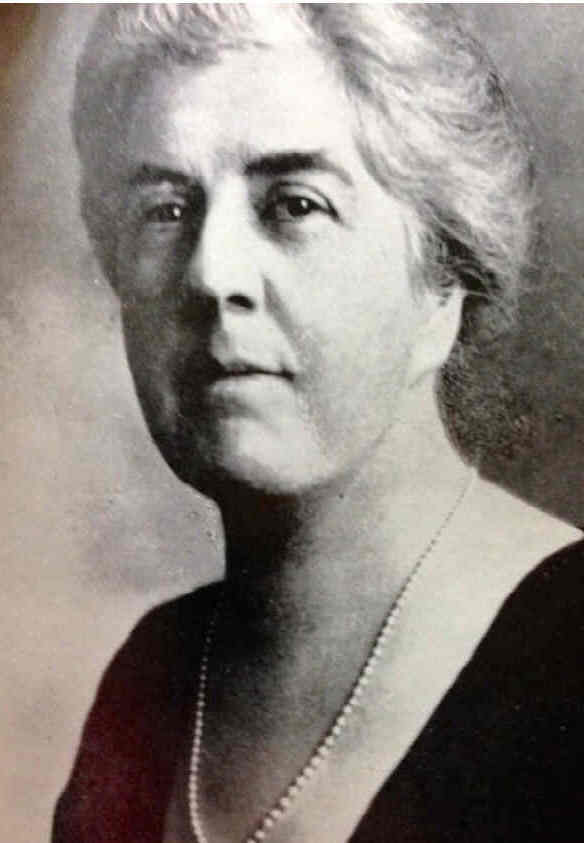
Beneath the tree lay the body of Reverend Edward Wheeler Hall, an Episcopal priest, his coat arranged neatly, as if someone had dressed him for rest.
Nearby lay the body of Mrs. Eleanor Reinhardt Mills, a choir singer from his church.
Both had been shot.
Scattered around them were love letters.
The letters suggested an affair between the reverend and the choir singer.
They were not hidden.
They were not burned.
They were left in the open, under the tree, for anyone to find.
A secret, made public by paper and ink.
The man with the dog did not know what he had walked into.
He only knew the stillness was wrong.
Who fired the shots is not established at this point.
The weapon was a .32-caliber pistol, and it was never recovered.
The letters were the evidence.
The shooter was not.
THE AFFAIR AND THE LETTERS
He was an Episcopal priest.
She sang in his choir.
The reverend was Edward Wheeler Hall, a man of the cloth in a quiet New Jersey town.
The choir singer was Eleanor Reinhardt Mills.
Hall was married to Frances Noel Stevens Hall, a member of a wealthy and prominent local family.
The letters found under the crabapple tree pointed to an affair between the two.
They were scattered at the scene, next to the bodies.
The exact contents of the letters are not detailed in the source.
What is documented is that they existed, and that they suggested a secret.
Early suspicion fell on Mills's husband, James Mills.
He was cleared.
The weapon was a .32-caliber pistol, and it was never recovered.
The letters were the evidence.
The shooter was not.
A respected reverend, a choir singer, a double life.
The papers called it a sensation.
The town called it worse.
THE COLD CASE AND THE INDICTMENT
The first investigators arrived without a shared plan.
Local authorities worked one way; the county prosecutor worked another.
They interviewed neighbors, they collected the letters, they took statements.
But the two sides did not compare notes.
Leads were followed, then dropped, then followed again by a different office.
The case went cold.
For years, the crabapple tree drew curiosity seekers, not detectives.
Then, in 1926, a grand jury was convened.
The specific evidence that convinced the grand jury is not in the record.
What is in the record: the grand jury indicted Frances Hall, her two brothers, and a cousin.
All four were arrested and charged with murder.
Four years after the bodies were found, suspicion finally had names.
The accused were the reverend's widow and her family.
The wealthy Stevens family, the papers noted, had money and influence.
The prosecution would have to prove motive, means, and opportunity.
The defense would have to answer for a double life made public in ink.
Neither side had the weapon.
Neither side had a confession.
The grand jury acted on something, but the record does not say what.
That would require evidence.
The accused waited in jail, and the town waited for answers.
THE TRIAL AND THE VERDICT
The trial began in November 1926 in Somerville, New Jersey.
The prosecution, led by Alexander Simpson, tried to build a motive out of jealousy and revenge.
He put the woman known as the "Pig Woman" on the stand.
She testified that she had watched the murders from her farm.
The exact nature of her testimony is not detailed in the record.
What is documented is the attack on her credibility.
Her health was failing. Her story shifted. The defense tore at both.
The defense argued the whole case was rumor and unreliable testimony.
No physical evidence tied the accused to the crime scene, they said.
The accused were targets because of who they were, they argued.
The jury heard it all.
They heard the love letters described. They heard the motive described. They heard the witness described.
Then they deliberated for several hours.
The verdict came back not guilty for all four defendants.
Not because the prosecution failed to persuade. But because the prosecution failed to prove.
The courtroom emptied. The accused walked out.
The case was left where the letters had been found: unsolved.
AND THE STORY STILL ISN'T OVER
The acquittal was seen as a major defeat for the prosecution.
It left the case officially unsolved.
The courtroom emptied. The accused walked out.
Frances Hall moved away from New Brunswick.
The Stevens family largely withdrew from public view.
The case remains officially unsolved.
No one else was ever charged.
The weapon was a .32-caliber pistol.
It was never recovered.
Over the years, theories have been proposed.
Some point to a spurned lover. Some point to a jealous spouse. Some point to a hired hand.
None have been proven.
The identity of the killer is not established.
That would require evidence.
The trial had ended in hours of deliberation, then a verdict of not guilty for all four.
The prosecution's case had rested on a witness whose credibility was attacked.
Her testimony was undermined by failing health and inconsistencies.
The defense argued the evidence was circumstantial.
They argued the wealthy family had been targeted by social prejudice.
The jury agreed.
But the letters were real. The bodies were real.
The .32-caliber pistol was never found.
The case was left where the letters had been found: unsolved.
It is a closed case. It is not a solved one.
The story still isn't over.
Advertisement
You may also like
The 9-year-old boy whose mother demanded justice for Atlanta's vanished children
Camille Bell’s son was nine years old. His name was Yusuf Bell, and between 1979 and 1981, at least 28 Black children, adolescents, and…
The 31-day gap in a missing-child report that changed a family forever
On July 15, 2008, Cindy Anthony called 911 to report her two-year-old granddaughter missing. She told the dispatcher that her daughter, Casey Anthony, had…
The sister who spent decades correcting the 38-witness myth
The number 38 has been attached to Kitty Genovese's murder for decades. The supposed witnesses who saw or heard the attack and did nothing,…
Pregnant mom and two daughters vanish; husband's truck seen leaving at dawn
The truck is already moving before the street is fully light. A neighbor's security camera caught that image on August 13, 2018: Christopher Watts's…
A boat bought days before a missing wife — the timeline detectives couldn't shake
He reported her missing on December 24, 2002. Laci Peterson was eight months pregnant, and Scott Peterson told police she had vanished from their…
The rear axle that cracked the Oklahoma City bombing case open
The rear axle sat in a crater of broken glass and concrete, blocks from where the Murrah Building's north face used to be. At…