The sister who spent decades correcting the 38-witness myth
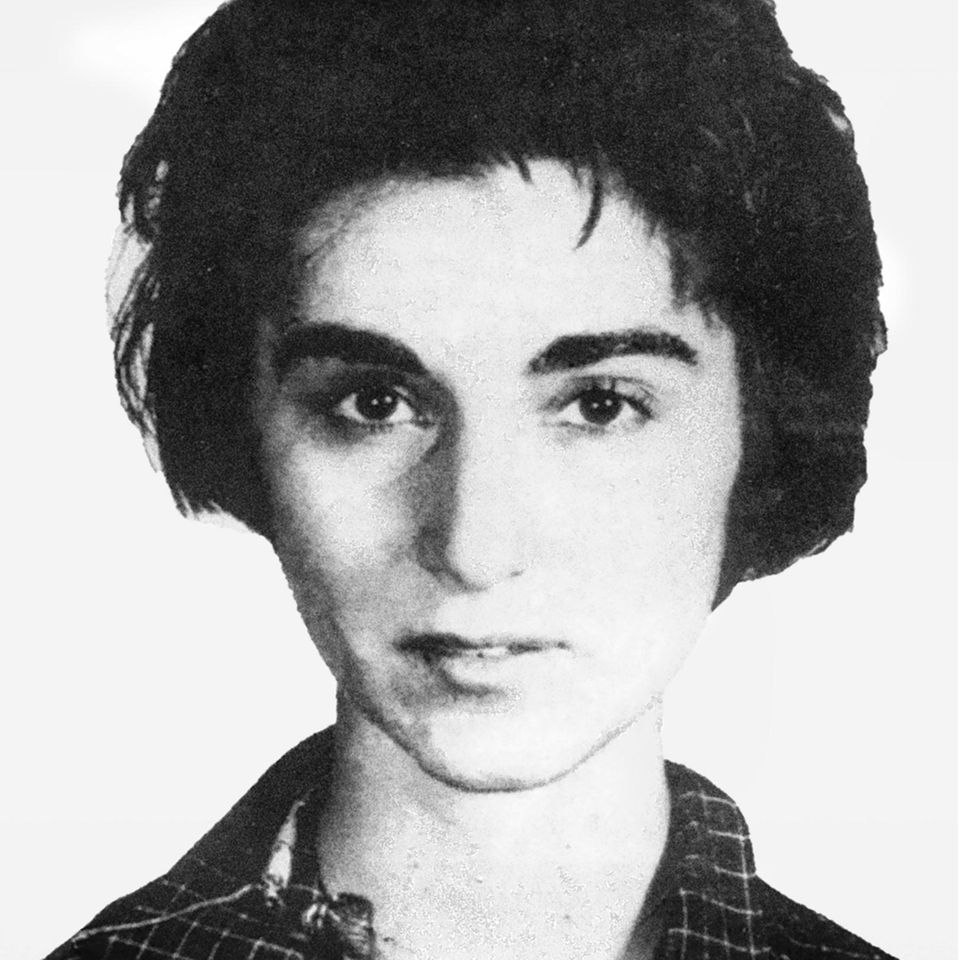
The number 38 has been attached to Kitty Genovese's murder for decades.
The supposed witnesses who saw or heard the attack and did nothing, as reported by The New York Times.
The number became the shorthand for urban apathy, for the city that watched and turned away.
Later reporting, including by the Times itself in 2016, found the number exaggerated.
Several neighbors did call police.
Several neighbors did attempt to intervene.
The record does not establish that 38 people watched and did nothing.
Susan Genovese, Kitty's sister, spent years as a public speaker and advocate.
She addressed the myth of the 38 witnesses.
She corrected the record about her sister's death.
The exact wording of Susan Genovese's public statements is not in the record.
She said something, in speeches, in interviews, across years of advocacy.
What she said precisely is not established.
What is established is that the myth persisted, and that she worked against it.
Why did the number 38 hold for so long?
Why did it shape a generation's understanding of that night?
Why did it outlast the truth?
That would require evidence.
The evidence is what the later reporting found: fewer witnesses, some who acted, a story more complicated than the headline.
Susan Genovese spent decades on that complication.
She spoke where her sister could not.
The myth had a name, and so did the correction.
THE NIGHT ON AUSTIN STREET
The first attack came at 3:15 a.m.
Kitty Genovese, a 28-year-old bar manager, was walking home from her job at Ev's 11th Hour Bar to her apartment at 82-70 Austin Street in Kew Gardens, Queens.
She was stabbed twice in the back by Winston Moseley.
She screamed for help, and a neighbor shouted from a window.
Moseley fled.
Then the street went quiet.
Approximately ten minutes passed.
Moseley returned, found Genovese in a hallway, and stabbed her repeatedly before sexually assaulting her and stealing money.
She died in an ambulance en route to Queens General Hospital.
Ten minutes.
That is the gap the record leaves open.
Not because the timeline is unclear — the source states it plainly.
But because those minutes became the hinge of a national story about who heard what, who saw what, and who did nothing.
What is not established is the exact number of witnesses.
The 38 figure is disputed.
Later reporting, including by the Times itself in 2016, found the number exaggerated and that some neighbors did call or intervene.
At the time of her death, Kitty was living with her partner, Mary Ann Zielonko.
That relationship was not widely reported in mainstream coverage of the era.
It is part of who Kitty was.
It is also part of what the myth erased.
She was returning from work.
She was near home.
She was on the ground below a window that opened and closed.
Ten minutes separated the first assault from the fatal one.
The neighbor shouted once.
The record does not say who else heard that shout.
The record does not say who looked out and looked away.
The record does not say who called and who did not.
That would require evidence the original reporting did not provide.
SIX DAYS AND A CONFESSION
Six days after the attack, police stopped Winston Moseley driving a stolen car.
He was 29 years old, a business machine operator.
He confessed to the murder of Kitty Genovese.
He also confessed to the killings of two other women, Annie Mae Johnson and Barbara Kralik.
The investigation was led by a detective from the Queens homicide squad.
Moseley's confession included details of the attack that only the killer would have known, according to the source.
The source does not itemize what those details were.
That would require evidence the record does not provide.
The medical examiner's testimony established the cause of death as stab wounds.
The arrest came on March 19, 1964.
The relief of an arrest, then the weight of a confession.
It confirmed the horror of what happened on Austin Street.
It confirmed that one man did this.

It confirmed that one man said he did this.
The record holds the confession, the arrest, the stolen car.
It does not hold the specific words that tied Moseley to the scene.
The detective led the case.
The confession led to the conviction.
The medical examiner's testimony led to the cause of death.
The record is clear on those points.
It is silent on the rest.
THE TRIAL AND THE MYTH
The trial lasted only a few days.
Moseley was tried in Queens County Court in June 1964.
He was convicted of first-degree murder and sentenced to death.
The defense did not contest the facts of the killing.
The prosecution built its case on Moseley's confession and corroborating evidence.
The defense offered no alternative interpretation of the events.
That is what the record shows, and it is also where the record stops.
The defense's specific strategy is not in the record beyond not contesting the facts.
That remains unestablished.
What was established was the sentence: death.
New York abolished the death penalty in 1965, and the sentence was commuted to life in prison.
The legal case closed quickly.
The story did not.
The New York Times had reported that 38 witnesses saw or heard the attack and did nothing.
That account shaped public debate about urban apathy for decades.
It was cited in criminology courses.
It was taught as the "bystander effect."
It was repeated as fact.
Later reporting, including by the Times itself in 2016, found the number exaggerated.
Some neighbors did call police.
Some attempted to intervene.
The record does not establish 38 silent witnesses.
It never did.
So the question becomes: how did a false number become more famous than the true story of a woman's murder?
A woman named Kitty Genovese was stabbed on Austin Street.
She screamed.
A neighbor shouted.
She died in an ambulance.
The number survived her.
The correction came decades later, and it came quietly, compared to the myth.
Susan Genovese spent years as a public speaker, addressing the myth directly.
She corrected the record about her sister's death.
She did not need a trial transcript to know what happened that night.
She needed only the truth, which was always smaller and harder than the legend.
AND THE STORY STILL ISN'T OVER
Winston Moseley died of natural causes in prison on March 28, 2016, at the Sullivan Correctional Facility in Fallsburg, New York.
He was 81.
The case closed with his death; no future legal steps or pending motions are in the record.
Susan Genovese became a public speaker and advocate for victims' rights.
She often addressed the myth of the 38 witnesses, correcting the record about her sister's death.
She did not need a trial transcript to know what happened that night.
She needed only the truth, which was always smaller and harder than the legend.
The Genovese family has stated that the case remains a painful memory.
But Susan's advocacy, they said, helped transform the narrative into one about community responsibility.
Not about the number of witnesses.
About what a community owes a neighbor.
The apartment building where the attack occurred was later demolished.
Bricks gone, hallway gone, the ground where she fell now open air.
The case continues to be studied in criminology and psychology courses as a landmark example of the "bystander effect."
Modern scholarship has questioned the accuracy of the original reporting.
Did 38 people really do nothing?
Did 38 people even exist?
That would require evidence.
The record does not establish the number.
What remains is the sister's voice, correcting the story, one speech at a time.
What remains is a question about responsibility that outlived the building and the killer.
Susan Genovese carried that question for decades.
She is still carrying it.
Advertisement
You may also like
The pillowcase over Polly Klaas's head — and the 10:30 p.m. knock her friends never forgot
The knock at the door came at 10:30 p.m. It was October 1, 1993, and twelve-year-old Polly Klaas was having a slumber party with…
The Clutter family's last morning: a church pew left empty and a shotgun found at close range
The empty pew was noticed first. On the morning of November 15, 1959, the Clutter family did not show up for church in Holcomb,…
The ATF raid that sparked a 51-day siege — and the fire that still divides investigators
On April 19, 1993, a fire broke out during the FBI's final assault on the Mount Carmel Center. Seventy-six people inside the compound died…
A hammer near two desert graves — and the phone records that redrew a family's last days
The motorcyclist stopped in the Mojave Desert near Victorville, California, on November 11, 2013. He found two shallow graves in the dirt. Inside were…
The ring that identified Emmett Till after his body was found in the Tallahatchie River
The ring was small. It was inscribed with his father's initials. It was the only thing that gave Emmett Till back his name. He…
The mother who waited 37 years for the truth about Elizabeth Short
The morning of January 15, 1947, a woman’s body lay in a vacant lot on Norton Avenue in the Leimert Park area of Los…