The ex-wife's custody fight that prosecutors linked to the D.C. sniper attacks
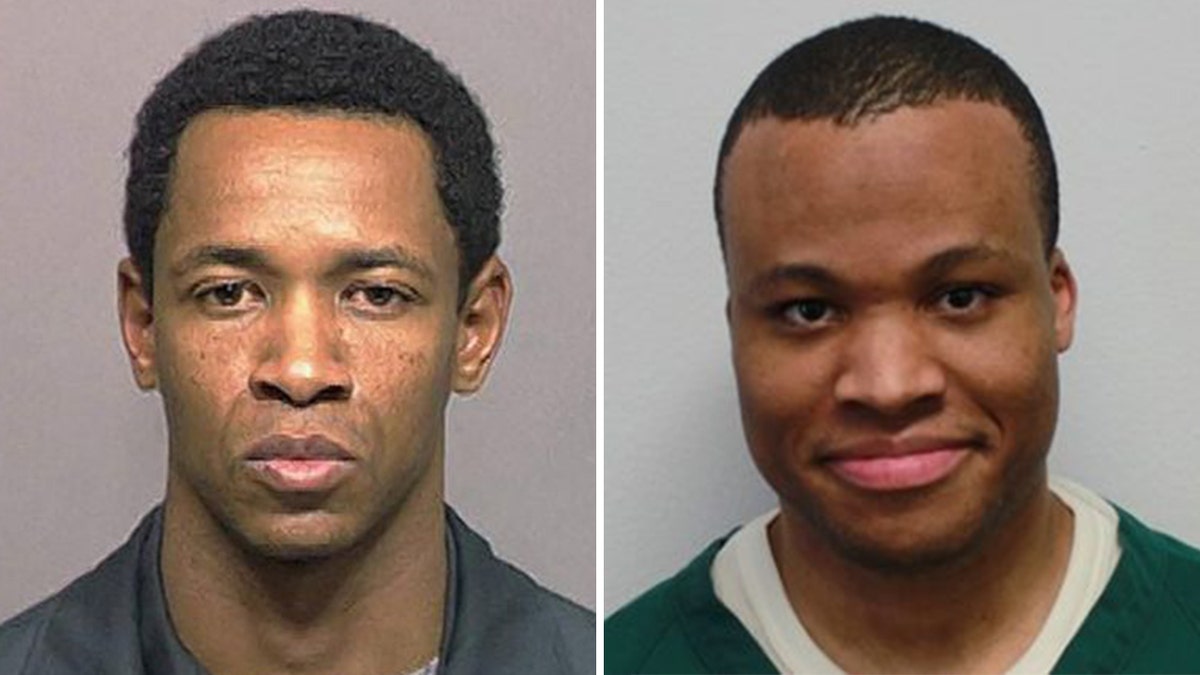
October 2, 2002. A man was shot outside a grocery store in Wheaton, Maryland.
That was the first. Between that evening and October 22, ten people were killed and three others wounded across Maryland, Virginia, and the District of Columbia. Gas stations. Shopping centers. A bus stop in Aspen Hill, Maryland, where the final attack took place. Schools closed. Residents feared pumping gas. The region was on lockdown.
The men arrested on October 24 were found sleeping in a car at a rest stop near Myersville, Maryland. One was a 41-year-old Army veteran. The other was his 17-year-old accomplice. They were charged with the murders. They were not yet convicted.
But the prosecutors' argument reached backward. It reached into a divorce file.
They argued the attacks were driven, in part, by John Allen Muhammad's custody dispute with his ex-wife. The claim was built on testimony from her. A former friend of Muhammad also testified.
She spoke of his behavior. He spoke of his threats. The record holds their words, but not a single, sealed motive.
Was this a plan to terrorize a region? Was it a plan to get a child back? Was it a plan to force the government to pay $10 million? The extortion motive was argued. It was not fully established in court.
The full motive for the attacks is not established in the record. The custody dispute is what prosecutors argued, not what the court definitively found as the sole cause. The evidence was a rifle in a trunk, a ballistics match, and a marriage that had ended badly.
The random terror had a private, domestic root. That is what the state alleged. That is what the testimony suggested. That is what the record does not fully prove.
THE ARMY VETERAN AND THE TEENAGER
John Allen Muhammad was a 41-year-old U.S. Army veteran.
Lee Boyd Malvo was a 17-year-old Jamaican national.
Muhammad was the mastermind, prosecutors said. Malvo was his accomplice and the shooter in many of the attacks.
The profile looked ordinary before the shootings began. A veteran. A teenager. A family dispute.
The investigation revealed that Muhammad had a history of domestic violence. He had also been involved in a custody dispute with his ex-wife.
Prosecutors linked that dispute to the attacks.
His ex-wife testified at trial about his motives and behavior. His former friend also testified.
The exact nature of the custody dispute is not detailed in the record. Its timeline is not detailed either. What is established is that it existed, and that prosecutors argued it drove the shootings.
Not because the court found it as the sole cause. Because the state alleged it, and the testimony suggested it.
The ex-wife described a marriage that had ended badly. The former friend described a man who had changed.
They were two witnesses with two versions of the same man. The record holds both versions. It does not settle which one was true.
Muhammad was the older figure, the one who gave orders. Malvo was the teenager who followed them.
That was the relationship the testimony painted. That was the relationship the prosecution built its case on.
A marriage that fell apart. A child caught in the middle. A veteran who turned to violence at home before the region knew his name.
The domestic root sat alongside the rifle in the trunk. It sat alongside the ballistics match. It sat alongside the $10 million motive that the record never fully established.
What remains is a question the testimony raises but does not answer. What was the plan, exactly, and who was it meant to reach?
The record does not say. That would require evidence.
THE CAPRICE AND THE RIFLE
A witness at a shooting in Ashland, Virginia, on October 19 reported seeing a white van.
The van was later identified as a Chevrolet Caprice.
That was the breakthrough.
For weeks the task force had chased reports, tips, and theories across the region.
Then a witness described a car, and the search narrowed.
On October 24, a tipster alerted police to a car parked at a rest stop near Myersville, Maryland.
Officers found Muhammad and Malvo sleeping inside the vehicle.
In the trunk, hidden, lay a Bushmaster .223-caliber rifle.
A scope and a bipod were recovered with it.
The rifle was later linked to the shootings through ballistic evidence.
It was a match.
It was the same weapon, the record shows, tied to the attacks by the science of the barrel and the bullet.
The case was built on more than the rifle.
Witness testimony placed the men near the scenes.
A tarot card was left at a shooting scene with a handwritten message.
The content of that message is not stated in the source.
Only that it was left, and that it was handwritten.
What was written on the card remains unestablished.
That would require evidence.
What the record does show is a car, a rifle, and two men sleeping at a rest stop.
The terror of those weeks ended with a tip and a trunk.
Not because of a confession.
Not because of a grand plan revealed.
But because a witness saw a white van, and a tipster made a call, and the rifle in the trunk matched the shootings.
She was on the ground below — no, that is not this section.
The rifle was in the trunk.
The scope was attached.
The bipod was there.
And the ballistics matched.
TWO INTERPRETATIONS OF THE SAME FACTS
The same facts carried two stories into the Virginia courtroom.
Prosecutors argued that Muhammad orchestrated the attacks as part of a plan to extort $10 million from the government.
Money, they said, was the point of the terror.
Prosecutors also argued the custody dispute with his ex-wife motivated the attacks.
She testified about the divorce, the threats, the years of control.
A former friend of Muhammad’s testified too, describing the same pattern.
Two interpretations of the same man.
One motive was documented in testimony: a bitter custody fight and a history of domestic violence.
The other was a demand for ten million dollars, argued by prosecutors but not fully established in court.
That would require evidence.
The record shows the argument; the record does not show the plan.
Muhammad was tried first in Virginia, charged with the murder of a man killed on October 9, 2002.
He was convicted on November 17, 2003, and sentenced to death.
Malvo was tried separately, charged with the murder of a woman killed on October 14, 2002.
He was convicted and sentenced to life in prison without parole.
The extortion demand was part of the prosecution’s case.
It was not the part the jury had to believe to convict.
The custody fight was real.
The domestic violence was real.
The ten million dollars was a theory, argued and never landed.
AND THE STORY STILL ISN'T OVER
Muhammad was executed by lethal injection on November 10, 2009, in Virginia.
Malvo's conviction was later upheld on appeal.
He remains in prison, serving life without parole.
The executions and the life sentences are done.
The case is closed in terms of convictions and executions.
No pending legal steps or future hearings are in the record.
What remains is quieter.
The victims' families have continued to advocate for stricter gun control and mental health awareness.
Muhammad's ex-wife has since become a public speaker on domestic violence awareness.
She speaks about the custody fight she lived through, the one prosecutors argued mattered.
She speaks about the violence that was documented in trial testimony.
The case remains one of the most studied examples of domestic terrorism in the United States.
It is studied for the shootings.
It is studied for the motives that were argued: the custody dispute, the domestic violence, the ten million dollars that was a theory and never landed.
It is studied for what the record does and does not establish.
The custody fight was real.
The domestic violence was real.
The ten million dollars was argued, and the record does not establish it.
That is where the story sits now.
The perpetrators are gone from the streets.
The survivors and the families of the victims carry the aftermath.
They carry it into advocacy.
They carry it into public testimony.
The ripple effects continue in study and in speaking.
That is the part that is not over.
Advertisement
You may also like

Pilot Roger Peterson was not certified for instrument flight. So why did he take off into freezing drizzle?
Freezing drizzle was falling over Mason City Municipal Airport on the night of February 3, 1959. Visibility was low, and the sky was dark.…
The bloody glove that didn't fit: inside the LAPD mishandling that shaped the O.J. Simpson trial
He pulled. He tugged. He grimaced. On October 3, 1995, O.J. Simpson stood before the jury and struggled to pull a leather glove over…
The wedding ring on the nightstand: inside the 48 hours before Chris Watts confessed
The nightstand held a ring. Officers found Shanann Watts’s wedding ring there on August 13, 2018, the day a friend reported her missing from…
The 2008 911 call that set off a search for a toddler who was never found alive
The 911 call came on July 15, 2008, from a house in Orlando, Florida. Cindy Anthony was on the line, reporting her granddaughter missing.…
The Atlanta mothers who demanded answers as 28 children vanished
Camille Bell's son was nine years old when he disappeared. Yusuf Bell left the house to run an errand and never came back. Faye…
The 8:44 p.m. video that shattered Alex Murdaugh's alibi
The video on Paul Murdaugh's phone is dated 8:44 p.m., June 7, 2021. SLED agents analyzed the clip during the trial and identified the…