The Atlanta mothers who demanded answers as 28 children vanished
Camille Bell's son was nine years old when he disappeared.
Yusuf Bell left the house to run an errand and never came back.
Faye Williams's son was eleven.
Earl Lee Terrell was found strangled, his body left in the woods.
Between the summer of 1979 and the spring of 1981, at least 28 Black children, teenagers, and young adults disappeared and were found murdered in and around Atlanta, Georgia.
The victims were mostly male. Many were strangled.
The bodies turned up in wooded areas, rivers, and vacant lots across the metro.
The city was terrified. The nation was watching.
The mothers organized.
They spoke publicly when the police would not say enough. They demanded answers when the answers did not come.
Camille Bell and Faye Williams were among the most prominent.
They stood at podiums and in front of cameras. They held up photographs of their sons.
What did they know that the authorities didn't?
What did they see that the investigation missed?
What did they understand about the pattern before anyone else did?
That would require evidence.
The investigation, initially handled by the Atlanta Police Department, eventually drew in the FBI and other agencies.
Dozens of detectives worked the cases.
But the full number of victims is not established in the record.
The identity of the killer or killers for all 28 cases is not established in the record.
The mothers kept pushing anyway.
THE DISAPPEARANCES
The first body was found in a wooded area.
Then another, in a river.
Then another, in a vacant lot.
Between the summer of 1979 and the spring of 1981, at least 28 Black children, teenagers, and young adults disappeared and were found murdered in and around Atlanta, Georgia.
The victims were mostly male.
Many were strangled.
The bodies were discovered across the Atlanta metropolitan area — in wooded areas, in rivers, in vacant lots.
The cases terrorized the city.
They drew national attention.
The investigation, initially handled by the Atlanta Police Department, eventually involved the FBI and other agencies.
Dozens of detectives and FBI agents worked the cases.
The cases became known as the Atlanta Child Murders.
But several victims were adults in their early twenties.
The mothers organized.
They spoke publicly throughout the investigation.
Camille Bell, whose 9-year-old son Yusuf Bell was among the victims, pushed for answers.
Faye Williams, whose 11-year-old son was also a victim, pushed alongside her.
They demanded that the city see what was happening.
They demanded that the list of names stop growing.
The list kept growing.
The exact number of victims is not fully documented in the record.
The precise timeline of each disappearance is not fully documented in the record.
The identity of the killer or killers for all 28 cases is not established in the record.
The mothers kept pushing anyway.
THE SPLASH IN THE RIVER
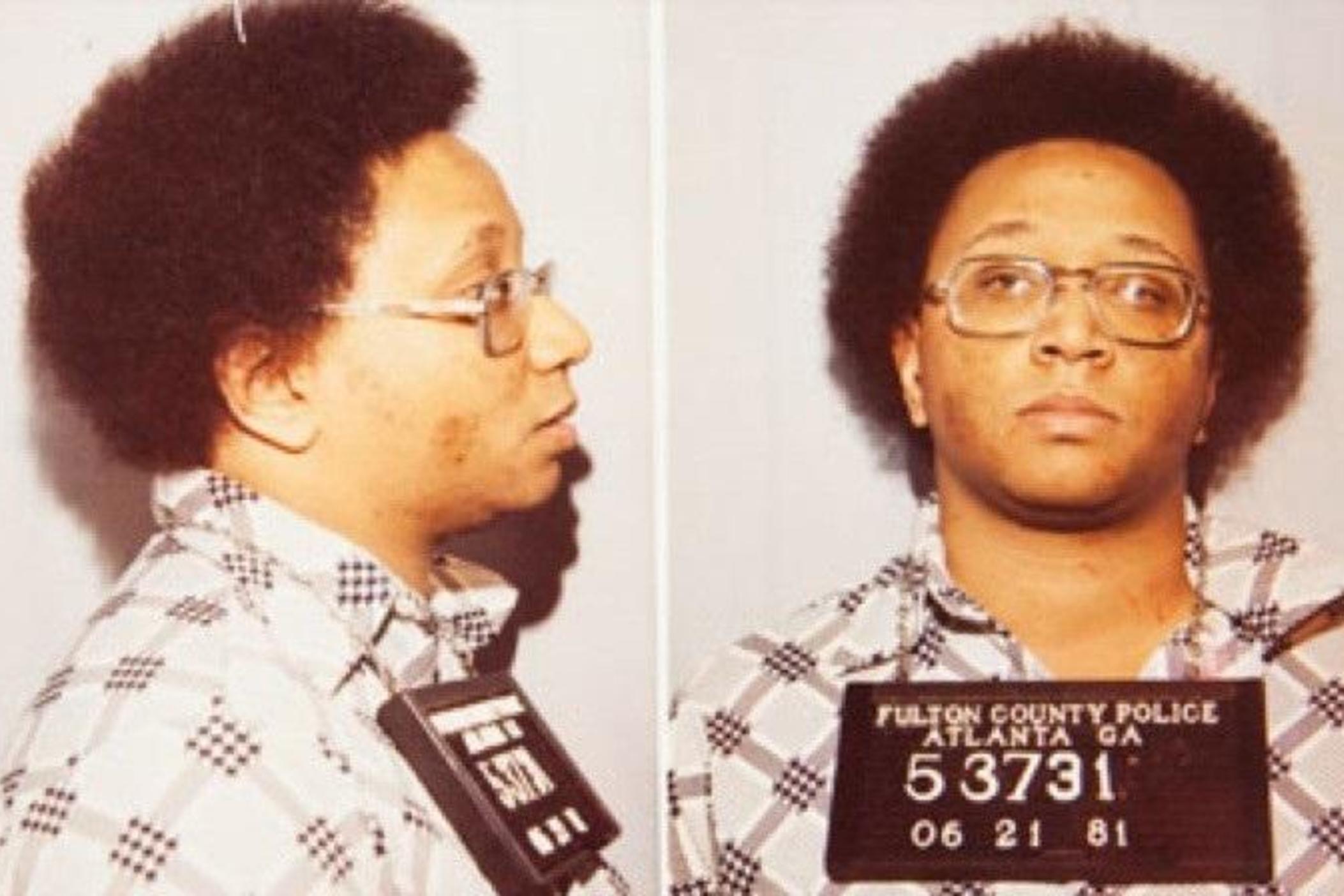
On May 22, 1981, a police stakeout near the Chattahoochee River heard a splash.
The officers saw a car driven by Wayne Williams.
Two days later, the body of a 27-year-old man was found in the river.
Williams was arrested and charged with that murder and with the murder of a 21-year-old man whose body had been found in the river earlier that year.
The prosecution built its case on fibers.
Carpet fibers found on the victims matched fibers from Williams's home and car.
Dog hairs and other trace evidence were presented as well.
The prosecution argued the river was a common dumping ground for Williams.
The defense argued the fiber evidence was circumstantial.
The defense said the police had rushed to charge Williams to quell public fear.
Whether the splash was definitively linked to Williams or to the victims is not established beyond the stakeout report.
That report is what the record holds.
It is the incident that turned the investigation toward one man.
It is also the moment the mothers' demands gained a named suspect.
The mothers had pushed for answers for nearly two years by then.
They had watched bodies surface in wooded areas, rivers, and vacant lots.
They had buried sons and daughters without a clear answer.
The stakeout gave them a name, but not a resolution.
The case against Williams rested on what the fibers could prove.
The fibers could place him near the victims.
The fibers could not place him at every death.
The record establishes two murders for which he was charged.
The record does not establish the rest.
THE TRIAL AND THE VERDICT
The trial began in January 1982 in Fulton County Superior Court.
The prosecution, led by the chief trial prosecutor, presented extensive forensic evidence.
Fibers found on the victims matched fibers from Williams's home and car.
Dog hairs and other trace evidence joined the fibers on the stand.
The defense argued the evidence was insufficient.
They argued Williams was a scapegoat, rushed to charge to quell public fear.
The jury deliberated.
On February 27, 1982, the jury found Wayne Williams guilty of two counts of murder.
He was sentenced to two consecutive life terms in prison.
Williams was never charged with the other killings.
Prosecutors suggested he was responsible for many of them.
That suggestion was not a charge.
It was not a conviction.
Whether Williams was responsible for the other 26 murders is not established by any conviction or charge.
Appeals were filed.
They were denied.
Williams has maintained his innocence throughout.
The record establishes two murders for which he was charged.
The record does not establish the rest.
AND THE STORY STILL ISN'T OVER
Williams has maintained his innocence throughout.
The record establishes two murders for which he was charged.
The record does not establish the rest.
He remains in prison in Georgia, serving two consecutive life sentences.
He has filed multiple appeals, all unsuccessful.
The other murders in the Atlanta Child Murders case remain officially unsolved.
Many investigators and prosecutors have stated their belief that Williams was responsible for them.
That is a belief, not a finding.
In 2019, Atlanta Mayor Keisha Lance Bottoms ordered a new review of the cases using DNA evidence.
No charges have resulted.
Whether that review will yield new charges or answers is not known.
The full truth of all 28 cases is not established.
Camille Bell, mother of victim Yusuf Bell, has continued to push for answers.
She has expressed frustration that the full truth was never established.
Her son was 9 years old.
He was one of the names read aloud at vigils, one of the photographs held up at press conferences, one of the cases that terrorized the city.
Faye Williams, mother of victim Earl Lee Terrell, pushed alongside her.
She wanted her son's case answered.
She wanted the city to look.
The mothers organized.
They spoke publicly while the investigation stalled.
They demanded answers when the bodies kept coming.
They watched a trial convict one man of two murders.
They watched the other cases go quiet.
The trial established what it established.
The trial did not establish the rest.
The mothers know the difference.
That is why they still ask.
That is why the case is not closed, not in the way they mean.
Williams remains in prison.
The other files remain open.
The DNA review remains unfinished.
A belief is not a verdict.
A theory is not a record.
The full truth of all 28 cases is not established.
That is what the record shows.
That is what the mothers have said all along.
Advertisement
You may also like
The $200,000 in $20 bills that vanished with a hijacker's leap into the night
The flight attendant took the note. She unfolded it. It said he had a bomb in his briefcase. The man called himself Dan Cooper,…
The 10:30 p.m. intruder, a pillowcase, and the two friends who freed themselves — how Polly Klaas's case broke open
The door was unlocked. It was October 1, 1993, around 10:30 p.m., and an intruder walked into a home in Petaluma, California, a small…
Six shots in the dark: the Amityville confession that came within hours
The neighbor saw a young man burst from the house first. The house was 112 Ocean Avenue in Amityville, New York. The young man…
The December 1978 search warrant that revealed a foul odor and stains under Gacy's home
He was 15. Robert Piest told his mother he was going to meet a contractor about a job. That was on December 11, 1978.…
Pilot Roger Peterson was not certified for instrument flight. So why did he take off into freezing drizzle?
Freezing drizzle was falling over Mason City Municipal Airport on the night of February 3, 1959. Visibility was low, and the sky was dark.…
The bloody glove that didn't fit: inside the LAPD mishandling that shaped the O.J. Simpson trial
He pulled. He tugged. He grimaced. On October 3, 1995, O.J. Simpson stood before the jury and struggled to pull a leather glove over…