The 2008 911 call that set off a search for a toddler who was never found alive
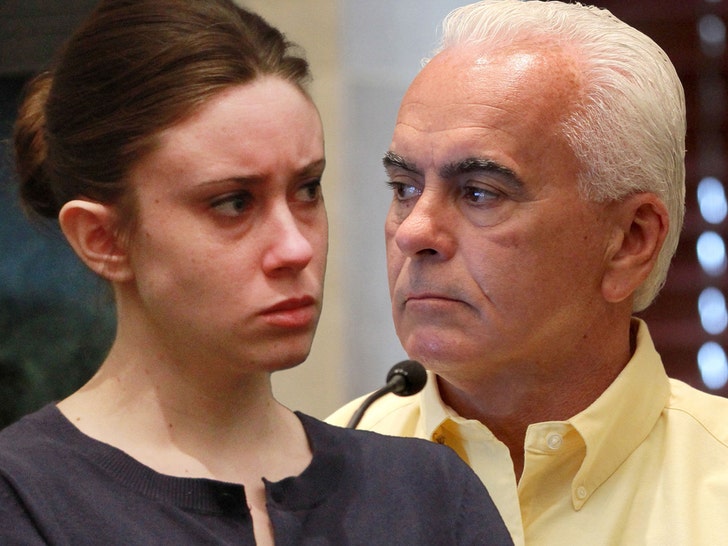
The 911 call came on July 15, 2008, from a house in Orlando, Florida.
Cindy Anthony was on the line, reporting her granddaughter missing.
The child was Caylee Anthony, two years old.
Relatives had last seen her about a month earlier, in mid-June 2008.
Cindy also told the dispatcher something else.
She said her daughter's car smelled like decomposition.
That one detail turned a missing-person report into something darker.
The call set off a search for a toddler who was never found alive.
What happened in that month between the last sighting and the call?
What happened in the days before the car began to smell?
What happened to a two-year-old who was simply not there anymore?
The exact circumstances of Caylee's disappearance are not established by the record.
The record shows the call, the odor, and a search that ended months later in a wooded area.
It does not show what happened in June.
It does not show what happened in the car.
That would require evidence, and the evidence that exists points in many directions at once.
THE MONTH BETWEEN
Caylee was last seen by relatives in mid-June 2008.
For a month, no one reported her missing.
Her mother, Casey Anthony, told investigators that Caylee had been kidnapped by a babysitter named Zenaida Fernandez-Gonzalez.
That babysitter was never located.
Investigators concluded she did not exist.
Casey gave multiple false statements to law enforcement about her daughter's whereabouts.
She changed the story.
She gave names.
She gave places.
None of it held.
Detectives found chloroform-related internet searches on the family computer.
They found a stain in Casey's car trunk.
Forensic testing indicated the stain was consistent with decomposition.
The car smelled, Cindy Anthony told the 911 dispatcher.
The month between mid-June and July 15 is a gap the record does not fill.
No one can say from the evidence when Caylee died.
No one can say how.
The cause of death is not determined.
The record does not establish when or how Caylee died.

That would require evidence.
The evidence that exists points in many directions at once.
Why did no one call sooner?
Why did the stories keep changing?
Why did a babysitter who did not exist carry so much weight?
Those questions remain open.
THE REMAINS AND THE ARREST
On December 11, 2008, a utility worker found skeletal remains in a wooded area about a quarter-mile from the Anthony family home.
The remains were identified as Caylee's.
The medical examiner ruled the death a homicide, though the cause of death could not be determined.
The record does not establish how Caylee died.
Casey Anthony was charged with first-degree murder, aggravated child abuse, aggravated manslaughter of a child, and four counts of providing false information to law enforcement.
She was accused, not convicted, of the death.
The charges came after months of searching, after the lies, after the car trunk stain that forensic testing indicated was consistent with decomposition.
What happened in those woods?
What happened before the remains were placed there?
What happened in the car, in the house, in the month between mid-June and the 911 call?
Those questions would follow the case into court.
The medical examiner testified that the cause of death could not be determined.
The manner was ruled a homicide, but the how remained open.
A child was gone.
Her remains were found a quarter-mile from where her grandparents still lived.
The arrest came swiftly after the identification.
The trial would not come for more than two years.
The case was circumstantial, built on a stain, a search history, and a series of false statements.
It was also a case about a two-year-old who was never found alive.
THE TRIAL AND THE VERDICT
The trial began in May 2011 and lasted six weeks, with cameras and commentators filling the Orlando courtroom.
The prosecution's case relied heavily on circumstantial evidence: the car trunk stain, the computer searches, and Casey's lies.
The defense argued that Caylee had accidentally drowned in the family pool and that the death had been covered up by George Anthony.
The defense also presented evidence that the remains had been placed in the woods months after the death, challenging the timeline.
The medical examiner testified that the cause of death could not be determined.
On July 5, 2011, the jury acquitted Casey of murder, child abuse, and manslaughter.
They convicted her on four counts of providing false information to law enforcement.
She was sentenced to four years with credit for time served.
She was released on July 17, 2011, having already served nearly three years in jail.

The verdict was met with public shock and widespread criticism.
How did the jury reach that verdict?
Did the circumstantial case fail to meet the standard of proof?
Did the defense's drowning theory raise enough doubt?
The record does not resolve those questions.
The cause of death was never established in court.
The competing narratives — accidental drowning or something else — remain unresolved.
What remains is the judgment: not guilty of murder, guilty of lying.
What remains is a two-year-old whose remains were found months after she was reported missing.
What remains is a case that still divides those who followed it.
The acquittal did not end the story.
It only turned the verdict into a controversy that has followed the family ever since.
AND THE STORY STILL ISN'T OVER
The acquittal did not end the story.
It only turned the verdict into a controversy that has followed the family ever since.
Casey Anthony was released from custody in July 2011.
She has since lived largely out of the public eye.
She has appeared in occasional interviews and legal filings.
The criminal appeals were filed.
They were denied.
The civil cases were not.
Zenaida Fernandez-Gonzalez, the woman Casey had falsely named as the kidnapper, sued for defamation.
A judge ruled in Fernandez-Gonzalez's favor in 2022, awarding damages.
George Anthony has remained in Florida.
In 2025, he filed a defamation lawsuit against his daughter.
He alleges she falsely accused him of abuse and involvement in Caylee's death.
Cindy Anthony has remained in Florida as well.
The family is still torn apart.
What remains unresolved is the cause of Caylee's death.
The record does not establish what happened.
No court ever resolved it.
Not at trial.
Not on appeal.
Not in the civil proceedings.
That would require evidence the case did not produce.
The verdict remains one of the most controversial in American legal history.
It is a legal outcome.
It is also a wound that has not closed.
Advertisement
You may also like
The $200,000 in $20 bills that vanished with a hijacker's leap into the night
The flight attendant took the note. She unfolded it. It said he had a bomb in his briefcase. The man called himself Dan Cooper,…
The 10:30 p.m. intruder, a pillowcase, and the two friends who freed themselves — how Polly Klaas's case broke open
The door was unlocked. It was October 1, 1993, around 10:30 p.m., and an intruder walked into a home in Petaluma, California, a small…
Six shots in the dark: the Amityville confession that came within hours
The neighbor saw a young man burst from the house first. The house was 112 Ocean Avenue in Amityville, New York. The young man…
The December 1978 search warrant that revealed a foul odor and stains under Gacy's home
He was 15. Robert Piest told his mother he was going to meet a contractor about a job. That was on December 11, 1978.…
Pilot Roger Peterson was not certified for instrument flight. So why did he take off into freezing drizzle?
Freezing drizzle was falling over Mason City Municipal Airport on the night of February 3, 1959. Visibility was low, and the sky was dark.…
The bloody glove that didn't fit: inside the LAPD mishandling that shaped the O.J. Simpson trial
He pulled. He tugged. He grimaced. On October 3, 1995, O.J. Simpson stood before the jury and struggled to pull a leather glove over…