The 1981 bridge stakeout that caught a white station wagon — then let it go
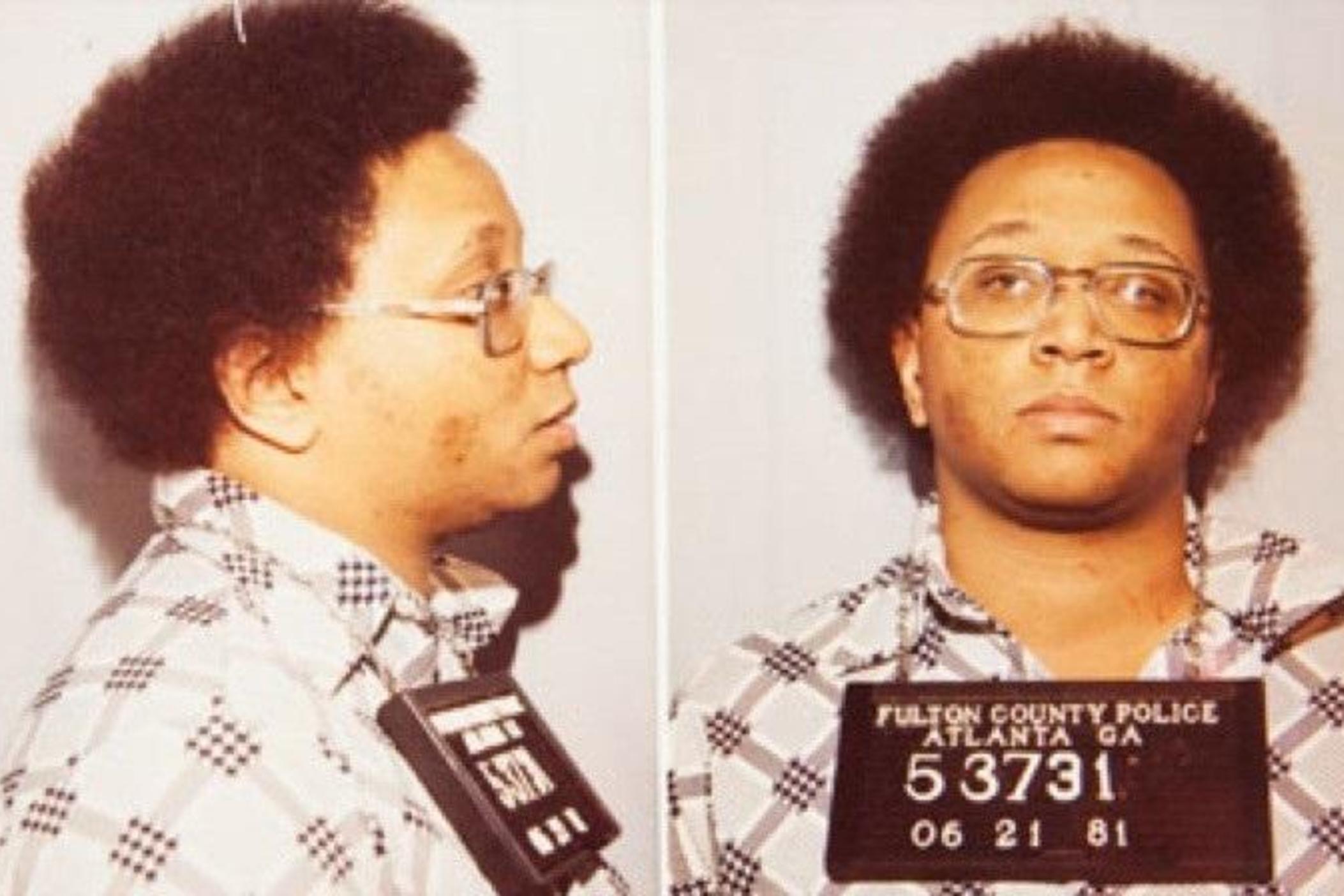
The officer was on a bridge over the Chattahoochee River.
It was May 22, 1981, and he heard a splash.
He looked down and saw a white station wagon below, driven by a 23-year-old man named Wayne Williams.
Williams was questioned that night.
He was released that night.
What caused the splash is not established by the record.
Not by the officer's report. Not by the surveillance logs. Not by anything later introduced in court.
The bridge stakeout was part of a 24-hour surveillance operation that began in June 1981.
It began because bodies had been found in the river.
It began because a pattern had emerged.
The officer was watching for that pattern when he heard the splash.
He saw the car.
He saw the driver.
He let the driver go.
Why was he released?
What did the splash mean?
Was it something thrown? Something dropped? Something heavier than the current?
That would require evidence.
The record holds the moment: a white station wagon, a bridge, a splash, a release.
It holds the driver's name.
It does not hold an answer.
THE FIRST REPORTS
The first widely recognized victim was a 14-year-old boy reported missing in July 1979.
His body was found later that same month.
Between July 1979 and May 1981, at least 28 Black children, adolescents, and young adults disappeared or were found murdered in the Atlanta metropolitan area.
The victims ranged in age from 7 to 28.
Many were found strangled or asphyxiated, often in wooded areas or dumped in the Chattahoochee River.
The case became known as the Atlanta Child Murders.
The city's Black community, already wary of police, pressed for action.
The investigation was hampered by jurisdictional disputes between Atlanta city police and Fulton County authorities.
It was also hampered by community distrust.
Who was responsible for the first death?
Who was responsible for the 27th?
Who was responsible for any of them?
That would require evidence, and for months the record held none.
The record names the first victim.
It does not name a single perpetrator for these early deaths.
That connection is not established.
Families waited.
Mothers organized.
Authorities struggled to coordinate, and the bodies kept coming.
THE TURNING POINT
In May 1981, the bodies of two young men were found in the Chattahoochee River.
Those two deaths became the murders Wayne Williams was charged with.
Police began staking out bridges over the river after a pattern emerged of bodies in the water.
In June 1981, a 24-hour surveillance operation focused on those bridges.
On May 22, 1981, an officer on a bridge heard a splash.
He saw a white station wagon.
The driver was Wayne Williams.
He was questioned that night.
He was released.
Whether the splash was connected to the bodies is not established.
No eyewitness placed Williams at any murder scene.
The surveillance continued.
Later, fiber evidence from Williams’s home, his car, and a bedspread was matched to fibers on the bodies of the two men.
The same fibers were matched to several other victims.
An FBI forensic expert testified the matches were statistically significant.
The defense argued the fibers were common.
The defense argued the matches were inconclusive.
The momentum had narrowed onto one person.
The release created the doubt.
The record holds the splash, the car, the questioning.
It does not hold the connection.
THE FIBERS AND THE TRIAL
The arrest came on June 21, 1981.
Williams was charged with two murders: those of a 27-year-old man and a 21-year-old man, both pulled from the Chattahoochee River.
The trial opened in January 1982 in Fulton County Superior Court.
The prosecution built its case on fibers.
Fibers from Williams's home, his car, and a bedspread were matched to fibers found on the bodies.
An FBI forensic expert testified the matches were statistically significant.
The defense answered with a different reading.
The fibers were common, they argued.
The matches were inconclusive.
Williams, they said, was a scapegoat.
On February 27, 1982, the jury returned.
Guilty on both counts.
The judge sentenced him to two consecutive life terms.
The verdict resolved two murders.
It did not resolve the rest.
Prosecutors argued at trial that Williams was responsible for many of the other killings.
He was never charged with them.
Whether he was responsible for those deaths is not established by the record.
No murder weapon was ever found.
No eyewitness placed him at any murder scene.
The conviction stood on the fibers, the river, and the timing.
The verdict was a resolution.
It was also a narrowing.
AND THE STORY STILL ISN'T OVER
Wayne Williams remains in a Georgia state prison.
He has been denied parole multiple times.
His appeals have all failed.
The case is officially closed.
It is closed, and it is also unresolved.
Many victims' families and some investigators believe other perpetrators were involved in the other killings.
The Atlanta Police Department reopened the case in 2005.
They re-examined evidence using DNA technology.
No new charges were filed.
Several of the victims' mothers kept advocating for answers.
They kept asking until their deaths.
The case has been the subject of numerous documentaries and books.
No new convictions have resulted.
The record does not establish what comes next.
Any future legal action is not in the record.
Any new evidence is not in the record.
The conviction stood on the fibers, the river, and the timing.
That verdict was a resolution for two deaths.
It was also a narrowing of a larger horror.
The other families were left outside that resolution.
They were left with questions the trial did not answer.
The case is closed, but the questions remain.
That would require evidence.
That would require a reopening.
Neither is in the record.
She was on the ground below, and the river kept moving.
Advertisement
You may also like
The love letters that vanished from police custody after the 1922 double killing
The crabapple tree stood in a lane called Lovers' Lane, in Phillipsburg, New Jersey, near New Brunswick. On the evening of September 14, 1922,…
The clip-on tie that held no answers after the skyjacker vanished — FBI's 45-year puzzle
The clip-on tie sits in an FBI evidence file, a strip of fabric no wider than a man's hand. It was recovered from the…
The 8:44 p.m. video on Paul Murdaugh's phone that cracked Alex's alibi
He called at 10:07 p.m. On June 7, 2021, Alex Murdaugh told emergency dispatchers in Colleton County, South Carolina, that he had found the…
The parole agent who spotted a face in a sketch — and what it took to bring Polly home
A parole agent looked at a composite sketch and saw a face he knew. The date was December 4, 1993. The face belonged to…
The unpaid $33.5 million judgment the Goldman family still pursues after Simpson's death
A jury in a 1997 civil trial found O.J. Simpson liable for the wrongful deaths of Nicole Brown Simpson and Ronald Goldman. The award…
The .35-caliber Marlin rifle found in a marsh that pointed to a calm 23-year-old
The marsh gave it back on a day the record does not name. A .35-caliber Marlin rifle, rusted and discarded, was found in the…