The .35-caliber Marlin rifle found in a marsh that pointed to a calm 23-year-old
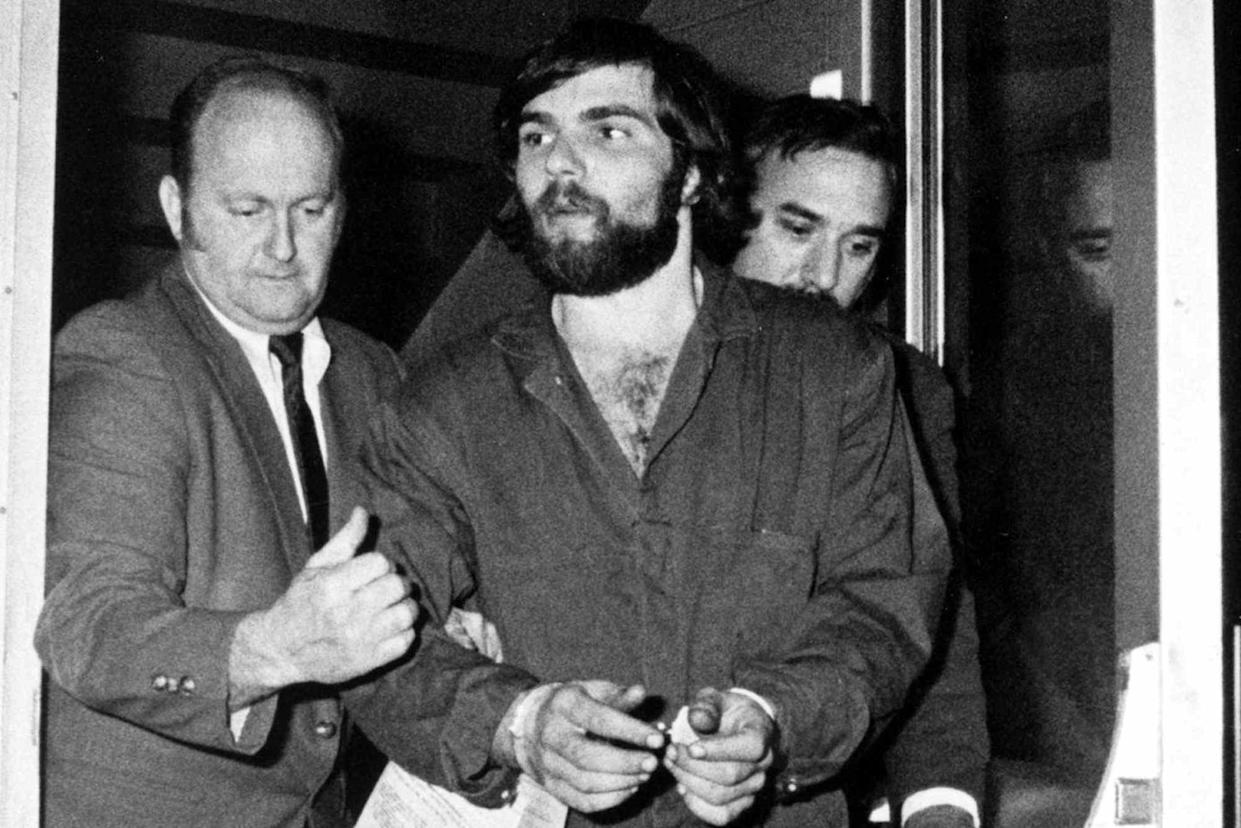
The marsh gave it back on a day the record does not name.
A .35-caliber Marlin rifle, rusted and discarded, was found in the water nearby, according to investigation evidence.
Ballistics matched that rifle to the bullets recovered from the victims, according to investigation evidence.
Every round in the house, from the father to the youngest child, came from that one gun.
The rifle is a key turning point in the investigation, according to investigation evidence.
Not because it was hidden well.
Because it was found at all.
The exact location of the marsh, and the person who found the rifle, are not in the record.
That part of the story is gone.
What remains is the match: metal to metal, barrel to wound.
The 23-year-old survivor stood at the scene while officers worked.
Police noted his calm demeanor, according to investigation evidence.
He had called from somewhere else, not the house.
He said he came home from work to find the bodies.
He did not sound like a man who had just lost six family members.
He sounded like a man waiting.
The rifle in the marsh was the thing that turned suspicion into focus.
It is a weapon.
It is also a question.
How does a gun end up in water, miles from the bodies, unless someone put it there?
The investigation would follow that question.
The rifle pointed one way.
The calm pointed the same way.
THE 911 CALL
The call came on November 13, 1974.
Police were sent to 112 Ocean Avenue in Amityville, New York, a village on Long Island's South Shore, according to the case record.
Inside the large Dutch Colonial house, officers found six bodies.
The father, the mother, and four of their children.
All had been shot with a .35-caliber Marlin rifle at close range while they slept, the case record states.
The sole survivor of the household was 23-year-old Ronald "Butch" DeFeo Jr.
He initially claimed he had come home from work to find the bodies.
He said he had just arrived.
He said he had found them like that.
The record does not establish the exact time of the call.
The record does not establish the content of the 911 call.
What the investigation evidence does establish is this: he had not called from the house.
He called from a nearby location.
His demeanor was notably calm.
A man reports six dead relatives.
A man speaks without visible distress.
Officers noted the mismatch.
The horror inside the house was absolute.
The report outside it was flat.
That calm would not last the day.
THE CONFESSION
Within hours, detectives began to suspect DeFeo Jr.
Not because of what he said.
Because of what he did not say.
He claimed he had been at work and returned to find the bodies.
Police noted the inconsistencies quickly.
He had not called from the house, but from a nearby location.
His demeanor was notably calm.
That calm did not last.
He was taken to the station, and he confessed.
The confession was detailed.
It named the weapon.
It described the order of the shootings.
It placed him inside the house that night.
Then the story shifted.
DeFeo Jr. later claimed he was coerced.
He said his statements were not voluntary.
The defense argued the confession was the product of police pressure.
What pressure?
What was said in that room?
The specific details of the alleged coercion are not in the record.
That is not established.
The court ruled the confession admissible.
The trial moved forward on those words.
The calm 23-year-old became the accused.
The detailed confession became the center of the case.
It was truth.
It was also a product of the station house.
The record holds both.
It does not resolve the tension between them.
THE TRIAL
The charge was filed as six counts of second-degree murder, according to the case record.
The trial opened in October 1975 in Suffolk County Court, the case record shows.
The defense argued that DeFeo Jr. was insane at the time of the killings.
He heard voices, the defense claimed, and he was under the influence of drugs.
The prosecution countered that he was sane and had acted deliberately.
Family conflict and financial gain were the possible motives, prosecutors argued.
The specific evidence of that conflict and that gain is not detailed in the record.
It is not established in the record.
The jury heard the voices and the drugs and the motives.

The jury rejected the insanity defense.
It found him guilty on all six counts, according to the trial outcome.
The sentence came down as six consecutive terms of 25 years to life.
Six terms.
Consecutive terms.
One for the father, one for the mother, one for each of the four children.
They ran one after another, not together.
The weight of that is the weight of the sentence itself.
A single term of 25 years to life would have been a lifetime.
Six of them, stacked, meant the rest of his life and beyond.
The insanity plea was the only door out, and the jury closed it.
The record holds the verdict.
It holds the sentence.
It does not hold the details of the family conflict or the financial gain.
That would require evidence.
AND THE STORY STILL ISN'T OVER
An appeal was filed, arguing that the confession was coerced and that the trial judge had erred in the jury instructions.
The appeal record shows those arguments.
The conviction was upheld.
The appeal outcome does not say why, only that it was.
DeFeo Jr. has remained in prison.
Parole has been denied multiple times, the case record states.
Most recently, it was denied in 2021.
The current status of any pending parole or appeal is not in the record.
That would require evidence.
The house at 112 Ocean Avenue was sold.
It became the subject of the "Amityville Horror" book and film franchise.
The haunting claims were widely debunked, the case record states.
The family's tragedy was overshadowed by that fictionalized narrative.
The real record is the six bodies, the .35-caliber Marlin rifle, the confession, the conviction.
The fiction is the rest.
The house was extensively renovated.
Its address was changed to avoid notoriety.
The surviving relatives largely stayed out of the public eye.
The story of the place is not the story of the people.
It is a story of a calm 23-year-old, a rifle in a marsh, and a conviction that held.
It is also a story of what was never thoroughly explored.
The investigation did not fully examine the claims of drug use and family dysfunction.
That might have provided context.
It did not change the outcome.
The legal saga continues.
The tragedy remains documented, and the fiction remains debunked.
Advertisement
You may also like
Three rock icons boarded a plane; a pregnant widow learned the news from reports
A coin, tossed in the air, decided who would live and who would fly. Tommy Allsup lost his seat on the plane to Ritchie…
The axle number on a Ryder truck that led FBI agents to a rental clerk and a suspect
At 9:02 a.m. on April 19, 1995, a truck bomb exploded outside the Alfred P. Murrah Federal Building in Oklahoma City, Oklahoma. The blast…
The jailhouse confession that broke the Manson case — and the raid that missed
She was in jail for something else. Susan Atkins, charged in an unrelated case, sat in a cell and talked. She told her cellmate,…
The phone calls a massage therapist recorded that changed a murder trial's story
She was a massage therapist in Fresno, and she met Scott Peterson in November 2002. He told her he was single. She did not…
The flight logs that tied Epstein's jet to underage girls — and the FBI files that still won't close
The plane had a name before the case did. The "Lolita Express," they called it — Epstein's private jet, a Boeing 727 that shuttled…
The FBI named the wrong man the night before the Tsarnaev brothers were caught
On April 18, 2013, the FBI released images of two suspects taken from Lord & Taylor surveillance footage. That same night, the FBI initially…