The love letters that vanished from police custody after the 1922 double killing
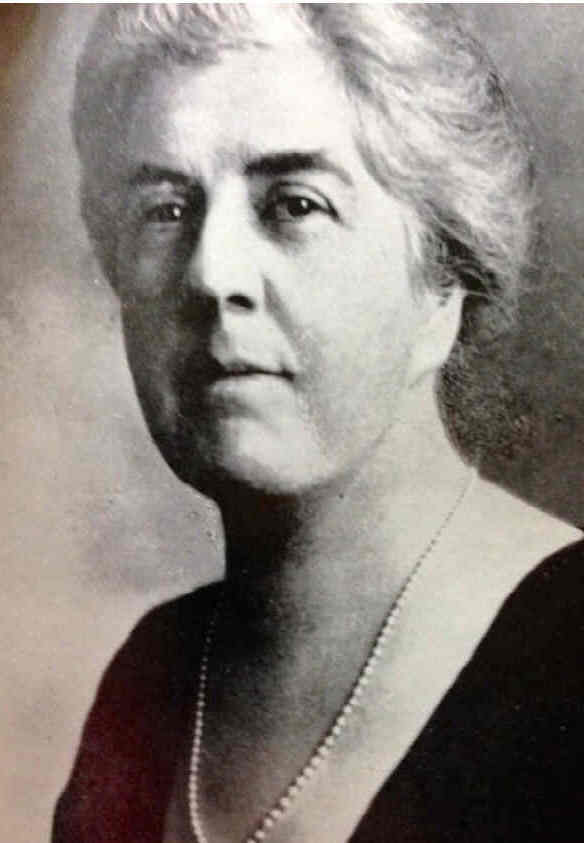
The crabapple tree stood in a lane called Lovers' Lane, in Phillipsburg, New Jersey, near New Brunswick.
On the evening of September 14, 1922, two bodies were found beneath it.
The victims had been shot.
Edward Wheeler Hall was an Episcopal priest, rector of St. John's Church.
Eleanor Reinhardt Mills was a married woman who sang in his choir.
They had been having an affair.
The bodies were arranged in a suggestive pose.
Love notes from Mills to Hall lay scattered nearby.
The notes were there, in the grass, in the open.
Police recovered them.
Then the love notes disappeared from police custody.
That loss is in the record.
It is a fact that they were recovered, and a fact that they vanished.
Who took them is not established by the record.
Why they vanished is not established by the record.
The record only holds the gap: here, then gone.
The murder weapon, a .32-caliber revolver, was never found.
The scene itself was trampled by onlookers before it could be secured.
Middlesex County officials failed to close off the ground.
So the evidence lay open, and the evidence walked away.
The notes were the most intimate thing left at the tree.
They were the proof of the affair, written in her hand.
And they were the first thing to disappear.
That would require evidence.
The record does not provide it.
THE TRAMPLED SCENE AND THE MISSING GUN
The first officers arrived while the bodies were still warm.
Middlesex County officials did not rope off the lane.
Sightseers walked through the crabapple tree before the evidence was collected.
They picked up notes, moved objects, left footprints over the scene.
What exactly the onlookers destroyed is not in the record.
The record shows only that the scene was trampled, and that the case would pay for it.
The murder weapon was a .32-caliber revolver.
It was never found.
It was never recovered, never produced, never matched to anyone.
Whether the missing gun was connected to the vanished letters is not in the record.
The love letters between Hall and Mills were recovered.
They were the first thing to disappear.
They were collected as evidence, and then they were gone from police custody.
Not misplaced in a drawer. Not returned to a family.
Gone.
The case went cold.

It stayed cold for years.
Then the tabloid press began pushing, and the Mills family hired a private detective.
A grand jury was convened in 1926.
The investigation reopened, but the mistakes of the first hours never came back.
The scene was already lost.
The gun was already gone.
The letters were already missing.
The record does not say who took them.
It does not say where they went.
It says only that they were recovered, and that they were later gone.
THE WITNESS FROM THE HOSPITAL BED
The state’s case rested on one witness.
She was a farmer who raised pigs, and the newspapers called her the “Pig Woman.”
She claimed she had seen the murders from a distance while tending her animals.
She testified from a hospital bed, propped up and gravely ill.
Under cross-examination, her account began to come apart.
The defense showed that she had a criminal record.
They showed that her story had changed over time, in detail after detail.
Whether she actually saw the murders is not established; the record only says she claimed she did.
The prosecution had no physical evidence tying the four defendants to the crime.
There was no murder weapon, no fingerprints, no witness who could place them at the scene.
There were only her words, spoken from a sickbed.
The turning point was the collapse of her credibility.
One inconsistency led to another, and the jury watched it happen.
The state’s case did not survive the fall.
It was a case built on a single voice, and that voice broke.
The courtroom drama was real, but so was the frustration.
A double killing, four people charged, and the whole weight of the prosecution resting on a witness the defense could dismantle.
The record does not say what she truly saw.
It says only what she claimed, and what she claimed could not hold.
THE CIRCUMSTANTIAL CASE AND THE VERDICT
The trial opened in November 1926 in Somerville, New Jersey.
Four defendants sat before the trial judge: the widow, her two brothers, and her cousin.
All four were charged with first-degree murder.
Prosecutor Alexander Simpson built his case on circumstance.
He leaned on the testimony of the witness who spoke from a hospital bed.
He leaned on alleged threats the widow had made against Eleanor Mills.
That was the prosecution's story: a woman who threatened, a witness who claimed she saw.
The defense answered with a simpler argument.
The evidence was entirely speculative, they said.
No motive had been proven.
No opportunity had been proven.
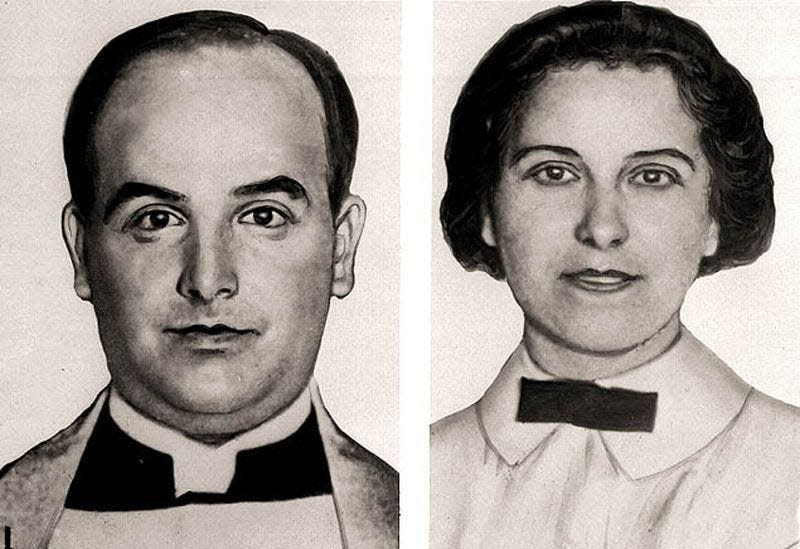
No weapon, no letters, no physical link — only a story that shifted.
The defense called the whole case a construction of suspicion.
The jury heard both readings of the same facts.
One reading turned threats and a dying witness into murder.
The other reading turned them into nothing at all.
The trial ran long, day after day of testimony.
Then the jury left the courtroom.
They deliberated for only a few hours.
On December 3, 1926, they returned.
The verdict was not guilty for all four defendants.
The record shows the verdict.
The record does not show what the jury actually believed during those few hours.
That is not established.
The case was never reopened.
Four people walked free, and the questions walked with them.
AND THE STORY STILL ISN'T OVER
The Hall-Mills murder remains officially unsolved.
The widow lived quietly until her death in 1942.
Her brothers died in 1932 and 1933.
The cousin died in 1940.
James Mills, the victim's husband, died in 1941, never having been charged.
The case has been the subject of numerous books and documentaries.
No definitive resolution has ever been reached.
The lost love letters and the missing murder weapon remain unaccounted for.
There is no pending hearing, motion, or decision.
The next concrete step is not in the record.
The case was never reopened.
That is not established.
Four people walked free, and the questions walked with them.
The questions had names: the letters, the gun, the witness who testified from a hospital bed.
The letters were recovered, then vanished from police custody.
The gun was never found.
The witness's account collapsed under cross-examination.
What remains is a file, a crabapple tree, and a verdict.
What remains is a verdict that answered the charge but not the question.
Who took the letters?
Why were they taken?
Where is the revolver?
That would require evidence.
The record holds the acquittals.
The record holds the deaths.
The record does not hold the letters or the gun.
It is a closed case.
It is also an open wound.
Advertisement
You may also like
Three rock icons boarded a plane; a pregnant widow learned the news from reports
A coin, tossed in the air, decided who would live and who would fly. Tommy Allsup lost his seat on the plane to Ritchie…
The axle number on a Ryder truck that led FBI agents to a rental clerk and a suspect
At 9:02 a.m. on April 19, 1995, a truck bomb exploded outside the Alfred P. Murrah Federal Building in Oklahoma City, Oklahoma. The blast…
The jailhouse confession that broke the Manson case — and the raid that missed
She was in jail for something else. Susan Atkins, charged in an unrelated case, sat in a cell and talked. She told her cellmate,…
The phone calls a massage therapist recorded that changed a murder trial's story
She was a massage therapist in Fresno, and she met Scott Peterson in November 2002. He told her he was single. She did not…
The flight logs that tied Epstein's jet to underage girls — and the FBI files that still won't close
The plane had a name before the case did. The "Lolita Express," they called it — Epstein's private jet, a Boeing 727 that shuttled…
The FBI named the wrong man the night before the Tsarnaev brothers were caught
On April 18, 2013, the FBI released images of two suspects taken from Lord & Taylor surveillance footage. That same night, the FBI initially…