The 1999 grand jury vote that ruled the Ramseys' fate — until one DA said no
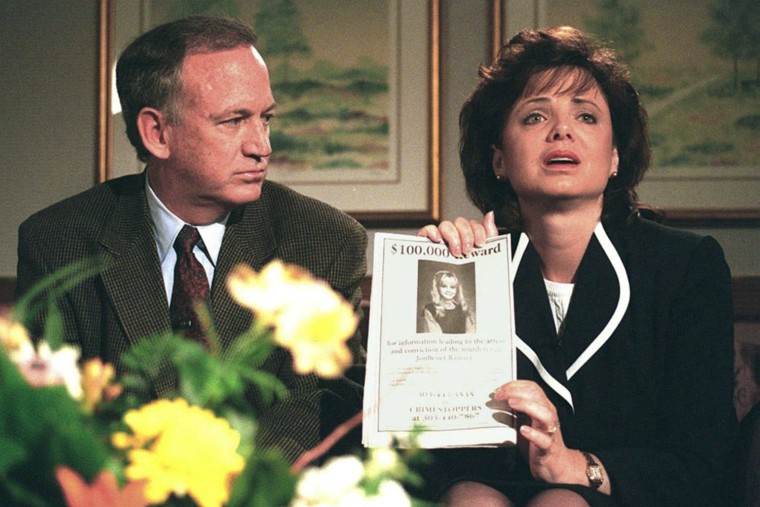
Nineteen ninety-nine. A grand jury in Boulder voted to indict John and Patsy Ramsey on charges of child abuse resulting in death.
The vote happened. It is a documented fact.
Then the district attorney, Alex Hunter, declined to sign the indictment. He cited insufficient evidence.
So the indictment was never filed. No one was ever arrested. No one was ever tried for the murder of JonBenét Ramsey.
The grand jury's decision was kept secret for fourteen years. In 2013, the documents were released, and the vote became public.
The record shows the vote. The record does not show the crime.
Why did Hunter say no? His full reasoning is not in the record. That is not established. It remains a question the documents leave open.
Was it doubt about the evidence? Was it doubt about the witnesses? Was it doubt about what a jury would believe?
That would require evidence.
The vote was a secret that changed everything. The refusal to sign made it a secret that changed nothing, officially.
The case remains unsolved. It is open. It is cold.
A grand jury believed there was probable cause. A district attorney believed there was not enough to prosecute. Both decisions are on paper. Neither explains the other.
The weight of that choice sat on the Ramseys for years. Then Patsy Ramsey died in 2006. Then the documents came out in 2013.
The vote was real. The refusal was real. The gap between them is where the story still lives.
THE 911 CALL AND THE RANSOM NOTE
The call came at 5:52 a.m. on December 26, 1996.
Patsy Ramsey called 911 to report her 6-year-old daughter, JonBenét, missing.
The operator heard a woman's voice, frantic, saying the child was gone.
A ransom note demanding $118,000 was found on the stairs.
The amount matched John Ramsey's bonus that year — a detail the note's author would have known.
The note was written on paper from the family's own home.
That made it a key piece of evidence, and a strange one.
Who writes a ransom note on the victim's own stationery?
That question would follow the case for decades.
Who wrote the note is not established in the record.
Later that afternoon, JonBenét's body was discovered in the basement.

Her father, John Ramsey, found her there.
She was on the ground below.
The ransom note promised she would be safe if the family followed instructions.
She was not.
The chaos of that morning bled into the investigation.
The crime scene was not secured properly.
Officers allowed friends and family to move through the house.
John Ramsey carried his daughter's body up from the basement before the scene was processed.
That early misstep would haunt every later finding.
Evidence was touched. Positions were shifted. The record of that room was never clean.
The morning was a blur of panic and confusion.
It became a case built on what was left behind.
THE AUTOPSY AND THE DNA
The coroner performed the autopsy on December 27, 1996.
He determined the cause of death was asphyxia due to strangulation.
A skull fracture was also present.
The weapon was a garrote made from a broken paintbrush handle and cord.
It was fashioned from items found in the house.
The cord was pulled tight around the child's neck.
The skull fracture came from a blow to the head.
The autopsy could not establish who delivered that blow.
DNA evidence was collected from under JonBenét's fingernails.
DNA was also found in her underwear.
The profiles did not match any family member.
That was the finding in the initial testing.
It was a finding that pointed away from the family.

It was also a finding that pointed nowhere else.
In 2008, new DNA testing was performed.
The testing again excluded the Ramsey family from the evidence.
The district attorney's office formally cleared them that year.
A schoolteacher had confessed to the murder.
His confession was false.
DNA evidence exonerated him.
The identity of the killer is not established by the record.
The record shows the forensic findings.
It shows the exclusions.
It does not show who was in the basement.
The garrote remains in evidence.
The DNA profile remains unmatched.
The case remains officially unsolved.
TWO THEORIES, ONE CASE
Steve Thomas resigned in 1998.
The lead detective was frustrated with the district attorney's office, and he later wrote a book critical of the investigation.
Lou Smit saw it differently.
A veteran detective who worked for the district attorney's office, Smit argued an intruder was responsible.
Two theories, one case.
Family involvement or an intruder — both readings rest on the same facts: the ransom note, the DNA, the garrote.
The ransom note was written on paper from the family's home.
The DNA from under JonBenét's fingernails and from her underwear matched no family member.
The garrote was made from a broken paintbrush handle and cord.
Which theory is correct is not established by the record.
In 1999, a grand jury voted to indict John and Patsy Ramsey on charges of child abuse resulting in death.
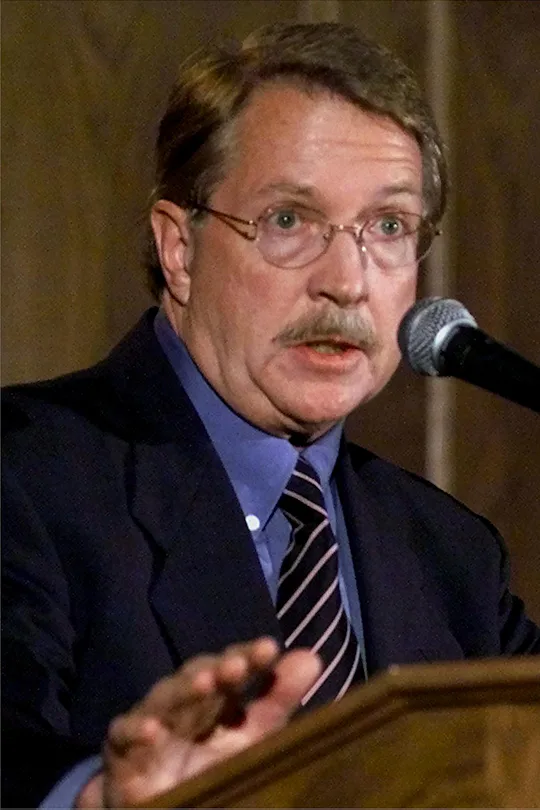
District Attorney Alex Hunter declined to sign the indictment.
He cited insufficient evidence.
The vote was kept secret until 2013, when the documents were released.
The grand jury voted; the DA said no.
No one was ever arrested or tried for the murder.
The case became one of the most publicized unsolved murders in American history.
Not because the evidence was clear.
But because the evidence could be read two ways.
The public read it one way.
The DA read it another.
The grand jury read it one way.
The record shows the vote, not the crime.
That would require evidence.
AND THE STORY STILL ISN'T OVER
Patsy Ramsey died of ovarian cancer in 2006.
John Ramsey has kept the case alive since.
He has continued to advocate for renewed investigation.
In 2023, the Boulder Police Department announced it was working with the Colorado Cold Case Review Team.
They are re-examining evidence using new DNA technology.
What that technology will find is not known.
It is not established.
The record shows the vote, not the crime.
No one has ever been charged.
The grand jury's 1999 vote remains a documented fact.
It is a fact that the vote happened.
It is not a fact that the crime was committed by anyone named.

The case remains open.
It remains unsolved.
New technology might change everything.
It might change nothing.
That would require evidence.
The evidence is being re-examined.
The DNA is being tested again.
The paintbrush handle, the cord, the ransom note — all of it is on the table again.
John Ramsey has asked for this for years.
He has watched the theories come and go.
He has watched the suspects come and go.
He has watched his wife die without an answer.
Patsy Ramsey was never charged.
She was never tried.
She was indicted by a grand jury that the district attorney refused to act on.
That is the weight of the case.
A vote that meant nothing legally.
A vote that meant everything publicly.
The Boulder Police Department is still working.
The Colorado Cold Case Review Team is still working.
The case remains open.
The case remains unsolved.
That is where the story stands.
Not with a conviction.
Not with a confession.
Not with a closed file.
With a re-examination.
With a question.
With a vote that still carries weight.
Advertisement
You may also like
The ransom note left on a windowsill that changed a nation's laws
The crib was empty. Anne Morrow Lindbergh discovered the 20-month-old missing around 10 p.m. on the evening of March 1, 1932. On the nursery…
The trapdoor beneath a contractor's home that hid 29 bodies — and the teenager who led police to it
December 11, 1978. A 15-year-old boy named Robert Piest told his mother he was going to meet a contractor about a job. He never…

The cellphone video that broke Alex Murdaugh's alibi — and the double murder trial that followed
The video is eight seconds of darkness, dogs barking, and a voice. Paul Murdaugh recorded it at the dog kennels on the family's Moselle…
The rifle that six sleeping DeFeos were shot with — and the son who confessed
The call came on November 13, 1974. A neighbor placed it to the Suffolk County Police Department. Officers arrived at 112 Ocean Avenue in…
The floppy disk trace that unmasked a church leader as BTK after 30 years
A floppy disk arrived at a Wichita newspaper in 2004, sent by someone claiming to be the BTK killer. It was a taunt, a…
The notebook found beside Brian Laundrie's remains that changed the Gabby Petito case
On October 20, 2021, Brian Laundrie's remains were found in the Carlton Reserve in Florida. A notebook lay nearby. Inside that notebook was a…