The 2005 massage report that launched a 14-year Epstein investigation
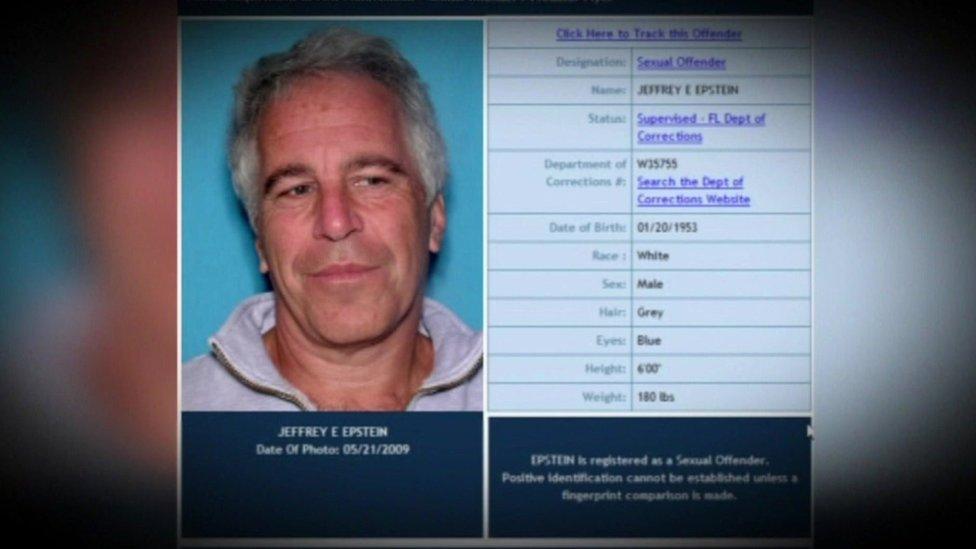
The call came in 2005.
A mother in Florida told Palm Beach police that her 14-year-old stepdaughter had been recruited by a woman to give a massage at a mansion.
The stepdaughter said she was sexually abused during that massage.
The mansion belonged to Jeffrey Epstein, a wealthy financier with connections to politicians and royalty.
That single report—not any online theory—is the documented starting point.
It is the beginning of what became a 14-year investigation.
One phone call, one mother, one stepdaughter.
The record does not establish the mother's name, or the stepdaughter's.
The stepdaughter is a minor and is not named in the record.
The detective who took the report is referred to only as the lead detective.
What did he write down that day?
What did he think, listening to a mother describe a massage at a mansion?
What did he do next?
That would require evidence.
What remains is the report itself, and the spiral that followed.
THE INVESTIGATION
The lead detective interviewed multiple underage victims, one after another.
Over the following months, Palm Beach police identified dozens of underage girls who described similar encounters.
Not a handful. Dozens.
The exact number of victims is not specified in the record; it says "dozens."
Each girl told a version of the same story: a recruiter, a massage, a mansion.

The FBI joined the investigation.
Federal prosecutors in Miami, led by U.S. Attorney Alexander Acosta, built a case that could have resulted in federal charges of sex trafficking of minors.
The evidence included testimony from multiple victims, flight logs, and financial records.
It was a case that had scale.
In 2006, Epstein was arrested.
The arrest came after months of interviews, after the girls had been counted, after the flight logs had been pulled.
It is a timeline with a shape.
It is also a timeline with a gap.
The investigation moved from a single mother's report to a federal case.
The girls were interviewed. The records were examined. The charges were prepared.
What happened between the arrest and the plea?
That would require evidence.
THE DEAL
The federal case was built. The charges were prepared. The FBI was in.
In 2007, Alexander Acosta, then the U.S. Attorney for the Southern District of Florida, approved a non-prosecution agreement.
The agreement allowed Epstein to plead guilty to lesser state charges. It avoided federal prosecution.
The specific terms of that agreement are not detailed in the record.
What did the deal contain? What was traded away? What was shielded from a federal trial?
That would require evidence.
In 2008, Epstein pleaded guilty to two state charges: soliciting a minor for prostitution and procuring a minor for prostitution.
He was sentenced to 18 months in county jail. He was released after 13 months with extensive work-release privileges.
The state prosecutor who oversaw those charges is not named in the record. He is referred to only as the state prosecutor.
Thirteen months. Work release. A federal sex-trafficking case set aside.
The agreement was later criticized as overly lenient. Acosta would resign as U.S. Secretary of Labor in 2019 amid criticism over it.
The girls had been interviewed. The records had been examined. The charges had been prepared.
What happened between the arrest and the plea?
That would require evidence.
THE REOPENING
Thirteen years after the first report to Palm Beach police, the case moved again.
In 2018, the Miami Herald published an investigative series by reporter Julie K. Brown that re-examined the case.
The series brought renewed public attention.
What the series contained in detail is not in the record beyond its existence and its impact.
That distinction matters, because the attention was real.
In July 2019, federal prosecutors in New York charged Epstein with sex trafficking of minors and conspiracy.
He pleaded not guilty.
The trial was scheduled for 2020.
The evidence was not heard.
The verdict was not reached.
The trial was scheduled for 2020.
On August 10, 2019, Epstein died by suicide in his cell at the Metropolitan Correctional Center in New York.
The federal charges were dismissed after his death.
No conviction.

No acquittal.
No trial.
The federal case ended with a death certificate and a dismissal order.
The momentum was abrupt, then it was gone.
What would have been established in court was never established at all.
AND THE STORY STILL ISN'T OVER
Epstein was dead, and the federal case against him died with him.
The judge dismissed the charges. The trial never happened.
What would have been tested in court was never tested at all.
The reckoning moved to other rooms.
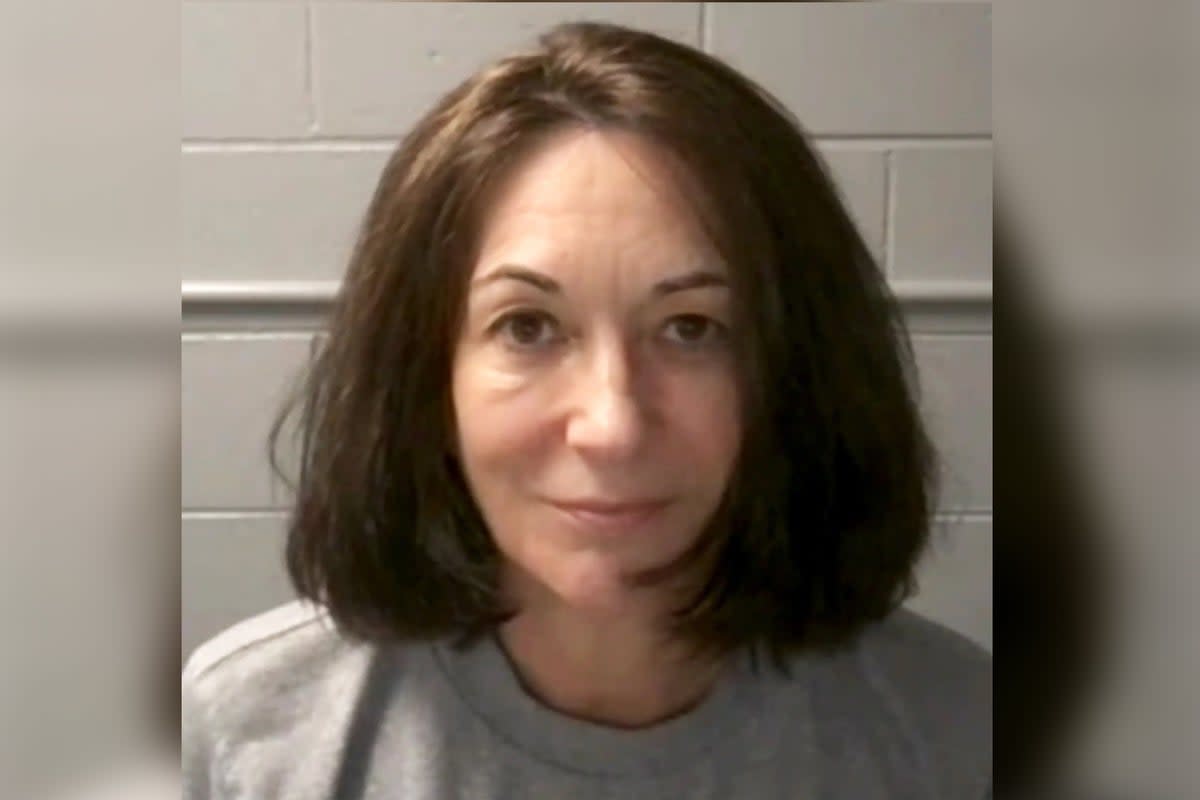
Ghislaine Maxwell was tried separately, and in 2021 a jury convicted her on five counts of sex trafficking and conspiracy.
She was sentenced to 20 years in prison in 2022.
Alexander Acosta resigned as U.S. Secretary of Labor in 2019, amid criticism over the non-prosecution agreement he had approved in 2008.
The estate faced civil lawsuits from victims. Those were settled in 2022.
Virginia Giuffre settled her lawsuit against Prince Andrew in 2022; the terms were not disclosed.
The case prompted broader investigations into Epstein's network and associates.
No other major figures were criminally charged.
That is what the record shows. What those investigations found, and where they stopped, is not detailed in the public record.
The story does not end with a verdict against Epstein. It ends with a death certificate.
It does not end with a full accounting. It ends with settlements.
It does not end with closure. It ends with a dismissal order.
The victims were heard. The courts were not the last word.
The public reckoning continues without the central defendant.
That is the shape of the case now. Not a conclusion, but a pause.
Advertisement
You may also like
The 911 call a mother made at 5:52 a.m. — the ransom note that followed
The 911 call came at 5:52 a.m. December 26, 1996, in Boulder, Colorado. Patsy Ramsey's voice on the line, reporting her 6-year-old daughter, JonBenét,…
The brother's call that ended a 17-year bombing spree
The manifesto arrived in 1995. It was 35,000 words, titled "Industrial Society and Its Future," and it was mailed to The New York Times…
The newspaper clipping and note in the Black Dahlia case that still defy explanation
A newspaper clipping and a note, reportedly carrying the killer's taunts, sat in the evidence file. They were key evidence, the investigation summary says.…
The 1969 letter that came with a victim's bloody shirt and a promise
The package arrived at the San Francisco Chronicle in 1969. Inside was a piece of a shirt. The shirt was bloody. It belonged to…
The tarot card left at a D.C. sniper scene that said 'Call me God'
The card was on the ground beside the body. October 19, 2002. Falls Church, Virginia. A victim shot while loading groceries. Police found a…
Afeni Shakur scattered her son's ashes at his childhood home — the case that still haunts Vegas
Afeni Shakur carried her son's ashes back to Marin City. She scattered them at his childhood home, a private act in a small California…