Afeni Shakur scattered her son's ashes at his childhood home — the case that still haunts Vegas
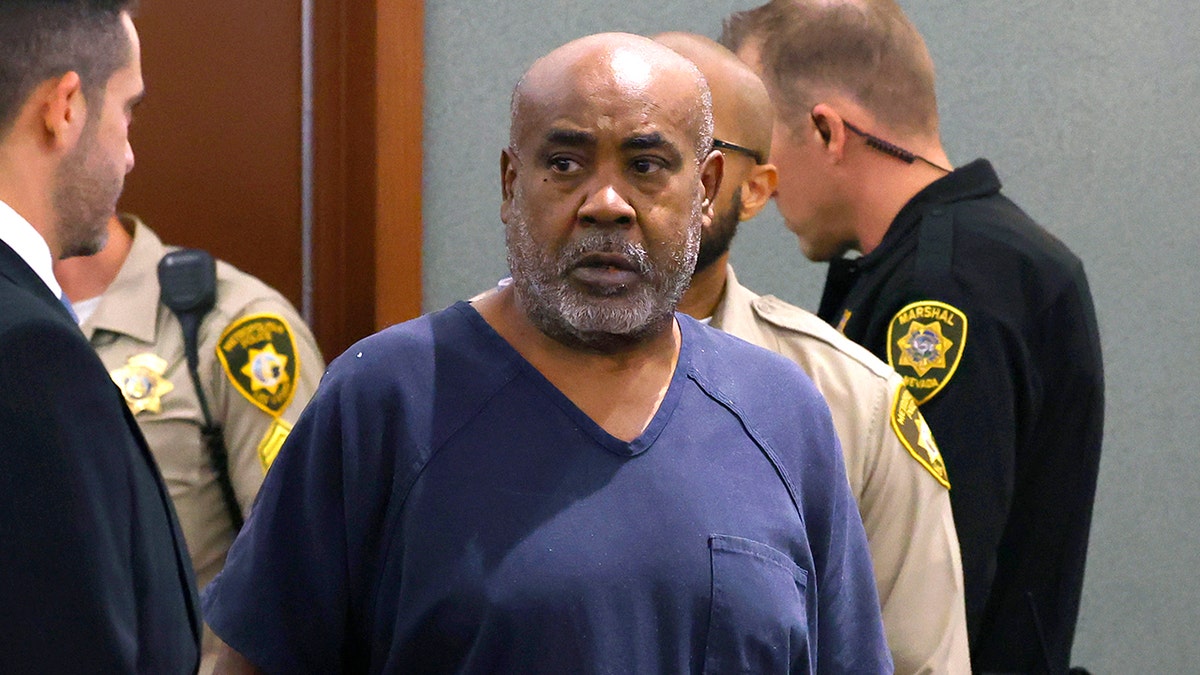
Afeni Shakur carried her son's ashes back to Marin City.
She scattered them at his childhood home, a private act in a small California town.
The exact date of that scattering is not in the record.
Neither are the circumstances around it.
That was her choice, and it stayed hers.
Tupac Shakur was 25 when he died on September 13, 1996.
He had been shot six days earlier on the Las Vegas Strip, riding in a black BMW after a Mike Tyson fight.
Four bullets hit him.
He was taken to University Medical Center, where he underwent surgery and was placed on life support.
His mother was a former Black Panther.
She spoke extensively about her son's death in the years that followed.
She managed his estate until her own death in 2016.
For 27 years, no one was charged with the murder.
Then, in 2023, Duane Keith Davis was arrested and charged with murder with a deadly weapon.
Davis had publicly claimed involvement in interviews and in a memoir.
According to his own accounts, he was not the shooter.
He said he was in the Cadillac from which the shots were fired.
He said the shooter was his nephew.
His trial has not concluded.
He remains in custody.
The mother's gesture was quiet.

The case against Davis is loud, public, and still unresolved.
She was on the ground below the story, holding the ashes.
The city above kept asking questions.
The answers, if they come, will come in a courtroom.
That would require evidence.
SEPTEMBER 7, 1996 — THE DRIVE-BY
The light on the Strip was still bright when the black BMW rolled toward the intersection.
Flamingo Road and Koval Lane, a red light, a convoy around it.
A white Cadillac pulled alongside.
Gunfire erupted.
Tupac Shakur was hit four times, twice in the chest.
He was riding after a Mike Tyson boxing match at the MGM Grand hotel, part of a convoy in a black BMW sedan.
Seconds earlier, the night was a celebration.
Then the window flashed, and the car filled with noise.
He was taken to University Medical Center, where surgeons operated and placed him on life support.
Six days later, on September 13, 1996, he died.
He was 25.
His mother, Afeni Shakur, a former Black Panther, would later scatter his ashes at his childhood home in Marin City, California.
The exact sequence of events inside the Cadillac is not established.
The shooter's identity is not proven.
What is documented is the sudden violence, the four wounds, the two in the chest.

The convoy scattered.
The white Cadillac drove on.
The Strip kept its lights, and the case went cold.
For 27 years, no one was charged.
That is the record.
The shock of the moment, though, is not a matter of dispute.
It happened in the open, at a red light, in front of a city that kept asking questions.
THE COLD CASE AND THE CONFESSION
The original investigation struggled.
Detective Tim Carroll led it, but the name is not the point. Witnesses in a busy area did not come forward, and the case went cold.
That is the record.
In 2006, the Las Vegas Metropolitan Police Department reopened the case.
In 2018, a retired LAPD detective who had investigated the murder for the LAPD was brought in to review the evidence.
His investigation relied heavily on interviews with Duane Keith Davis.
Davis, in a 2008 interview with federal authorities and in his 2019 memoir, claimed he was in the Cadillac from which the shots were fired.
He said the shooter was his nephew, Orlando Anderson, who died in 1998.
Davis's statements, along with corroborating testimony from other witnesses, formed the basis of the 2023 arrest.
A .40-caliber Glock recovered in a 1998 police raid was later linked to the shooting through ballistics testing.
The chain of custody was questioned by defense attorneys.
Not because the testing failed. Because the evidence sat for years, passed through hands the record does not fully trace.
That question is not resolved in court.

The reliability of Davis's statements is also disputed. It is not established.
He has a criminal history. He has told versions of this story more than once. The trial has not yet begun.
What is documented: he said he was there. What is not: whether any of it holds.
The case went cold once. It was reopened twice. It rests now on a confession that is not a confession — a man placing himself in the car, naming another as the shooter, and dying before he could answer for it.
Anderson died in 1998. He was never charged.
That is the record.
THE PROSECUTION AND THE DEFENSE
Duane Keith Davis was arrested on September 29, 2023, and charged with one count of murder with a deadly weapon.
He pleaded not guilty.
The prosecution argues that Davis's own admissions, including in his memoir, are sufficient to support the charge.
The defense argues that the case is based on the unreliable statements of a man with a criminal history.
They argue the evidence is decades old.
No trial date has been set.
Davis remains in custody at the Clark County Detention Center.
Two narratives sit side by side, and neither has been tested in court.
The prosecution's case rests on what Davis himself said.
The defense's case rests on who Davis is.
Not because the record is silent. But because the record has not been heard.
The outcome of the trial is not established.
The truth of Davis's claims is not established.
That would require evidence, and a judge, and a jury.
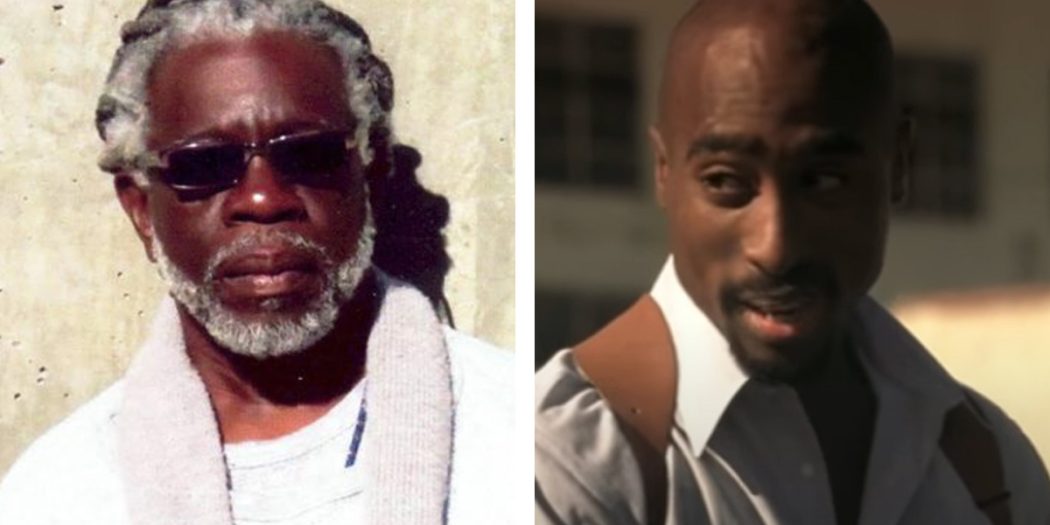
The case has drawn renewed attention to the unsolved murder.
Sekyiwa Shakur, Tupac's sister, has spoken publicly about the case.
She has spoken about the family's desire for justice.
Her brother died at 25.
His mother scattered his ashes at his childhood home.
Now his family watches a legal battle unfold around a man who placed himself in the car that night.
They wait.
The case is active.
The trial is pending.
The family's question remains unanswered.
AND THE STORY STILL ISN'T OVER
Twenty-seven years.
That is how long the murder went unsolved. Afeni Shakur did not live to see an arrest. She died in 2016, twenty years after her son.
Her estate, which she managed until her death, still releases his music and his projects. The work continues. The case, in a different way, continues too.
The Las Vegas Metropolitan Police Department has said the investigation remains active. Duane Keith Davis's trial is pending. No trial date has been set.
The final legal outcome is not known. That is where the record stands.
Sekyiwa Shakur, his sister, has spoken publicly about the family's desire for justice. It is a desire that remains unmet. Not because the case is closed. Because it is not.
The ashes scattered at Marin City are a reminder. They are the personal cost behind the public case. A mother carried them there. A mother who spent years speaking about her son's death, who managed what he left behind, who is now gone herself.
The story is not finished.
It is a case with an arrest. It is a case without a trial. It is a case where the family still asks a question that the record has not answered. A trial looms. That would require evidence, and a date, and a verdict.
None of those exist yet.
The music continues to be released. The investigation continues to be called active. The family continues to wait.
She scattered his ashes at his childhood home. That home is a memory now. The case is a limbo. And the limbo is where the story still sits.
Advertisement
You may also like
The 19-year-old nurse's aide whose brother spent decades doubting the confession
She was nineteen. A nurse's aide. On January 4, 1964, Mary Sullivan was found dead in her rented apartment. She was the final victim…
Two Utah robberies, one witness, and the .22-caliber pistol that sealed Gary Gilmore's fate
The first shot came at a Sinclair station in Provo, Utah, on the night of July 19, 1976. A 24-year-old gas station attendant was…
The fake police car that drove away from a garage at 10:30 a.m.
The garage door at 2122 North Clark Street stood open. A resident found it that way and looked inside. Seven men were dead on…
The 1987 saliva sample that sat unmatched for 14 years — then broke the Green River case
A warrant in 1987 gave investigators a saliva sample from Gary Ridgway, a truck painter at a Kenworth plant in Renton. The sample was…
The glasses Ronald Goldman was returning when he was stabbed — and the family who never stopped asking
He was 25 years old, a waiter at a nearby restaurant. On the night of June 12, 1994, he was returning a pair of…
Two men in police caps, one hour, and the empty frames in Boston
It is 1:24 a.m. on March 18, 1990, and the side door of the Isabella Stewart Gardner Museum opens. Two men stand there in…