The 1969 letter that came with a victim's bloody shirt and a promise
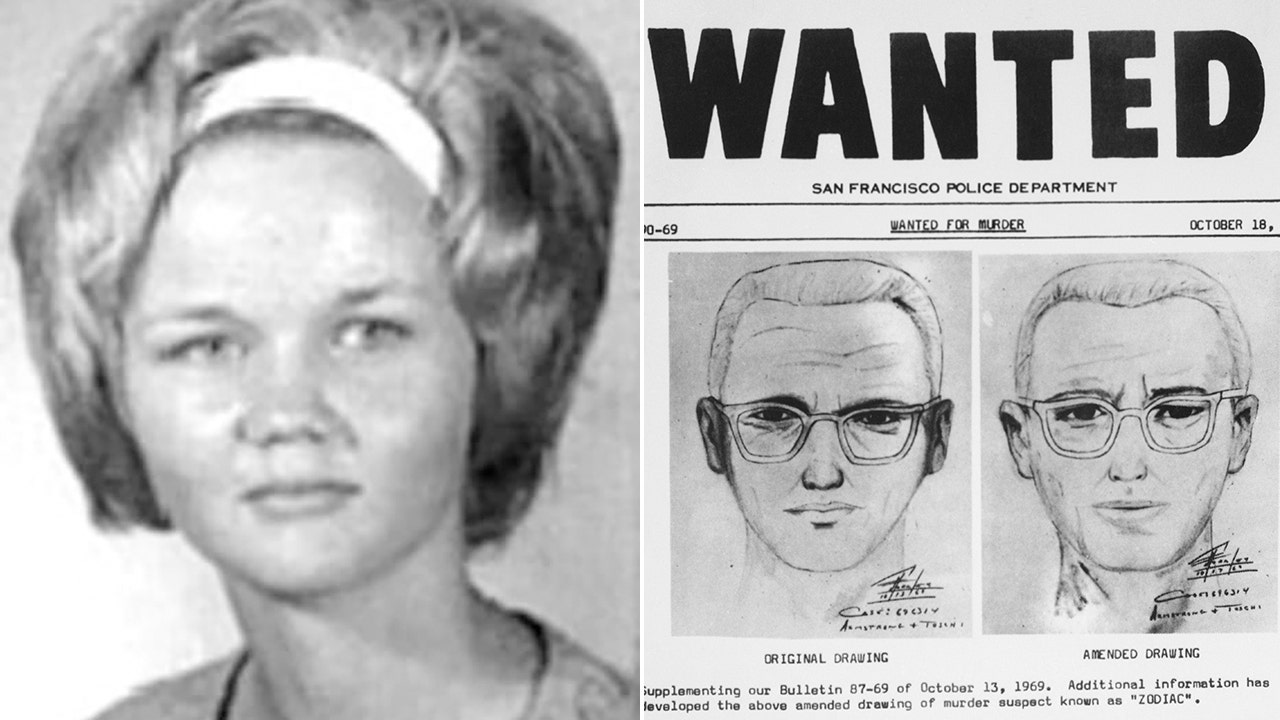
The package arrived at the San Francisco Chronicle in 1969.
Inside was a piece of a shirt.
The shirt was bloody.
It belonged to a taxi driver, shot on October 11, 1969, in San Francisco.
The killer sent the fragment as proof.
Proof that he was the murderer.
He had already written to three newspapers, sending cryptograms and letters, claiming dozens of victims.
This time he sent an object.
A piece of a dead man's clothing, mailed like a receipt.
With the shirt came a promise.
A taunt.
Police never answered it.
The exact wording of that promise is not in the record.
The killer's identity is not in the record either.
No one was ever arrested.
No one was ever charged.
The taxi driver had a name.
He was 29 years old.
He was working the night shift when he picked up a fare.
The fare shot him.
The killer cut a piece of the shirt from the body and mailed it.
Why that piece?
Why that victim?
Those questions remain open.
The shirt fragment was evidence.
It was also a message.
It was proof of murder and proof of reach.
The killer could touch the newsroom.
The police could not touch him.
She was a victim's family member, left with an object in the world.
The package sits in the case file, in the record, in the story.
The promise it carried was never kept.
Not by the police.
Not by the killer.
The killer vanished into the letters he wrote.
The shirt stayed.
The blood stayed.
The question stays.
THE FIRST SHOTS
December 20, 1968.
Two teenagers were parked at a lovers' lane near Vallejo when someone shot them.
Both were 17 years old.
They died at the scene.
Vallejo Police Department detectives took the case.
They had a handgun, shell casings, and no suspect.
The killer's identity was not established.
The motive was not established.
What was left was the randomness of it.
A parked car, a quiet road, two lives ended.
The families buried their children before Christmas.
Then the summer came.
July 4, 1969.
Blue Rock Springs Park in Vallejo.
A 22-year-old woman and a 19-year-old man were shot in another parked car.
The woman died.
The man survived.
He described the attacker to police.
A handgun again.
The Vallejo detectives compared the two scenes.
Same weapon, they believed.
Same pattern.
Same absence of a reason.
Two attacks, four victims, three dead.
One survivor who could speak.
And still no name.
The families waited.
The detectives worked.
The randomness did not resolve itself into a motive.
It was violence.
It was sudden.
It was not explained.
The first shots were fired in December.

The case file kept them.
THE KNIFE AND THE CAB
The knife came first.
On September 27, 1969, at Lake Berryessa, the killer stabbed a young couple.
The 22-year-old woman died.
The 20-year-old man survived.
The survivor described the attacker to police.
He gave a description.
He gave an account.
The record does not say the description led anywhere.
Two weeks later, on October 11, 1969, the killer used a handgun.
The final confirmed attack was on October 11, 1969, when a taxi driver was shot in San Francisco.
A San Francisco police officer saw a man near the taxi driver's crime scene.
The officer did not detain him.
That is what the record says.
The killer used a knife at Lake Berryessa.
The killer used a handgun in the taxi shooting.
The killer also claimed to have used a car.
Its make and model were never confirmed.
Not because no one asked.
But because no one could answer.
Was the car parked nearby?
Was it idling at the curb?
That would require evidence.
The taxi driver was on the ground below.
The killer's identity remains unknown.
No suspect was ever charged.
The survivor at Lake Berryessa lived.
He described his attacker.
The taxi driver did not.
The case file keeps both.
THE LETTERS AND THE CIPHER
The killer sent cryptograms and letters to the San Francisco Chronicle, the Vallejo Times-Herald, and the San Francisco Examiner.
He taunted police. He claimed dozens of victims.
One cipher was solved by a schoolteacher and his wife in 1969.
It contained a message from the killer. It did not reveal his identity.
The cipher's full meaning is not established.
The letters were the primary investigative tool.
The killer left little physical evidence.
No fingerprints that matched. No consistent description. No usable trace.
Over the decades, police pursued numerous suspects.
Arthur Leigh Allen, a Vallejo schoolteacher, was investigated multiple times.
He was never charged.
Allen died in 1992.
In 2002, DNA testing on Zodiac letters excluded him as the source.
Some investigators disputed the reliability of the testing.
The DNA results are disputed.
DNA testing on stamps and envelopes from the letters has been conducted.
No match has ever been made.
What was examined: the paper, the ink, the stamps, the envelopes.
What was found: nothing that named a man.
What remains: an open file, a dead suspect, a solved cipher that solved nothing.
Was the cipher a confession? Was it a boast? Was it a key to something else?
That would require evidence.
The letters were the puzzle. The puzzle was the only game.
The killer's identity remains unknown.
The victims' families have lived with that for decades.
One victim's sister has spoken publicly about the toll.
She described the waiting. She described the silence. She described the case that never closed.
The letters keep the killer present. The letters keep the case open. The letters keep the families waiting.
AND THE STORY STILL ISN'T OVER
The case remains open in the San Francisco Police Department, the Vallejo Police Department, and the Napa County Sheriff's Office.
The killer's identity remains unknown.
No one was ever arrested. No one was ever charged. There was no trial.
The victims' families have lived with the unresolved case for decades.
One victim's sister has spoken publicly about the toll it took on her family.
She described the waiting. She described the silence. She described the case that never closed.
The survivors have given interviews over the years.
They described the attacker to police. They retold the nights. They answered the same questions again and again.
In 2021, a group of private investigators claimed to have identified the killer.
Law enforcement did not confirm the claim, and it was widely disputed.
That is not established. The claim remains a claim. The killer's identity remains unknown.
The letters keep the killer present. The letters keep the case open. The letters keep the families waiting.
Advertisement
You may also like
The 19-year-old nurse's aide whose brother spent decades doubting the confession
She was nineteen. A nurse's aide. On January 4, 1964, Mary Sullivan was found dead in her rented apartment. She was the final victim…
Two Utah robberies, one witness, and the .22-caliber pistol that sealed Gary Gilmore's fate
The first shot came at a Sinclair station in Provo, Utah, on the night of July 19, 1976. A 24-year-old gas station attendant was…
The fake police car that drove away from a garage at 10:30 a.m.
The garage door at 2122 North Clark Street stood open. A resident found it that way and looked inside. Seven men were dead on…
The 1987 saliva sample that sat unmatched for 14 years — then broke the Green River case
A warrant in 1987 gave investigators a saliva sample from Gary Ridgway, a truck painter at a Kenworth plant in Renton. The sample was…
The glasses Ronald Goldman was returning when he was stabbed — and the family who never stopped asking
He was 25 years old, a waiter at a nearby restaurant. On the night of June 12, 1994, he was returning a pair of…
Two men in police caps, one hour, and the empty frames in Boston
It is 1:24 a.m. on March 18, 1990, and the side door of the Isabella Stewart Gardner Museum opens. Two men stand there in…