The 35,000-word manifesto that made a bomber's own brother call the FBI
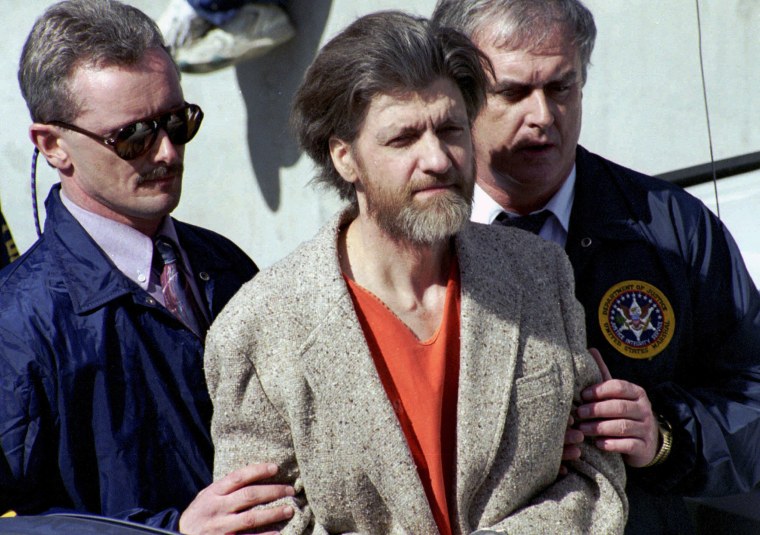
The Washington Post published the 35,000-word manifesto in September 1995.
It ran because the author had promised to stop his bombings if a major newspaper printed it.
The byline was anonymous.
No one had claimed the text publicly, and the FBI did not name its author.
The manifesto's writer had been sending mail bombs since 1978.
Those bombs had killed three people and injured 23 others.
The public read the manifesto in print, folded across their breakfast tables or spread open on a bus seat.
Not on a screen.
The internet existed, but it was not yet a mass medium, and this was not a viral moment in the modern sense.
It was a deliberate media event, negotiated and staged through established channels.
A newspaper chose to publish, and a nation read in paper and ink.
The text itself was dense, technical, and long — 35,000 words of argument against technology and industrial society.
Readers encountered it as a puzzle, a confession, a threat, or a treatise, depending on where they sat.
They asked who wrote it.
They asked why a bomber would write at such length.
They asked what it meant that a newspaper would print the words of a killer.
The identity of the author was unknown at the time of publication.
That is not in dispute.
The record does not establish that anyone publicly claimed the manifesto before it appeared in print.
It simply appeared, and the reading public turned the pages.
The drama unfolded through print, not pixels.
A single line of prose could be the author's signature, if anyone knew how to read it.
That recognition would come later, and it would come from a brother.
THE BOMBS
The first bomb arrived in 1978, a parcel left at a university parking lot.
Between 1978 and 1995, mail bombs killed three people and injured 23 others across the United States.
The targets were academics, airline executives, and computer store owners, the case summary states.
The bombs were sent through the U.S. Postal Service.
They were constructed from wood, metal, and household chemicals, according to the case summary.
The FBI named the case UNABOM, a portmanteau of "university" and "airline bomber."
The final bombing killed a timber industry lobbyist in Sacramento, California, in April 1995.
That death came seventeen years after the first device.
The FBI's investigation became one of the longest in its history.
Agents examined fragments of wood, bits of metal, the residue of household chemicals.
They built a composite sketch of a man seen near a bombing.
The sketch proved unhelpful.
The subject of that sketch was never confirmed as the bomber; the record does not establish his identity.
The bomber's identity was not known, not then.
Was he a student? A professor? A former employee?
Was he one man or many?
That would require evidence, and for years there was none.
The public read about the bombs in newspapers, the details emerging in drips.
A package here, an explosion there, a body in Sacramento.
The manhunt stretched on, and the mail kept moving.
THE BROTHER'S CALL
The manifesto hit newsstands in September 1995, and the manhunt shifted overnight.
In a small town in upstate New York, David Kaczynski read the words and stopped.
He recognized the prose, the cadence, the obsessions.
David called the FBI.
He told agents he believed the writer was his older brother, Ted.
David provided letters and documents from his brother to the authorities, according to the case summary.
The exact content of those letters and documents is not specified in the source.
That is not established.
What is documented is the act: a brother turning in a brother.
David's wife, Linda Patrik, supported the decision to contact authorities.
The FBI listened, then looked.
Forensic linguistic analysis matched the manifesto's prose to Ted Kaczynski's writings.
Analysts compared sentence structures, word choices, and rhetorical patterns.

The match held.
In April 1996, agents searched Ted's Montana cabin.
They found bomb-making materials.
They found a handwritten journal.
They found a live bomb.
The cabin was small, remote, and crammed with evidence.
Ted Kaczynski was arrested.
The manhunt that had stretched on for nearly two decades ended not with a break in the case, but with a brother's phone call.
The public had read the manifesto in newspapers, not online.
The internet was not yet a mass medium.
But the words reached one reader who knew the author.
David Kaczynski recognized the style before the FBI did.
He made the call that the investigation could not.
THE PLEA
The charges came in ten counts of illegal transportation, mailing, and use of bombs.
Three more counts of first-degree murder were added.
The courtroom was not where the story would end.
Kaczynski wanted to represent himself.
He rejected a plea deal that would have spared him the death penalty.
Why would a man facing execution refuse a bargain?
Why would he insist on speaking for himself when lawyers were ready?
Why would he push toward a trial he seemed determined to disrupt?
That would require evidence.
The court ordered a competency evaluation instead.
The specifics of that evaluation are not detailed in the case summary.
What is documented is the result.
In January 1998, Kaczynski pleaded guilty to all charges.
He accepted life without the possibility of parole.
The sentence carried an additional 30 years.
No appeals were filed.
The death penalty was avoided, not by argument, but by procedure.
The public had followed the case through newspaper columns and evening broadcasts.
Now the coverage shifted from the hunt to the handover.
A man who had evaded capture for seventeen years stood in a courtroom and said the words.
The trial that many expected never happened.
The confession did.
Kaczynski was convicted on his own plea, not by a jury's verdict.
He was not convicted of any additional charges.
Nothing else was pursued.
The case was closed in the way that plea bargains close cases: quietly, completely, with the questions left to the record.
It is a resolution.
It is also a reduction.
The manifesto had demanded to be read.
The brother had read it.
The court now read the charges.
And then the story moved on, to a supermax cell in Florence, Colorado, where the man who wrote 35,000 words would spend the rest of his life in silence.
AND THE STORY STILL ISN'T OVER
He serves his life sentence at the federal supermax prison in Florence, Colorado.
His brother David has spoken publicly since. He advocates for mental health awareness. He expresses regret over his brother's actions.
The cabin where Ted Kaczynski lived was preserved. It was later displayed in museums, a wooden artifact of a two-decade hunt.
The case remains a landmark in forensic linguistics. It also stands as a landmark in the use of public appeals to solve crimes.
The public's reaction shaped the outcome. Readers consumed the manifesto in print, not online. They discussed it in letters to editors, in living rooms, in the slow mail of 1995.
That discussion is what made the brother's recognition possible. It is what turned a published document into a documented act.
No future legal steps are mentioned in the record. The source states no appeals were filed.
The story moves from the page to the cell. It moves from a Montana cabin to a Colorado supermax. It moves from 35,000 words to a life of silence.
The man who wrote the manifesto is still there. The brother who read it is still speaking.
The newspapers that published the words are archived. The letters to the editor are archived. The cabin is behind glass in a museum.
What remains is the question of legacy. What remains is the ripple of a media-driven manhunt, still spreading.
Advertisement
You may also like
He walked into a bar to report the six bodies — but the first account did not match
The bar was on a quiet stretch of Long Island, a place where a man could walk in and order a drink before noon…
The smell from Gacy's crawl space that made police dig again
The smell hit the officers before they reached the trapdoor. It was December 1978, and police were searching the home of a building contractor…
The Christmas Eve phone call that broke Laci Peterson's mother
December 24, 2002, was a Tuesday. Laci Peterson, 27 and eight months pregnant, was last seen at the family home in Modesto. That evening,…
The faulty gyroscope and a pilot not rated for instrument flight — the evidence in a 1959 crash that killed three stars
The gyroscope was found malfunctioning, and it was the one instrument that tells a pilot which way is up. The Civil Aeronautics Board’s investigation…
The unmatched glove that didn't fit — and the $33.5 million judgment the Goldman family still pursues
The courtroom was warm, and the cameras held on the leather. O.J. Simpson tugged at the pair of gloves the prosecution had asked him…
The 911 call that shattered a legal dynasty – and the lie that followed
The dogs were still barking when the first deputies arrived at Moselle. Paul Murdaugh, 22, and his mother, Maggie, 52, lay dead near the…