The faulty gyroscope and a pilot not rated for instrument flight — the evidence in a 1959 crash that killed three stars
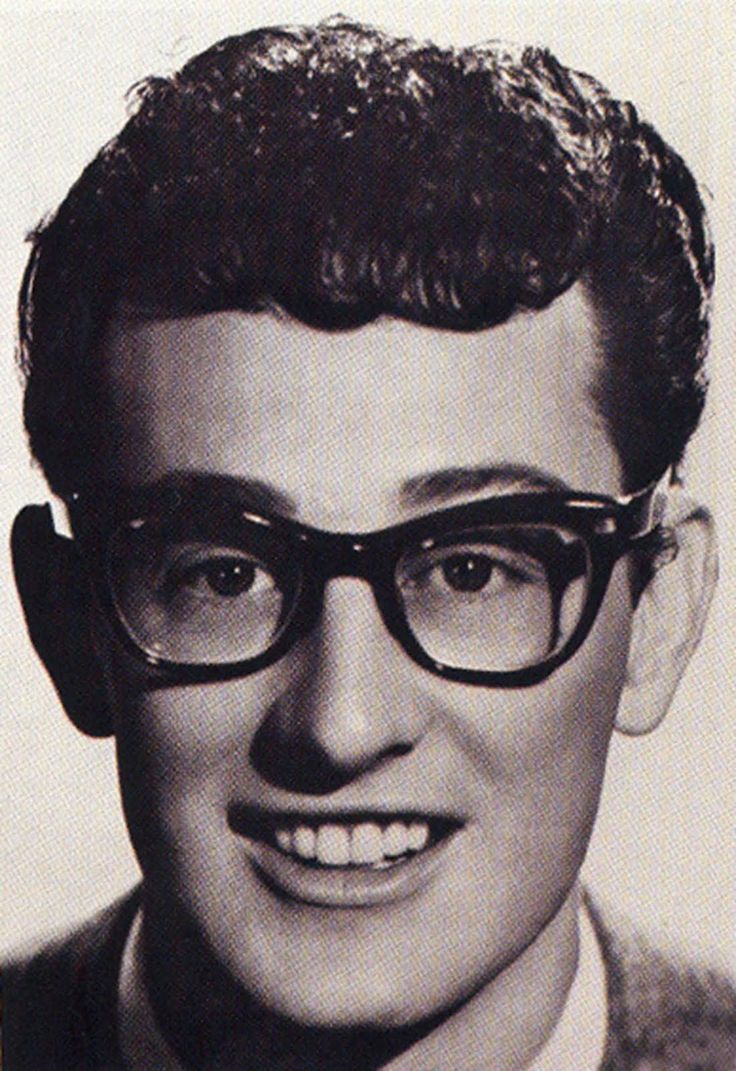
The gyroscope was found malfunctioning, and it was the one instrument that tells a pilot which way is up.
The Civil Aeronautics Board’s investigation established that fact from the wreckage.
It also established that the pilot, Roger Peterson, was not certified for instrument flight rules.
That meant he was not qualified to fly by instruments alone.
The plane departed at approximately 12:55 a.m. in light snow and gusty winds.
The farmer who owned the field found the wreckage the following morning.
Four men were dead on impact, and the board’s report would later point to Peterson’s decision to fly.
Not because the engine failed.
Not because the airframe broke apart.
Because a small mechanical failure met a missing qualification in the dark.
The exact sequence inside the cockpit is not established.
The pilot’s final actions are not in the record.
What the record shows is this: a gyroscope that lied, and a pilot untrained to read the truth without it.
The board concluded he likely became disoriented.
The plane crashed nose-first into the ground at high speed.
How did those two facts come together?
How did a flight of eleven minutes end in a cornfield?
How did a man without instrument rating take off into snow at 12:55 a.m.?
That would require evidence of his thoughts, and the record does not contain it.
The gyroscope is the closest the investigation came to a witness.
THE FLIGHT
The plane was a 1947 Beechcraft Bonanza, registration number N3794N, owned by Dwyer Flying Service.
It left Mason City Municipal Airport at approximately 12:55 a.m. on February 3, 1959.
On board were Buddy Holly, Ritchie Valens, and the third musician, known as The Big Bopper.
The pilot, Roger Peterson, was at the controls.
They were bound for Moorhead, Minnesota, the next stop on the "Winter Dance Party" tour.
The flight was a routine leg of a touring schedule.
It was a short hop, the kind of hop bands did between shows.
The plane crashed in a cornfield near Clear Lake, Iowa, shortly after takeoff.
All four men were killed instantly.
The wreckage was discovered the following morning by the farmer who owned the land.
The exact time of the crash is not in the record.
Only the departure time and the discovery the following morning are documented.
The plane was chartered by Holly.
Peterson was 21 years old.
The tour's other musicians, including Waylon Jennings, had been on the plane's passenger list at various points.
Jennings gave up his seat on the plane.
Tommy Allsup lost a coin toss for the final seat.
Those details belong to the story that grew around the crash.
The record itself is narrower.
It is a plane, a pilot, a departure time, and a field.
The investigation would have to explain how a routine leg ended in a cornfield.
THE SEATS
The tour rolled on without them.
Four buses carried the musicians between Midwest dates, and the buses kept breaking down.
Holly chartered the plane to reach Moorhead, Minnesota, faster.
Waylon Jennings gave up his seat on the plane to Richardson.
Tommy Allsup lost a coin toss to Valens for the final seat.
The record says Jennings gave up his seat and Allsup lost a toss.
It does not detail the exact circumstances of either exchange.
Those moments live in memory, not in the investigation files.
The plane was a 1947 Beechcraft Bonanza, registration number N3794N, owned by Dwyer Flying Service.
Holly chartered it; the source summary confirms that.
The crash was investigated by the Civil Aeronautics Board, the CAB.
The wreckage was discovered by the owner of the farm where the plane went down.
Albert Juhl found it the following morning.
The farm was near Clear Lake, Iowa.
All four men were killed instantly.
The randomness is the thing that chills.
A seat given, a coin flipped, a ride taken.
The record does not say who called heads or tails.
It does not say what words passed between Jennings and Richardson.
It says only that one gave up his seat and one lost a toss.
That is what the record holds.
THE INVESTIGATION
The Civil Aeronautics Board laid the wreckage out across the farm field in sections.
They measured the scatter.
They photographed the torn metal.
They traced the path of the impact from the first furrow to the last piece of debris.
The wreckage was scattered over a large area, indicating the high impact speed, the CAB report noted.
They examined the engine.
They examined the airframe.
They examined the instruments, piece by piece, wire by wire.
The investigation found no evidence of mechanical failure in the engine or airframe.
The focus shifted instead to pilot error and the lack of instrument training.
The gyroscope, the instrument that tells a pilot which way is up, was found to be malfunctioning.
The exact cause of that malfunction is not in the record.
It is only noted as malfunctioning.
The CAB concluded that Peterson likely became disoriented in the dark and snowy conditions.
He lost control of the aircraft.
The plane crashed nose-first into the ground.
The board’s final report, released later in 1959, cited the probable cause as “the pilot’s unwise decision to embark on a flight which he knew would require instrument flying qualifications which he did not possess.”
That is the finding.
That is the whole finding.
The crash was determined to be an accident, not a criminal act.
No criminal investigation was pursued.
No charges were filed.
There was no trial.
The record holds the gyroscope and the missing rating.
It does not hold a motive, a crime, or a culprit.
It holds a malfunction and a decision.
That was enough.
AND THE STORY STILL ISN'T OVER
The Civil Aeronautics Board released its final report later in 1959.
The probable cause, the report stated, was "the pilot's unwise decision to embark on a flight which he knew would require instrument flying qualifications which he did not possess."
No charges were filed against anyone.
There was no trial.
The crash was ruled an accident, and the record ends there.
The families of the victims filed civil suits against the plane's owner, Dwyer Flying Service, and the manufacturer, Beech Aircraft Corporation.
Those lawsuits were settled out of court.
The terms were not publicly disclosed.
That is not established in the record.
No criminal charges were ever brought.
The investigation had already answered what it could answer: a malfunction, a decision, a crash.
What it could not answer — why the pilot chose to fly that night, what he saw in the final seconds — remains outside the evidence.
The crash site remains a memorial site.
A monument was erected there in 1988.
The site is marked by a large pair of eyeglasses, a tribute to Buddy Holly's iconic glasses.
The exact location of that monument and those glasses is not in the record.
Fans still visit.
The tour continued without the three musicians.
The question of what could have been is not a question the records can resolve.
That would require evidence.
The gyroscope failed.
The pilot was not rated for instrument flight.
The plane went down nose-first in a cornfield near Clear Lake, Iowa.
The story is not closed.
It is a malfunction and a decision.
That was enough.
Advertisement
You may also like
Inside Dahmer's confession: how one man spent four days leading detectives through a drip of details on 17 killings
He was handcuffed, and he was talking fast. Tracy Edwards had flagged down two Milwaukee police officers on July 22, 1991, after escaping the…
Love letters scattered in the lane — the 1922 murder that made the front pages for years
The note was still pinned to the crabapple tree when the bodies were found. It read "Mrs. Mills." Not a confession. Not an accusation.…
The bloody glove found on O.J. Simpson's estate after detectives scaled a fence
The fence at 360 North Rockingham Avenue was seven feet tall, and Detective Mark Fuhrman climbed over it. He was there to notify O.J.…
The $5,800 in ransom cash that surfaced on a riverbank 9 years after the jump
Eight years after the jump, a boy was walking the sand of the Columbia River in Washington. He found a rotting bundle of cash,…
The ladder's wood that led detectives to Hauptmann's door—and the tool mark that sealed it
The ladder was the only thing the kidnapper left behind. A homemade wooden ladder, propped against the window of a nursery near Hopewell, New…
He walked into a bar to report the six bodies — but the first account did not match
The bar was on a quiet stretch of Long Island, a place where a man could walk in and order a drink before noon…