The bloody glove found on O.J. Simpson's estate after detectives scaled a fence
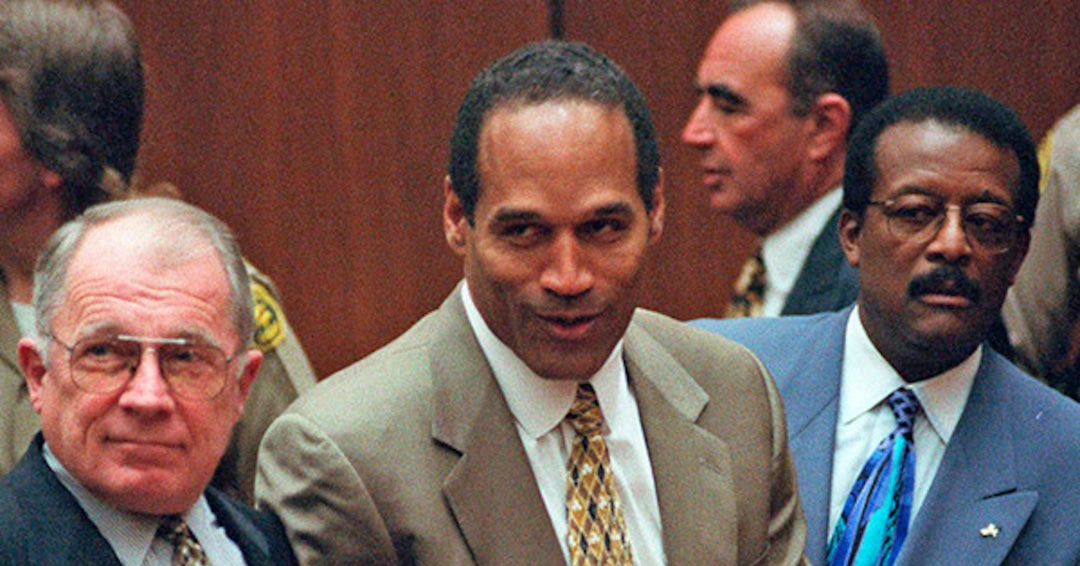
The fence at 360 North Rockingham Avenue was seven feet tall, and Detective Mark Fuhrman climbed over it.
He was there to notify O.J. Simpson that his ex-wife, Nicole Brown Simpson, had been found dead.
Instead, Fuhrman found a bloody glove on the estate.
The glove was later matched to one found at the crime scene on Bundy Drive.
The white Ford Bronco parked outside had what appeared to be blood on the door.
The investigation that produced this glove began with a failure.
The crime scene at Bundy Drive was not secured immediately.
Media and others walked through the area.
The glove would carry the weight of the entire case.
It would become the center of a courtroom demonstration.
Simpson struggled to put it on.
That moment split public opinion.
One object, one glove, found behind a fence.
It would raise a question that followed the case for decades.
Whether the glove was planted is not established by the record.
It is a claim made by the defense.
It is debated online.
The record shows only that Fuhrman found it after scaling the fence.
What else did that fence hide?
What did the glove carry with it?
What happens when a single piece of evidence carries everything?
That would require evidence.
THE NIGHT OF JUNE 12
A neighbor walking her dog found the bodies around midnight.
Nicole Brown Simpson and Ronald Goldman were on the ground outside her condominium on Bundy Drive, stabbed to death.
Both were killed with a knife.
The knife was never recovered.
The killings occurred sometime after 10:00 PM — the exact time is not established.
Goldman was a waiter at a nearby restaurant.
He had been returning Nicole’s mother’s glasses, left at the restaurant that evening.
The prosecution built its timeline on two witnesses.
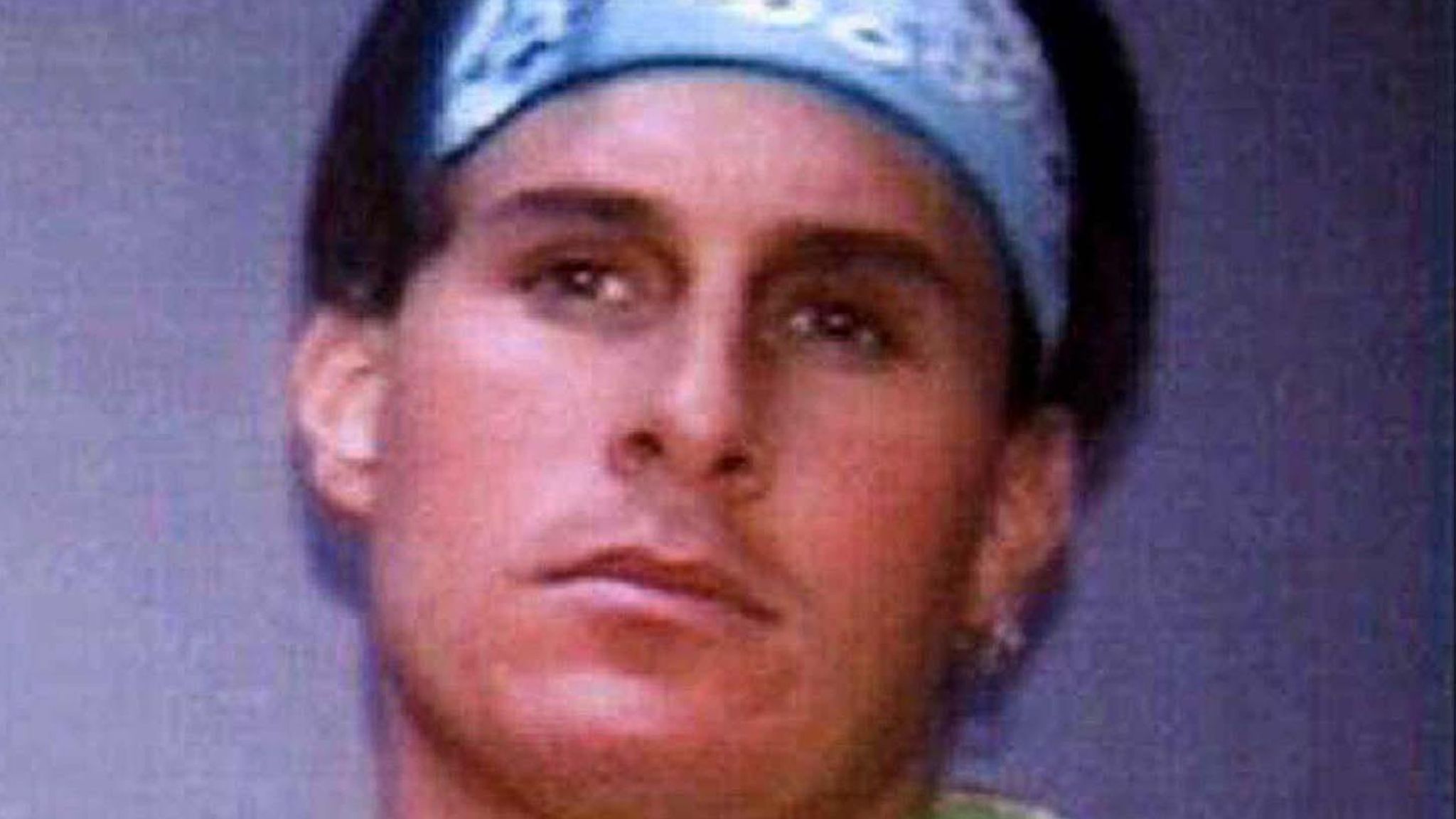
Brian “Kato” Kaelin, Simpson’s houseguest, said Simpson was home at the time of the murders.
Limousine driver Allan Park testified about Simpson’s movements that night.
Park said he arrived at the estate and saw no one at first.
He testified that a man matching Simpson’s description entered the house.
The timeline depended on what these two men saw and when.
It was a timeline built from moments, not from a clock.
The crime scene was not secured immediately.
That was a major mistake.
Media and others walked through the area before it was controlled.
What was tracked in, what was tracked out — that would require evidence.
The bodies were found at midnight.
The killings happened sometime after 10:00 PM.
Between those hours, the record holds two witnesses and a pair of glasses.
The rest is a gap.
THE BLOOD TRAIL
Detectives Philip Vannatter and Tom Lange found the white Ford Bronco parked outside Simpson's estate.
There was what appeared to be blood on the door.
The blood evidence linked Simpson to the scene: blood on the Bronco, blood on a sock in his bedroom, a trail of blood drops.
It accumulates.
It connects.
Then the handling starts to crack.
A key turning point was the decision to have Simpson's blood sample drawn and later transported by Vannatter to the crime scene.
The defense argued this raised contamination questions.
:max_bytes(150000):strip_icc():focal(749x0:751x2)/PEOPLE_MAG_BROWN_SISTERS_nicole-tout-1067c705ba0c4ab7a7e648e3ffd95be0.jpg)
Whether the blood evidence was contaminated is not established; it is an argument made by the defense.
It is a claim, not a documented fact.
The defense also attacked Detective Mark Fuhrman's credibility, introducing evidence of racist statements he had made.
The witness against the evidence becomes the evidence against the witness.
On June 17, 1994, Simpson was charged with two counts of first-degree murder.
He pleaded not guilty.
The weight of the trail is there. The cracks in its handling are there too.
Which one holds? That would require evidence.
THE GLOVE DEMONSTRATION
In the courtroom, Simpson pulled on the gloves.
He struggled to put them on.
The prosecution had argued the gloves were his.
The defense had argued they were too small.
What the record says is narrower than either story: Simpson struggled.
Whether the gloves fit or were too small is not established.
The trial began in January 1995.
Judge Lance Ito presided.
It lasted over eight months.

The prosecution told a story of a history of domestic violence.
They presented evidence of prior incidents against Nicole.
The defense told a story of contamination.
They argued the evidence was tainted and Simpson was framed.
Two stories, one pair of gloves.
Which one does the glove support?
That would require evidence.
The jury heard both stories.
On October 3, 1995, they acquitted Simpson of both murder charges.
The criminal case ended there.
The civil case did not.
In 1997, a civil jury found Simpson liable for the wrongful deaths of Nicole Brown Simpson and Ronald Goldman.
The order was $33.5 million in damages.
The criminal acquittal stands.
The civil liability stands.
The glove demonstration remains a moment, not a verdict.
It is a piece of a trial that produced two different endings.
The record holds both.

AND THE STORY STILL ISN'T OVER
The murder case remains officially unsolved in the sense that no one else was ever charged.
Who killed Nicole Brown Simpson and Ronald Goldman is not established by the record.
Simpson was acquitted of the murders in 1995.
A civil jury found him liable for their wrongful deaths in 1997 and ordered him to pay $33.5 million in damages.
The Goldman family continued to pursue civil judgments against Simpson's assets.
They kept chasing what the civil judgment said he owed.
Simpson was later convicted of armed robbery and kidnapping in 2008 in Las Vegas.
He served nine years in prison, released in 2017.
He died on April 10, 2024, of cancer.
The glove, the Bronco, the sock, the blood drops — all of it remains in the record.
The knife was never recovered.
The case had a lasting impact on public perception of the criminal justice system.
It changed how race relations were discussed in courtrooms.
It changed how trials were covered by media.
The demonstration remains a moment, not a verdict.
The acquittal remains a verdict, not a resolution.
The record holds both.
That would require evidence.
Advertisement
You may also like
A fishing trip, a missing pregnant wife, and the boat Scott Peterson bought just weeks before
He told police he went fishing that morning at the Berkeley Marina. He said he returned to find his wife gone. Laci Peterson, 27…
The 2008 deal that kept Epstein's federal charges secret — and the detective who never got to finish
A mother in Palm Beach, Florida, told police in 2005 that her 14-year-old stepdaughter had been sexually abused by an older man. That complaint…
The fiber and dog hair evidence that linked Wayne Williams to the Atlanta murders
The body of Nathaniel Cater came out of the Chattahoochee River on May 22, 1981. He was 27 years old. The next night, an…
The Reddit sleuths who named an innocent student a Boston bombing suspect
The bombs went off at 2:49 p.m., about four hours into the race. Two pressure-cooker bombs, placed in backpacks, exploded near the finish line…
Inside Dahmer's confession: how one man spent four days leading detectives through a drip of details on 17 killings
He was handcuffed, and he was talking fast. Tracy Edwards had flagged down two Milwaukee police officers on July 22, 1991, after escaping the…
Love letters scattered in the lane — the 1922 murder that made the front pages for years
The note was still pinned to the crabapple tree when the bodies were found. It read "Mrs. Mills." Not a confession. Not an accusation.…