The 2008 deal that kept Epstein's federal charges secret — and the detective who never got to finish
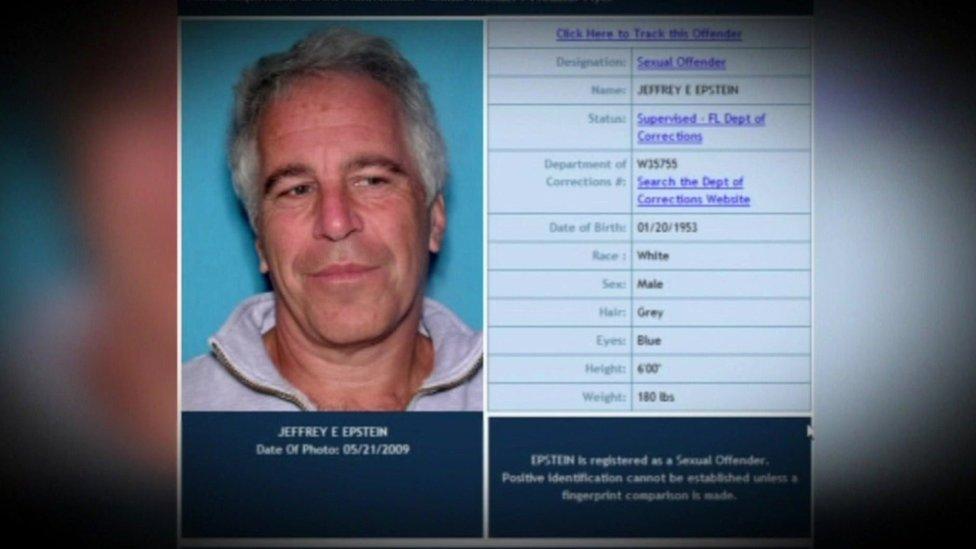
A mother in Palm Beach, Florida, told police in 2005 that her 14-year-old stepdaughter had been sexually abused by an older man.
That complaint started everything.
The lead detective on the Palm Beach Police Department interviewed the girl.
He kept pulling the thread.
What he found was a pattern: underage girls recruited for massages that escalated to abuse at Epstein's mansion.
His investigation identified dozens of underage victims.
It built what should have been a federal case.
It was a case that never got to finish.
Not because the evidence ran out.
But because a 2008 non-prosecution agreement, negotiated by U.S. Attorney Alexander Acosta, let Epstein plead guilty to lesser state charges.
He avoided federal prosecution entirely.
The detective's name is not in the verified record.
News coverage identifies him only by his role: the lead detective.
That is what the record does not establish.
What it does establish is the work he did — the interviews, the victims, the file that went quiet.
The complaint from one mother could have ended with a federal trial.
Instead, it ended with a plea deal and a work-release schedule.
The detective built the case.
Someone else chose what to do with it.
That is the question this story leaves open: why the case was set aside, and who made that call.
The record shows the deal was secret.
It shows the victims were not told.
It does not show the detective's name — only that he was there, and that he never got to finish.
THE 2005 COMPLAINT
It began with a mother in Palm Beach, Florida, who told police her 14-year-old stepdaughter had been sexually abused by an older man.
The older man was Jeffrey Epstein.
Palm Beach police opened an investigation, and the lead detective interviewed the girl, identified in court records as Jane Doe #1.
He gathered evidence of a pattern: Epstein recruiting underage girls for massages that escalated to sexual abuse at his Palm Beach mansion.
The detective's work identified dozens of underage victims.
Dozens.
That work led to a federal case.
It should have been enough.
Later reviews identified a major mistake: the FBI failed to fully pursue the case in the mid-2000s.
That failure allowed Epstein to receive a lenient plea deal.
The exact number of victims identified by the detective is not specified in the source.
Not because it doesn't matter.
But because the record doesn't say.
What the record does show is the weight of what was known early.
What it shows is how that weight was mishandled.
The detective interviewed the girl.
He built the case.
He never got to finish it.
THE 2008 NON-PROSECUTION AGREEMENT
In 2008, Epstein pleaded guilty to two state charges.
Soliciting a minor for prostitution.
Procuring a minor for prostitution.
He was sentenced to 18 months in county jail, with extensive work release.
He was required to register as a sex offender.
The federal non-prosecution agreement was negotiated by U.S. Attorney Alexander Acosta.
It meant Epstein faced no federal charges at that time.
The agreement was kept secret from the victims.
Critics later said that secrecy violated the Crime Victims' Rights Act.
The state attorney chose to bring charges through a grand jury rather than a direct information.
That decision limited the charges to solicitation and procurement.
It was a turning point.
Not because the evidence was thin.
But because the process narrowed what could be charged.
The plea was accepted by a circuit judge.
The judge's name is not confirmed in verified news coverage.
The role is confirmed; the name is not.
The detective who built the case had identified dozens of underage victims.
He had gathered evidence of a broad pattern.
He never got to present it federally.
The agreement was signed.
The federal case was set aside.
What remains is the document itself, and the question of why it was kept from the women it concerned.
THE 2018 EXPOSÉ AND THE 2019 ARREST
In 2018, journalist Julie K. Brown of the Miami Herald uncovered the details of the secret non-prosecution agreement.
The document was real. It had been signed a decade earlier. The women it concerned had never been told.
Public scrutiny returned. Federal prosecutors in New York took notice.
In 2019, they charged Epstein with sex trafficking of minors and conspiracy, alleging he ran a network that recruited girls from 2002 to 2005.
He pleaded not guilty.
Then, on August 10, 2019, Epstein died by suicide in his cell at the Metropolitan Correctional Center in New York.
The medical examiner ruled it a suicide. The exact circumstances of that night are not detailed in the record beyond that ruling.
The federal charges were dismissed after his death.
The prosecution ended without a verdict. The accused never faced the jury.
Ghislaine Maxwell was tried separately. She was convicted in 2021 of sex trafficking of a minor and other charges, and sentenced to 20 years in prison.
Testimony at her trial came from women who said they were recruited as teenagers.
The 2008 agreement was not the end of the story. It was the hinge on which everything turned.
A mistake was made in the mid-2000s, when the FBI failed to fully pursue the case. The result was a lenient plea deal kept secret from its victims.
What would have happened if the federal case had gone forward then?
That is a question the record cannot answer.
What the record shows is a pattern: an investigation that identified dozens of victims, a deal that buried them, and a revival that came too late for a trial.
AND THE STORY STILL ISN'T OVER
Epstein's death ended the federal prosecution, but it did not end the legal aftermath.
His estate faced numerous civil lawsuits from victims, and a compensation fund was established to pay claims.
Ghislaine Maxwell is serving her 20-year sentence.
The 2008 non-prosecution agreement remained a subject of legal and political controversy long after Epstein was gone.
Alexander Acosta resigned as U.S. Secretary of Labor in 2019 amid scrutiny of his role in negotiating it.
The FBI's handling of the original investigation was the subject of internal review and congressional scrutiny.
What the reviews found, the record does not fully say.
What the record does show is a series of missteps: an investigation that identified dozens of victims, a deal that buried them, and a revival that came too late for a trial.
Victims have continued to advocate for legal reforms, including the expiration of the statute of limitations for sex trafficking claims in some states.
They have testified, organized, and pushed lawmakers to change the law.
Some states have changed those laws.
Others have not.
Is there a next hearing?
A pending motion?
A decision on the horizon?
That is a question the record cannot answer.
No specific upcoming hearing, motion, or decision is in the record.
What remains is the pattern the detective built and the deal that interrupted it.
What remains is the question of what the FBI could have done in the mid-2000s and chose not to.
What remains is a case with no trial, a defendant with no verdict, and a story that still is not over.
Advertisement
You may also like
The Chattahoochee River splash that turned a stakeout into the Atlanta Child Murders' turning point
The bridge over the Chattahoochee River was quiet that night. Police were staked out on it, watching the water below. They had come after…
The 3:15 a.m. scream heard by a neighbor who shouted back — then silence for 10 minutes
At approximately 3:15 a.m. on March 13, 1964, Catherine "Kitty" Genovese, 28, was attacked outside her apartment building at 82-70 Austin Street in Kew…
The wedding ring on the bedside table that broke a killer's alibi
The friend pulled up to 2825 Saratoga Trail to pick Shanann Watts up for a business appointment. No one answered the door. Calls went…
The cellmate confession that cracked the Manson Family case wide open
She was in custody on unrelated charges when she started talking. She told cellmates about the murders — the break that led to arrests.…
The 31-day gap in Casey Anthony's timeline that no one could explain
The 911 call came in on July 15, 2008, from a grandmother in Orlando, Florida. Cindy Anthony told the dispatcher that her 2-year-old granddaughter,…
The fishing alibi that unraveled a Christmas Eve disappearance — what Scott Peterson told police
December 24, 2002, began with a missing-person report filed by a husband named Scott Peterson. His wife, Laci, eight months pregnant, was gone from…