The wedding ring on the bedside table that broke a killer's alibi
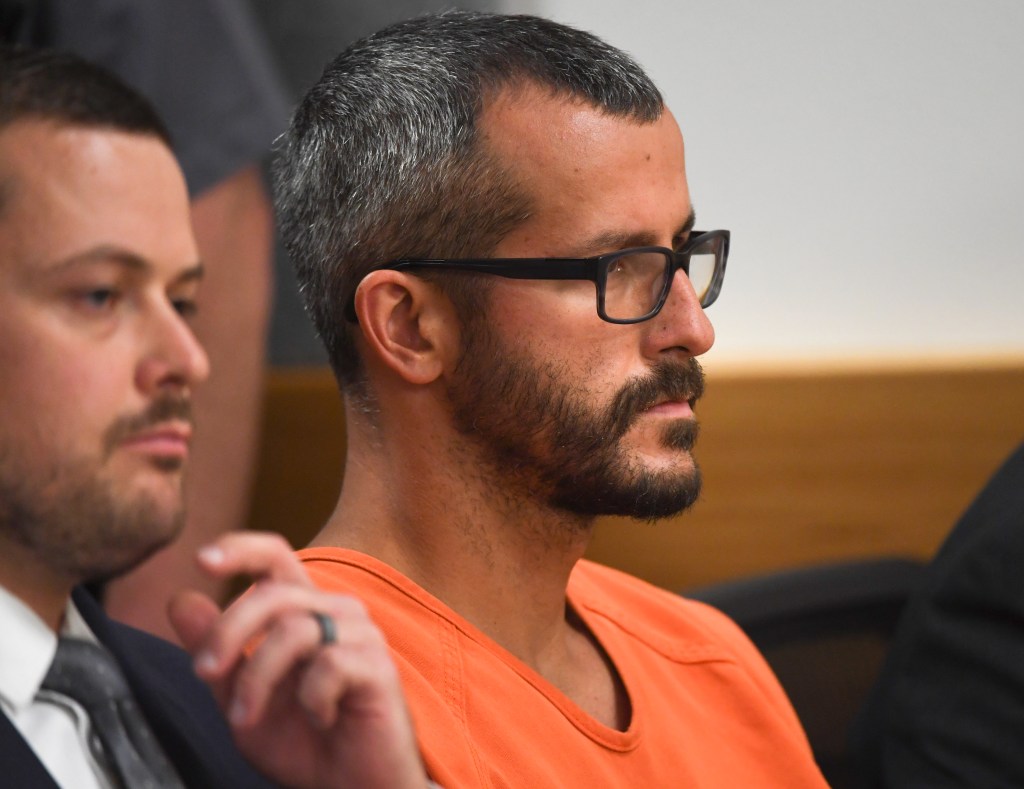
The friend pulled up to 2825 Saratoga Trail to pick Shanann Watts up for a business appointment.
No one answered the door.
Calls went to voicemail.
Texts went unanswered.
The friend contacted authorities, and officers from the Frederick Police Department arrived at the house.
Inside, they found Shanann’s purse and her cell phone.
They found her wedding ring on the bedside table.
Shanann’s husband, Christopher Watts, told police he had returned from a business trip early that morning.
He said his wife and daughters were gone.
He said Shanann had seemed upset, and that he had left for work before she woke.
The ring on the table did not fit that story.
The purse did not fit it.
The phone did not fit it.
A woman who leaves voluntarily takes her ring.
A woman who leaves voluntarily takes her phone.
A woman who leaves voluntarily takes her purse.
That would be the ordinary logic of a departure.
What exactly happened in the bedroom that morning is not yet established.
The ring’s significance is only hinted at.
At that moment, no one knew what the objects meant.
They only knew the objects were there, arranged in a way that contradicted the account being given.
The house was quiet.
The truck was gone.
The family was missing.
THE TRUCK ON CAMERA
The neighbor’s camera caught the truck at 5:17 a.m.
Watts’s Ford F-150 left the home in the early morning hours of August 13.
Something was in the back seat.
What exactly that something was, the record does not specify; the footage is described only as showing “something.”
Watts told police he had left for work before Shanann woke.
The camera said otherwise.
That day, Watts gave television interviews pleading for his family’s return.
He stood in front of reporters and asked for help finding his wife and daughters.
The inconsistencies were already visible to anyone watching.
Shanann’s purse and cell phone were in the house.
Her wedding ring sat on the bedside table.
A woman who packed to leave does not leave those behind.
On August 14, Watts failed a polygraph examination.
The machine read deception.
His words did not match his body’s responses.
On August 15, investigators confronted him with the surveillance footage.
He confessed.
He led them to an oil field site owned by his employer, Anadarko Petroleum.
Shanann’s body was found in a shallow grave there.

The girls’ bodies were discovered in oil tanks.
The autopsy confirmed Shanann had been strangled.
She was 15 weeks pregnant with a son they had planned to name Nico.
The girls had been smothered.
Watts initially claimed Shanann had killed the children in a rage.
Within days, he admitted that was false.
He had strangled her first, he said, then driven to the site with the children still alive.
The truck on camera had carried them there.
The camera did not blink.
The polygraph did not waver.
Watts’s words kept changing, but the footage stayed the same.
The net was closing.
It was already shut.
TWO STORIES, ONE CONFESSION
He confessed on August 15, 2018, the day of his arrest.
The first version was a story about a wife who snapped.
Watts told investigators that Shanann had murdered the girls in a rage, and that he had then buried her in a shallow grave.
It was a story built to shift blame onto a dead woman.
Within days, he gave another story.
The second version was the one the physical evidence had been pointing toward: he had strangled Shanann in their bedroom, driven to the oil field site, smothered both daughters, and disposed of their bodies in oil tanks.
His earlier claim about Shanann was false, he admitted.
The prosecution's case rested on things that did not move — the ring on the bedside table, the phone in the house, the truck on camera, the bodies in the ground.
It rested, too, on his eventual confession.
The defence's position was not that he was innocent.
It was that a guilty plea spared Watts the death penalty.
The prosecution argued the plea was appropriate given the certainty of conviction and the wishes of Shanann's family.
Two interpretations of the same facts stood in the room: a man who killed in a rage, or a man who planned and concealed.
The first version was a lie he told to save himself.
The second version was the one he told when the footage and the bodies left no room for the first.
What actually happened in the bedroom, and in the exact order at the oil field, is not independently established beyond Watts's own admissions.
The record holds his two stories, and his word that the second one was true.
That is all it holds.
THE PUBLIC WATCHES
The cameras were already rolling before the arrest.
Watts sat for television interviews in those first days, pleading for his wife and daughters to come home.
He described a happy marriage and a wife who had seemed upset.
The interviews were broadcast widely, and then the arrest came, and the pleading man became the accused.
Shanann's parents and her brother stood in the courtroom at sentencing.
They spoke of their daughter and their granddaughters, and their words were reported across the country.
The public watched the grief as closely as it had watched the plea.
Watts's mistress was named in the coverage.
Police interviewed her, and the record shows she was never charged with any crime.
The case became a fixture of true-crime programming.
Documentaries and series revisited the house on Saratoga Trail, the truck on camera, the ring on the bedside table.
:max_bytes(150000):strip_icc():focal(995x318:997x320)/chris-watts-family-main-081325-0e08a43c43f54d3ca80a4ff7eb743064.jpg)
No journalist or documentarian has been credibly connected to uncovering new evidence in the case.
The record holds what Watts admitted and what the physical evidence showed.
It does not establish any role for the mistress, or for any other person beyond Watts.
Did she know something?
Did anyone else?
That would require evidence.
The documentaries replay the confession, the sentence, the empty house.
The speculation continues in comment sections and forums.
The record does not move with it.
AND THE STORY STILL ISN'T OVER
The documentaries replay the confession, the sentence, the empty house.
The speculation continues in comment sections and forums.
The record does not move with it.
Christopher Watts is incarcerated at the Dodge Correctional Institution in Wisconsin.
He is serving three consecutive life sentences without parole, plus 84 years for the other charges.
He has given interviews from prison, to investigators and to media.
He has offered no successful appeal.
Shanann's family has spoken publicly about their grief.
They have criticized Watts's shifting narratives.
The house on Saratoga Trail was sold.
The property has been the subject of continued media attention.
Documentaries revisit the case, the confession, the ring.
No journalist or documentarian has been credibly connected to uncovering new evidence.
What comes next?
A pending motion?
A new hearing?
A new confession?
That would require evidence.
The record does not mention any pending action.
No future legal steps are specified.
The case is closed, and it is also not over.
The ring remains a symbol.
A small object that contradicted a lie.
It sat on the bedside table, where a woman who left voluntarily would not have left it.
The purse was in the house.
The phone was in the house.
The ring was in the house.
The full truth of that morning rests only in Watts's own words.
He has told more than one version.
The record holds the confession, the plea, the sentence.
It does not hold why.
The story continues to reverberate.
The public watches.
The family grieves.
The record stays where it is.
Advertisement
You may also like
The tip from a cellmate that sent two ex-cons to a Kansas farmhouse — but the safe was a lie
In 1959, a man in a prison cell told Richard Hickock about a safe. The man said he had once worked for Herbert Clutter,…
The 31-day gap and the nanny who never existed: Casey Anthony's first lie
She had a name before she had a body. On July 15, 2008, a two-year-old girl named Caylee Anthony was reported missing by her…
The 51-day standoff that turned a Texas ranch into a national flashpoint
The smoke rose over the Texas prairie on April 19, 1993, and the cameras caught every second of it. The fire at the Mount…
The Ryder truck axle that cracked the Oklahoma City bombing case — and the traffic stop that came first
The rear axle of a rented Ryder truck landed several blocks from the Alfred P. Murrah Federal Building. It was 9:02 a.m. on April…
The phone records that placed a business associate near the McStay gravesite — and the search history that followed
The last text message from Joseph McStay’s phone was sent to a business associate on the night of February 4, 2010. It was the…
Emmett Till's body was found by a cotton gin fan — but the trial's first witness changed everything
The fan was tied around his neck with barbed wire. Four days after the abduction, Emmett Till's body came up from the Tallahatchie River.…