The Ryder truck axle that cracked the Oklahoma City bombing case — and the traffic stop that came first
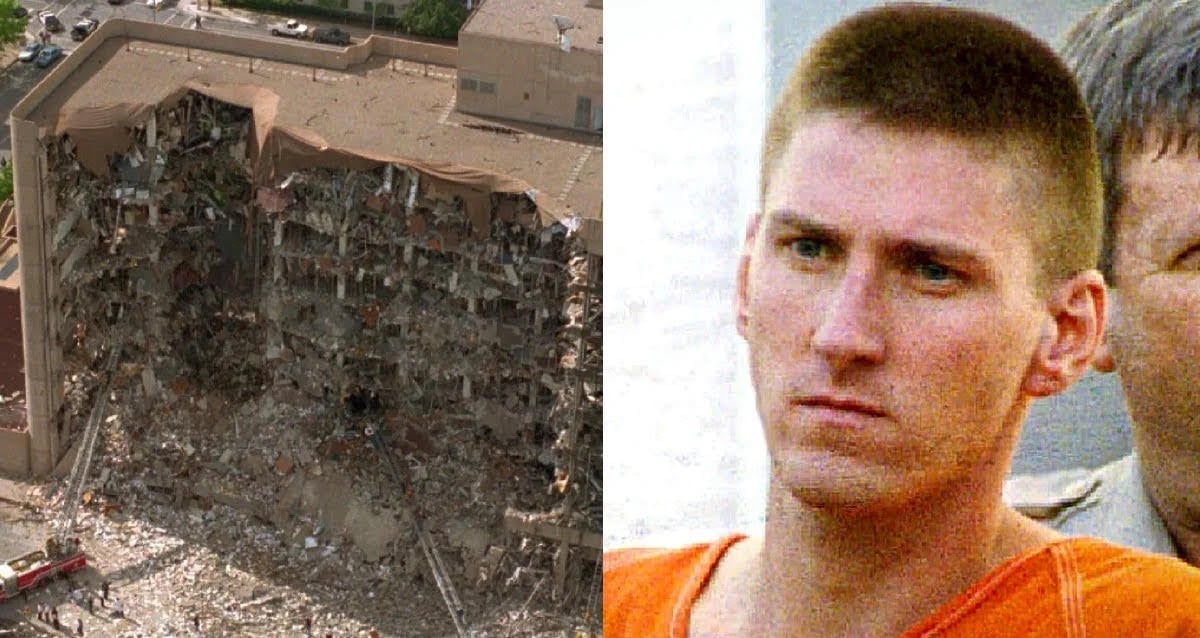
The rear axle of a rented Ryder truck landed several blocks from the Alfred P. Murrah Federal Building.
It was 9:02 a.m. on April 19, 1995.
The truck had been packed with an ammonium nitrate and fuel oil bomb.
The blast destroyed the north face of the nine-story building.
It killed 168 people, including 19 children in the building's day care center.
More than 680 others were injured.
The explosion was felt and heard for miles.
Emergency responders and local police arrived within minutes.
The first report of the explosion came from local news and police radio.
The FBI took over the investigation within hours.
The axle was a single piece of metal.
It was blown several blocks from the blast site.
Agents traced it by its VIN to a Ryder rental outlet in Junction City, Kansas.
The renter had used a fake name.
The renter had been seen with a second man.
The identity of that second man is not established in the record at this point.
A theory circulating online — not a fact established by the record — is that others, possibly linked to foreign terrorists, were involved.
The FBI initially suspected foreign terrorism.
The investigation quickly turned domestic.
The axle led to the renter.
The renter was already in custody.
About 90 minutes after the bombing, a man was arrested on a routine traffic stop in Perry, Oklahoma, for driving without a license plate and carrying a concealed weapon.
His name was Timothy McVeigh.
He was 27, a Gulf War veteran.
The axle was the hinge.
A routine rental receipt led to the largest FBI investigation in history at the time.
How does a single piece of metal do that?
How does a VIN become a trail?
How does a rental receipt become a case?
That would require evidence.
The evidence was the axle itself.
THE TRAFFIC STOP
The first report of the explosion came from local news and police radio.
The FBI took over the investigation within hours.
About 90 minutes after the bombing, a 27-year-old Gulf War veteran named Timothy McVeigh was arrested on a routine traffic stop in Perry, Oklahoma.
The stop was for driving without a license plate and carrying a concealed weapon.
McVeigh was already in custody.
Within hours, the truck axle's VIN led agents to the Ryder rental in Junction City, Kansas.
The renter had used the alias "Robert Kling."
A motel clerk and a waitress recognized his photo.
They identified the renter as Timothy McVeigh.
McVeigh was in a jail cell in Perry, Oklahoma, on the traffic stop.
The axle led to the rental.
The rental led to the name.
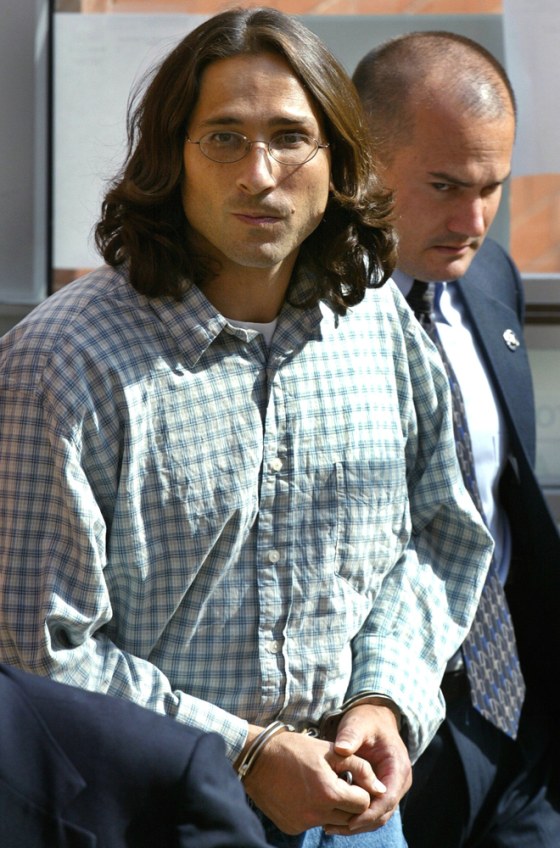
The name led back to the man already held.
The exact timing of when the FBI connected the traffic stop arrest to the Ryder rental is not specified in the record.
It is a gap in the timeline.
It is also the hinge.
Not because the FBI moved slowly.
But because the arrest came first, by accident, and the evidence caught up.
The axle was blown several blocks away.
It carried a VIN.
The VIN carried a rental agreement.
The rental agreement carried a false name.
The false name carried a photograph.
The photograph carried a face.
The face was already in custody.
THE GUN SHOW CARD
The FBI initially suspected foreign terrorism.
It did not stay that way for long.
The truck axle carried a VIN, and the VIN carried a name — a false one, but a name.
The false name carried a photograph.
The photograph carried a face.
The face was already in custody.
From that face, agents moved outward.
A business card recovered from a gun show led to Terry Nichols.
Nichols was arrested in Kansas days after the bombing.
Then came Michael Fortier.
Fortier, a friend of both men, was arrested and agreed to cooperate.
The key evidence stacked up: the truck axle, a receipt for ammonium nitrate, and testimony from Fortier.
Fortier described McVeigh's plans, according to the record.
The specific contents of that testimony are not detailed in the record.
What is documented is that he testified for the prosecution.
The investigation turned domestic with speed.
One axle became a rental outlet.
A rental outlet became a face.
A face became a network of people.
A network became three men in custody.
The case accelerated, but it also stumbled.
The FBI failed to turn over thousands of pages of documents to the defense.
That failure delayed the trial and led to an investigation of the FBI's handling of evidence.
It was a mistake in the middle of an otherwise tight case.
The prosecution's forensic evidence was overwhelming, the record shows.
The axle held.
The receipt held.
The testimony held.
What did not hold was the theory of foreign involvement.
That theory was argued by the defense, and the record does not establish it.

The evidence pointed one way: domestic, deliberate, and traced from a single piece of metal.
THE TWO STORIES
The defense argued that McVeigh was a scapegoat.
They said others, possibly linked to foreign terrorists, were involved.
That was the story the jury heard from Stephen Jones, McVeigh's lead defense attorney.
The specific identity of those "others" is not established in the record.
The prosecution told a different story.
They pointed to the truck axle, traced by its VIN to a Ryder rental in Junction City, Kansas.
They pointed to a receipt for ammonium nitrate.
They pointed to Michael Fortier, who testified about McVeigh's plans.
The forensic evidence, the prosecutors said, was overwhelming.
It was domestic, deliberate, and traced from a single piece of metal.
The trial did not happen in Oklahoma City.
Judge Richard Matsch moved it to Denver, Colorado, citing pretrial publicity.
McVeigh was charged with 11 counts of conspiracy and first-degree murder.
The jury heard the two stories.
The scapegoat theory, or the perpetrator theory.
Which one did the evidence support?
Which one did the axle support?
Which one did the receipt support?
The record answers plainly.
On June 2, 1997, the jury convicted McVeigh on all 11 counts.
The same jury sentenced him to death.
Two stories went in.
One verdict came out.
AND THE STORY STILL ISN'T OVER
McVeigh’s appeals failed.
On June 11, 2001, he was executed by lethal injection at the federal penitentiary in Terre Haute, Indiana.
Terry Nichols was tried separately.
He was convicted of conspiracy and eight counts of involuntary manslaughter, and sentenced to life in prison without the possibility of parole; the jury deadlocked on the death penalty.
His conviction was partially overturned on appeal.
He was retried and again sentenced to life.
Michael Fortier pleaded guilty.
He was sentenced to 12 years in prison for his role, and he was released from prison in 2006 after serving his sentence.
The Murrah Federal Building site is now the Oklahoma City National Memorial.
A field of 168 empty chairs stands there, one for each victim.
The memorial and museum opened in 2000.
The chairs are concrete. The names are bronze. The silence is permanent.
What remains unresolved in the public record?
The current status of any ongoing legal proceedings or investigations is not specified in the record.
That is not established.
What is established is the axle, the VIN, the receipt, the testimony.
What is established is the verdict.
What is established is the execution.
The story is closed in the courts.
It stays open in the chairs.
Advertisement
You may also like
The 1965 confession that never reached a trial — and the one name police could not clear
He confessed in 1965. He was already in custody, held for other crimes, when he gave a detailed account of the Boston Strangler murders.…
The 35,000-word manifesto that unmasked a killer after 17 years
A 35,000-word document arrived at two newspapers in 1995. Its title was "Industrial Society and Its Future." The writer demanded that it be published.…
The therapy tapes that turned a mob-style hit into a family murder case
The den was a room for family, for television, for the quiet end of a weekday night. On August 20, 1989, José and Kitty…
A tip from a truck driver led police to a parked Chevrolet Caprice — what they found inside
A truck driver made a call on October 24, 2002. The tip led police to a rest stop on Interstate 70 near Myersville, Maryland.…

The cellphone pings that placed Adnan Syed near Leakin Park — and the defense that never called one key witness
The cellphone records put Adnan Syed near Leakin Park around the time of the burial, according to the prosecution's case. A ping, a tower,…
The 1993 slumber party abduction that would take 64 days to resolve
The window was unlocked. On the night of October 1, 1993, an intruder entered through it at a home in Petaluma, California. Inside, twelve-year-old…