The 35,000-word manifesto that unmasked a killer after 17 years
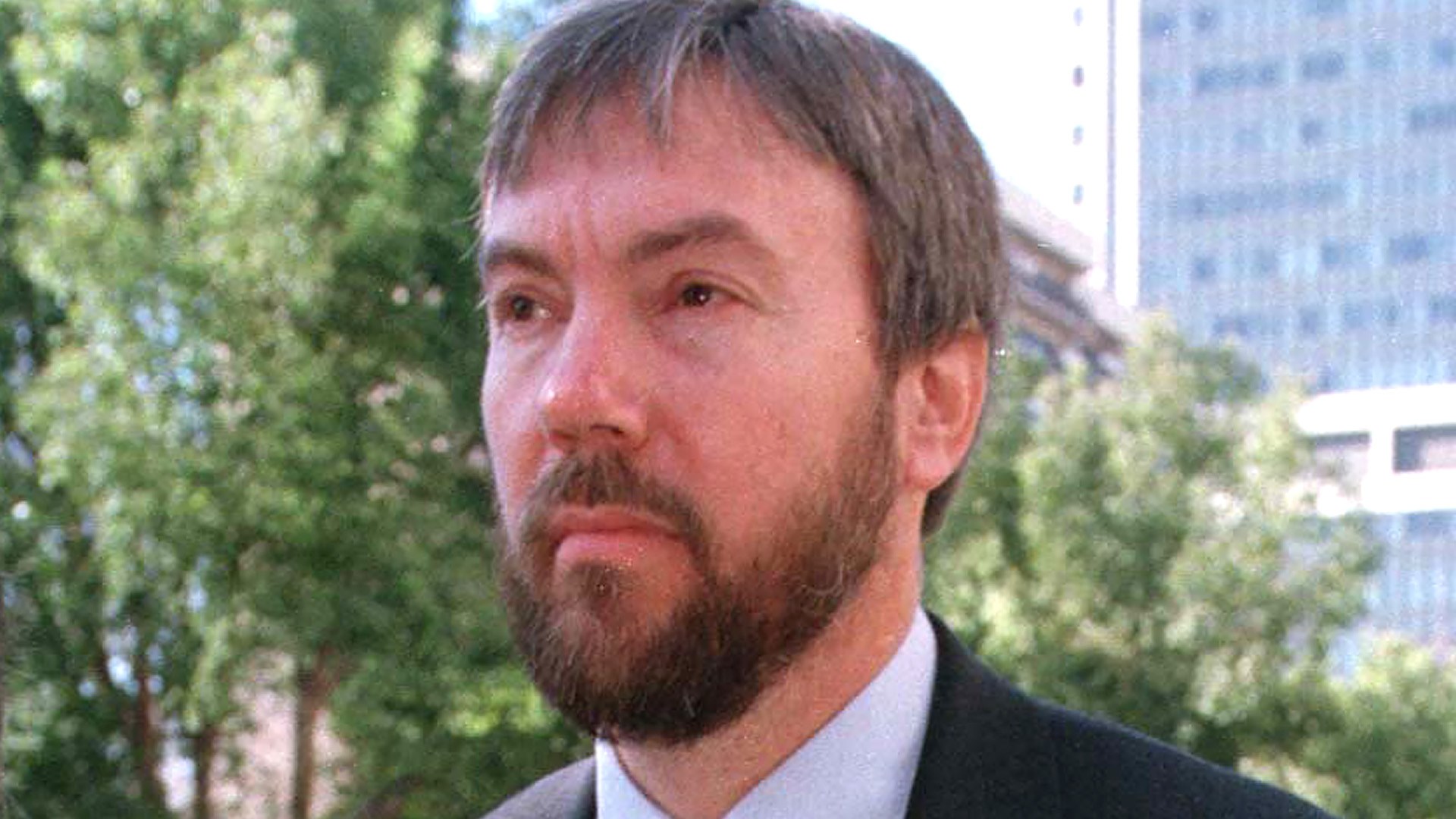
A 35,000-word document arrived at two newspapers in 1995.
Its title was "Industrial Society and Its Future."
The writer demanded that it be published.
The author was unknown at the time; the record does not establish otherwise.
The manifesto was not signed.
It carried no return address that identified a man.
Its words were dense, typed, and patient.
The text ran long enough to fill a small book.
It condemned modern technology, industrial society, and the shape of human life under both.
The newspapers had received it because a series of mail bombs had killed three people and injured 23 others over seventeen years.
The bomber had promised to stop if the manifesto ran.
The editors published it.
What the record does not establish is that the document's length itself was the clue that unmasked the bomber.
That claim circulates online.
It is a theory, not a fact established by the case file.
How could a 35,000-word text lead to one man?
How could anonymous typing become a name?
How could a manifesto become an address in Montana?
That would require evidence.
The evidence, when it came, was not in the prose alone.
It was in a brother's recognition of a writing style.
But that came later.
For now, there was only the document.
It sat in print, anonymous.
Its author had demanded publication.
He got it.
THE BOMBS
Between 1978 and 1995, a series of mail bombs killed three people and injured 23 others across the United States.
The first bomb, in May 1978, was found at the University of Illinois at Chicago.
It did not explode as intended; it was discovered before it could be opened.
The attacks continued for nearly two decades.
They targeted academics, airline executives, and computer store owners.
The case became known as the Unabomber case, a name derived from the FBI's code name UNABOM.
UNiversity and Airline BOMbings.
The final bombing, in April 1995, killed the president of the California Forestry Association in Sacramento.
That victim is named later in the case file; the specific identities of the three people killed are not established in this section of the record.
What is established is the pattern.
A package, a wooden box, a pipe, a postal mark.
The devices were built from wood, metal, and household materials, sent through the U.S. Postal Service.
The first one sat on a university parking lot.
The last one arrived in an office.
Seventeen years passed between that first find and the final blast.
The bombs were not random.
They were mailed.
The targets were chosen.
The injuries were real; the deaths were three.
The record lists the count but not all the names here.
That comes later.
THE 17-YEAR SEARCH
For seventeen years, the FBI’s UNABOM task force chased a ghost.
They called it UNABOM, for the university and airline targets.
The task force examined bomb fragments, postal marks, and the wood of each device.
Forensic analysis of those components linked the bombs to one another.
That link proved a single hand built them.
But the hand had no name.
Early on, the FBI focused on other suspects.
One was a man named John Patrick O’Leary.
He was later cleared.
The specific details of that early focus are not in the record beyond his being cleared.
What remains documented is the length.
Seventeen years of investigation drew criticism.
Critics questioned the FBI’s handling of the case.
They questioned the cost, the delays, the public fear.
The task force had leads, then lost them.
It had suspects, then cleared them.
It had a profile, then revised it.
The bombs kept coming, and the count grew.
Three dead.
Twenty-three injured.
Each device added pressure to a case that seemed to resist resolution.
What finally broke it open was not a forensic breakthrough.
Not a confession.
Not a lucky arrest.
It was a manuscript.
In 1995, the manifesto was published.
The record states that publication was the turning point.
It does not state what the FBI knew before that moment.
It does not state how close they were.
It states only that the writing reached the public, and then the case changed.
THE BROTHER'S CALL
The brother read the manifesto in the newspaper, and he recognized the voice.
Not the ideas. The phrasing, the rhythms, the particular way the sentences turned.
That recognition was the documented turning point. It was not an online theory; it was a family member making a call.
The brother, David Kaczynski, contacted authorities. He provided letters and documents written by his brother to the FBI.
His wife, Linda Patrik, helped in the identification. She read alongside him, and she agreed.
Forensic linguists compared the manifesto to those documents. They concluded the same person likely wrote both.
In April 1996, FBI agents searched the brother's cabin in Montana. They found bomb-making materials there.
They found a handwritten copy of the manifesto. They found a diary detailing the attacks.
The exact contents of that diary are not detailed in the record. The exact contents of the handwritten manifesto are not detailed either. Only that they were found.
The evidence was overwhelming, the record states.
That is what the documents say. That is what the case record establishes.
What it does not establish is what the call cost the family. The record does not say what David Kaczynski felt when he made it. It does not say what he and Linda Patrik discussed before they picked up the phone.
It says only that they did. It says only that the writing reached the public, and then the case changed.
AND THE STORY STILL ISN'T OVER
He was charged in 1996 with multiple federal counts, including three counts of first-degree murder, the case record states.
The trial began in January 1998 in Sacramento before a federal judge.
Kaczynski initially sought to represent himself.
He rejected a plea deal that would have required a life sentence without parole.
In January 1998, he agreed to a plea agreement.
He pleaded guilty to all charges in exchange for a sentence of life in prison without the possibility of parole.
He was sentenced on May 4, 1998, to four life sentences plus 30 years.
He was not eligible for parole.
Kaczynski is serving his life sentence at the Federal Supermax prison in Florence, Colorado.
He has made occasional court filings over the years, including attempts to withdraw his plea.
All of those attempts were denied, as of the record.
The specific outcome of any pending court filing is not in the record.
That is not established.
The cabin where he lived was moved and displayed at the Newseum in Washington, D.C.
The museum closed in 2019.
What remains is the weight of the sentence, not the question of guilt.
That was settled in a courtroom, not by any theory.
The brother's recognition of a writing style is the documented turning point.
It is not a viral claim.
It is a call that changed the case.
The record does not say what David Kaczynski felt when he made it.
It says only that he did.
That is the documented fact.
Everything else is aftermath.
Advertisement
You may also like
The 2008 911 call that set off a search for a toddler who was never found alive
The 911 call came on July 15, 2008, from a house in Orlando, Florida. Cindy Anthony was on the line, reporting her granddaughter missing.…
The Atlanta mothers who demanded answers as 28 children vanished
Camille Bell's son was nine years old when he disappeared. Yusuf Bell left the house to run an errand and never came back. Faye…
The 8:44 p.m. video that shattered Alex Murdaugh's alibi
The video on Paul Murdaugh's phone is dated 8:44 p.m., June 7, 2021. SLED agents analyzed the clip during the trial and identified the…
The ex-wife's custody fight that prosecutors linked to the D.C. sniper attacks
October 2, 2002. A man was shot outside a grocery store in Wheaton, Maryland. That was the first. Between that evening and October 22,…
The fingerprint on a door, the eyeglasses left behind, and the witness who tied Manson to the murders
The word was on the front door, written in blood. PIG. Five people were dead inside the house at 10050 Cielo Drive in Benedict…
The 911 call that sent searchers to Wyoming — and the notebook that changed everything
The notebook sat in the dirt beside his remains. October 20, 2021, in the Myakkahatchee Creek Environmental Park in Florida. The remains belonged to…