The 31-day gap and the nanny who never existed: Casey Anthony's first lie
She had a name before she had a body.
On July 15, 2008, a two-year-old girl named Caylee Anthony was reported missing by her grandmother, Cindy Anthony, in Orlando, Florida.
The child had not been seen for 31 days.
Her mother, Casey Anthony, initially told police that Caylee had been kidnapped by a nanny.
The nanny had a name: Zenaida Fernandez-Gonzalez.
That name would become the first crack in the story, the detail that made detectives pause.
It is not established that any person named Zenaida Fernandez-Gonzalez existed, was a nanny, or had any involvement with the child.
The record establishes a name given to police.
The record does not establish a person behind it.
Who was this nanny who never appeared, never came forward, never had a neighbor or a landlord or a single photograph?
That would require evidence.
The case drew intense national media attention, with a large public following that often vilified Casey Anthony.
Cable news picked up the name and turned it into a question mark.
The public turned the question mark into a punchline.
Zenaida Fernandez-Gonzalez became shorthand for a lie before the trial even began.
She was a name on a missing person's report.
She was also the reason the investigation started looking at the mother.
31 DAYS OF SILENCE
The call came on July 15, 2008, from the grandmother.
Cindy Anthony told the 911 dispatcher that her granddaughter was missing, that the child had not been seen in 31 days.
That gap was the first thing the detectives could not explain.
A two-year-old does not vanish from a family's life for a month without someone noticing, without someone asking, without someone calling.
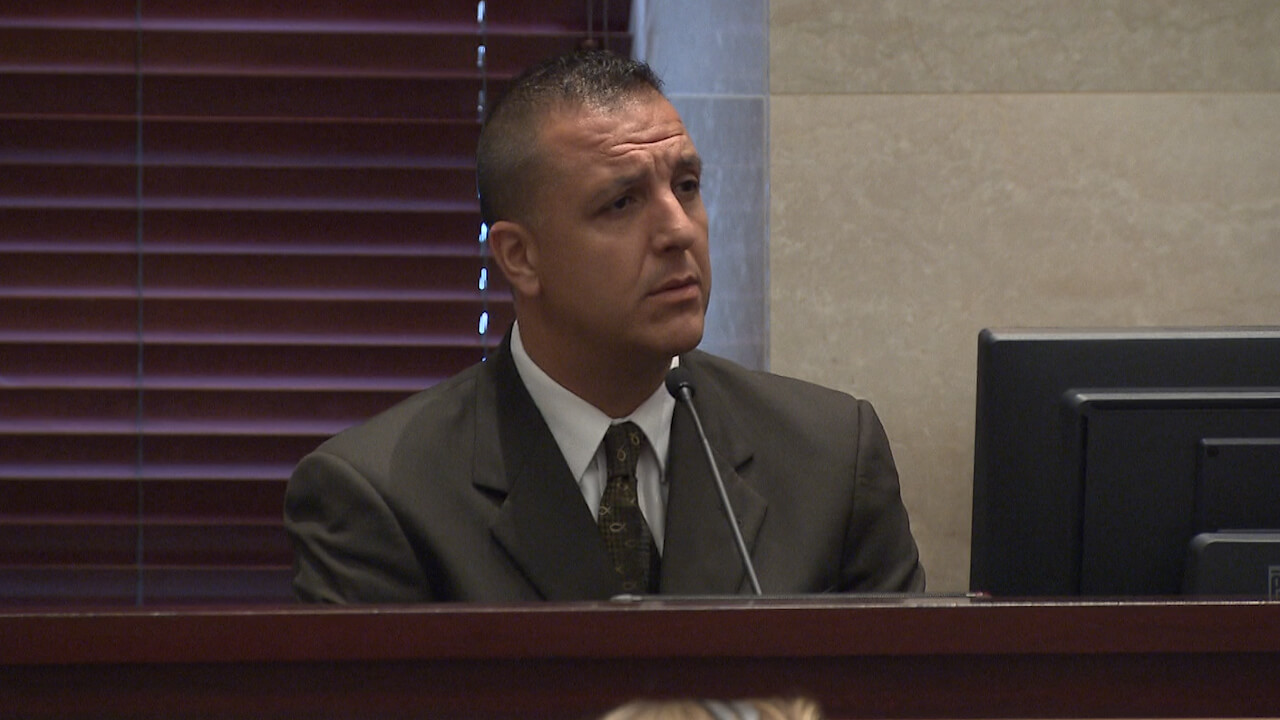
The lead detective, Yuri Melich, would later testify about what he found when he started asking.
He testified that Casey Anthony gave contradictory accounts.
She told him the nanny had taken the child, then she could not say where the nanny lived, then she could not say where the nanny worked.
She told him she had been looking for the child for weeks, but she could not name a single hospital, shelter, or police station she had contacted.
Melich testified that Casey appeared unconcerned about her daughter's whereabouts.
What was she doing in those 31 days?
What was she doing in that silence?
What was she doing while no report existed, no search existed, no alarm existed?
That would require evidence, and the record does not establish what Casey Anthony did or where she was during those 31 days before the report.
What the record does establish is the car.
The car Casey had been driving smelled of decomposition.
Forensic testing later found evidence consistent with human decomposition in the trunk.
The smell was enough to make the detectives look at the mother differently.
The nanny story had already made them suspicious.
The car made them certain they were not being told the truth.
Melich kept asking, and Casey kept giving him versions that did not hold.
Each version was a new thread, and each thread led nowhere.
The silence stretched behind them, 31 days long, and nothing in the record fills it.
THE REMAINS AND THE TAPE
On December 11, 2008, a utility worker found skeletal remains in a wooded area near the Anthony family home.
The remains were later identified as Caylee Anthony.
The medical examiner ruled the death a homicide, though the cause of death could not be determined.
Duct tape was found near the skull.
The prosecution argued that the tape indicated suffocation.
The defense countered that the body had been in the woods for months and that the tape could have been unrelated.
What the tape did, what the tape meant — that would require evidence.
The record establishes the tape was there.
The record does not establish that the tape killed her.
The cause of death was never definitively established.
The connection between the duct tape and the death is not established.
The discovery came after months of searching that had not covered that ground.
The investigation was criticized for delays.
Why had the initial search missed that wooded lot?
Why had 31 days passed before anyone reported the child missing?
Why had the remains sat there from June to December?
Those questions have answers in the record.
The answers do not include the tape.
A skull, a strip of tape, a wooded lot near the family home.
The physical weight of it settled over the case.
It was evidence.
It was also another question.
TWO STORIES, ONE CHILD
Two stories were put to the jury.
The prosecution, led by a lawyer from the Orange County State Attorney's Office, argued that Casey Anthony had murdered her daughter to live a carefree life.
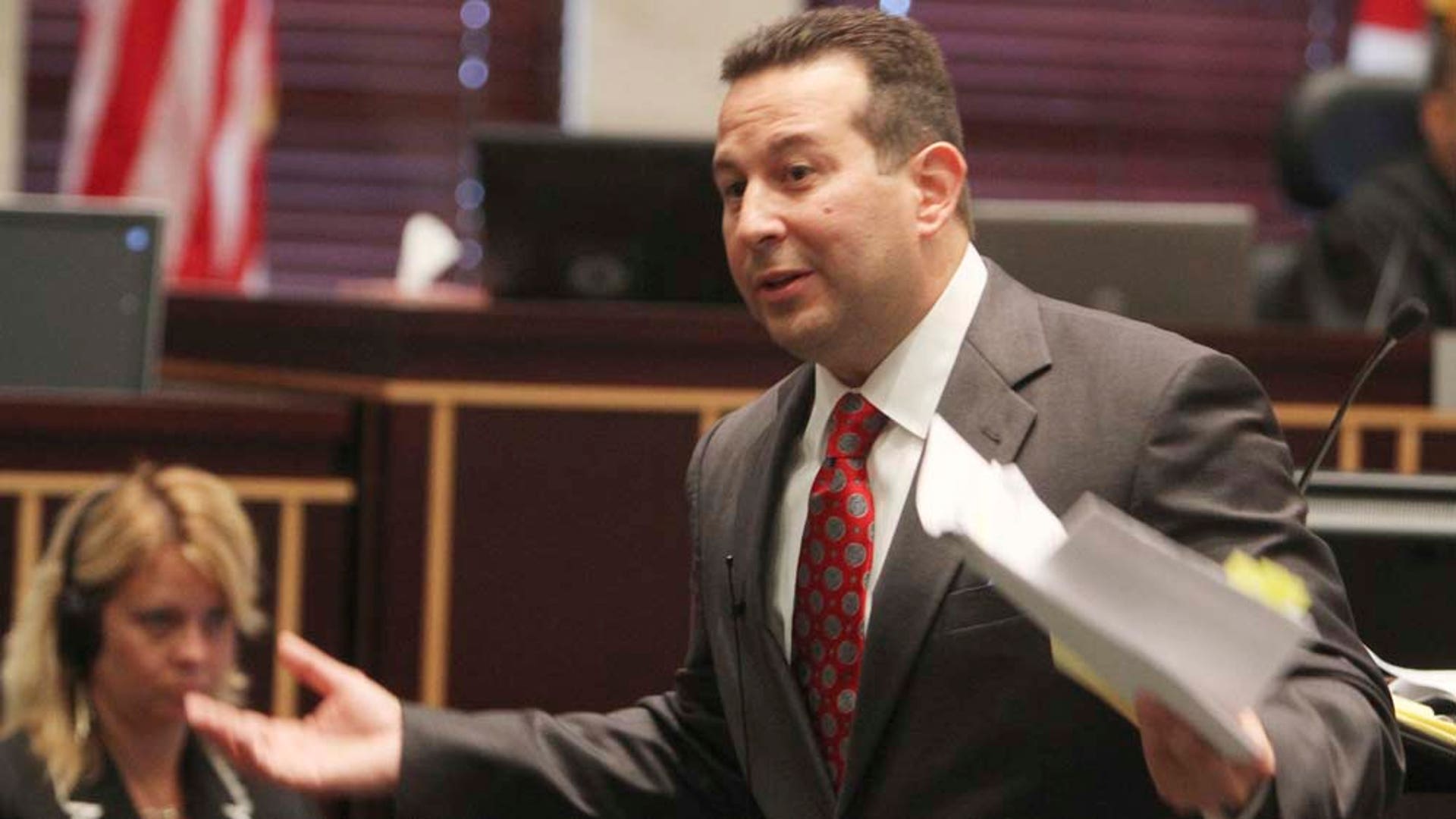
The defense, led by Jose Baez, argued that Caylee had accidentally drowned in the family pool on June 16, 2008, and that Casey had covered it up due to a history of abuse.
The trial began in May 2011 and lasted six weeks.
Cable news carried it gavel-to-gavel.
The public watched from both sides of the screen.
Most believed one version: the mother who partied while her child was gone.
That version was not the one the jury chose.
On July 5, 2011, the jury found Casey Anthony not guilty of murder, aggravated child abuse, and aggravated manslaughter.
She was found guilty of four counts of providing false information to law enforcement.
The verdict sparked widespread public outrage.
Commentators called it a failure.
Crowds outside the courthouse voiced their disgust.
Jurors later said the evidence did not meet the burden for murder.
They did not say the drowning story was true.
What actually happened to Caylee Anthony on or around June 16, 2008, is not established by the record.
The acquittal does not establish the defense's drowning narrative.
It does not establish the prosecution's murder-for-freedom narrative either.

It establishes only what the state could not prove.
The public wanted certainty.
The jury offered doubt.
The two stories remained irreconcilable.
The vertigo was the point.
One child, two versions, no verdict on the truth of either.
The mother walked free in July 2011.
The child stayed in the ground.
The record holds the charge, the trial, the acquittal.
It does not hold what happened that day.
That would require evidence.
AND THE STORY STILL ISN'T OVER
She was released from jail in July 2011.
She has largely remained out of the public eye, though she has occasionally appeared in media interviews and has been involved in legal disputes, including a bankruptcy filing.
She has maintained her innocence.
George and Cindy Anthony have remained in Florida.
The verdict did not end the argument.
It did not end the coverage.
It did not end the crowd outside the courthouse, the cable panels, the comment sections.
The case has continued to generate public interest and debate, with many believing that justice was not served.
What was served was a verdict: not guilty of murder, guilty of lying to law enforcement.
What was served was time already served.
What was served was a release date.
No other person has been charged in Caylee's death.
There is no pending legal step in the record.
The name Zenaida Fernandez-Gonzalez still hangs in the air.
It was a name Casey Anthony gave police in July 2008.
It was a name that produced no person.
It was a name that produced no arrest, no file, no body other than the one found in the woods.
The record does not establish that any such nanny existed.
The record does not establish that any such nanny was involved.
The record does not establish what happened on June 16, 2008, or the day Caylee died.
It establishes a charge, a trial, an acquittal.
It establishes a child reported missing after 31 days.
It establishes remains found in December.
It establishes duct tape near a skull and a cause of death that could not be determined.
The public believed one story.
The jury believed another.
The case produced a verdict but no answer.
The ache remains unresolved.
That would require evidence.
Advertisement
You may also like
The 1965 confession that never reached a trial — and the one name police could not clear
He confessed in 1965. He was already in custody, held for other crimes, when he gave a detailed account of the Boston Strangler murders.…
The 35,000-word manifesto that unmasked a killer after 17 years
A 35,000-word document arrived at two newspapers in 1995. Its title was "Industrial Society and Its Future." The writer demanded that it be published.…
The therapy tapes that turned a mob-style hit into a family murder case
The den was a room for family, for television, for the quiet end of a weekday night. On August 20, 1989, José and Kitty…
A tip from a truck driver led police to a parked Chevrolet Caprice — what they found inside
A truck driver made a call on October 24, 2002. The tip led police to a rest stop on Interstate 70 near Myersville, Maryland.…
The cellphone pings that placed Adnan Syed near Leakin Park — and the defense that never called one key witness
The cellphone records put Adnan Syed near Leakin Park around the time of the burial, according to the prosecution's case. A ping, a tower,…
The 1993 slumber party abduction that would take 64 days to resolve
The window was unlocked. On the night of October 1, 1993, an intruder entered through it at a home in Petaluma, California. Inside, twelve-year-old…