Emmett Till's body was found by a cotton gin fan — but the trial's first witness changed everything
The fan was tied around his neck with barbed wire.
Four days after the abduction, Emmett Till's body came up from the Tallahatchie River.
He was 14 years old, a Black boy from Chicago visiting relatives in Money, Mississippi.
He had been taken from his great-uncle's home in the middle of the night on August 28, 1955.
The cotton gin fan was the weight. The barbed wire was the binding.
His face was mutilated beyond recognition.
He was identified by a ring bearing his father's initials.
That ring, and that ring alone, gave him back his name.
A theory circulating online suggests the trial's first witness broke the timeline.
That is not a fact established by the record.
The record does not name the first witness.
The record does not describe their testimony as breaking anything.
It says the trial opened on September 19, 1955, in Sumner, Mississippi.
It says witnesses stood and pointed.
It says a jury deliberated for just over an hour.
The fan is documented. The body is documented. The ring is documented.
What the first witness said, and when, and to what effect — that would require evidence.
The river gave back the body. The ring gave back the name.
What the courtroom gave back is a separate question.
THE ABDUCTION AND THE RIVER
The river gave back the body on the fourth day.
The body was tied to a cotton gin fan with barbed wire.
The fan was traced to a nearby gin, according to the investigation.
The weight was meant to keep the body down. The river gave it back anyway.
The body belonged to Emmett Till, a 14-year-old boy from Chicago visiting relatives in Money, Mississippi.
He had been taken from his great-uncle's home in the middle of the night.
Days earlier, Till had allegedly whistled at or spoken to Carolyn Bryant, a white woman who worked at a local grocery store.
That alleged slight was the reported beginning. The weighted body was the reported end.
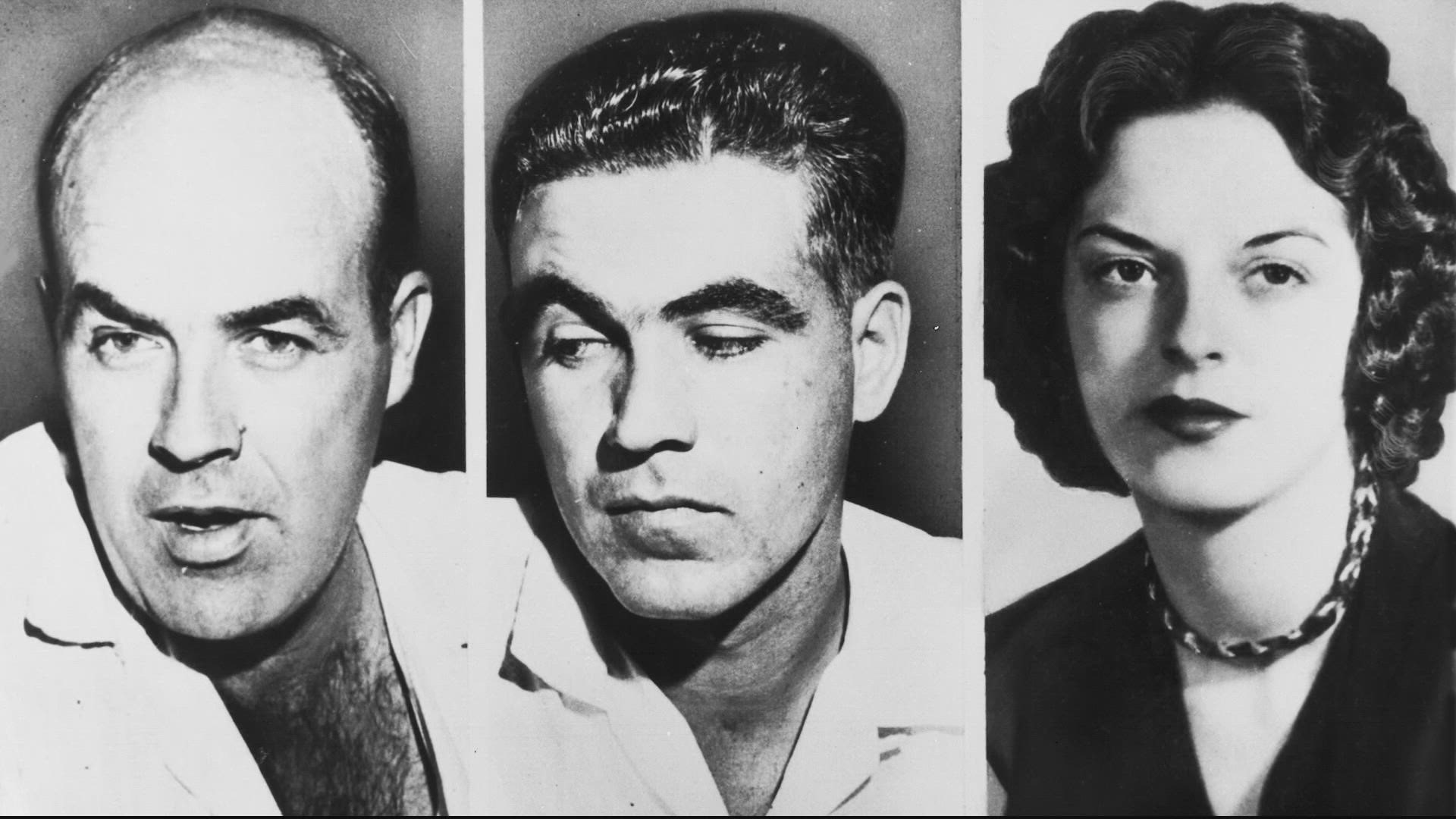
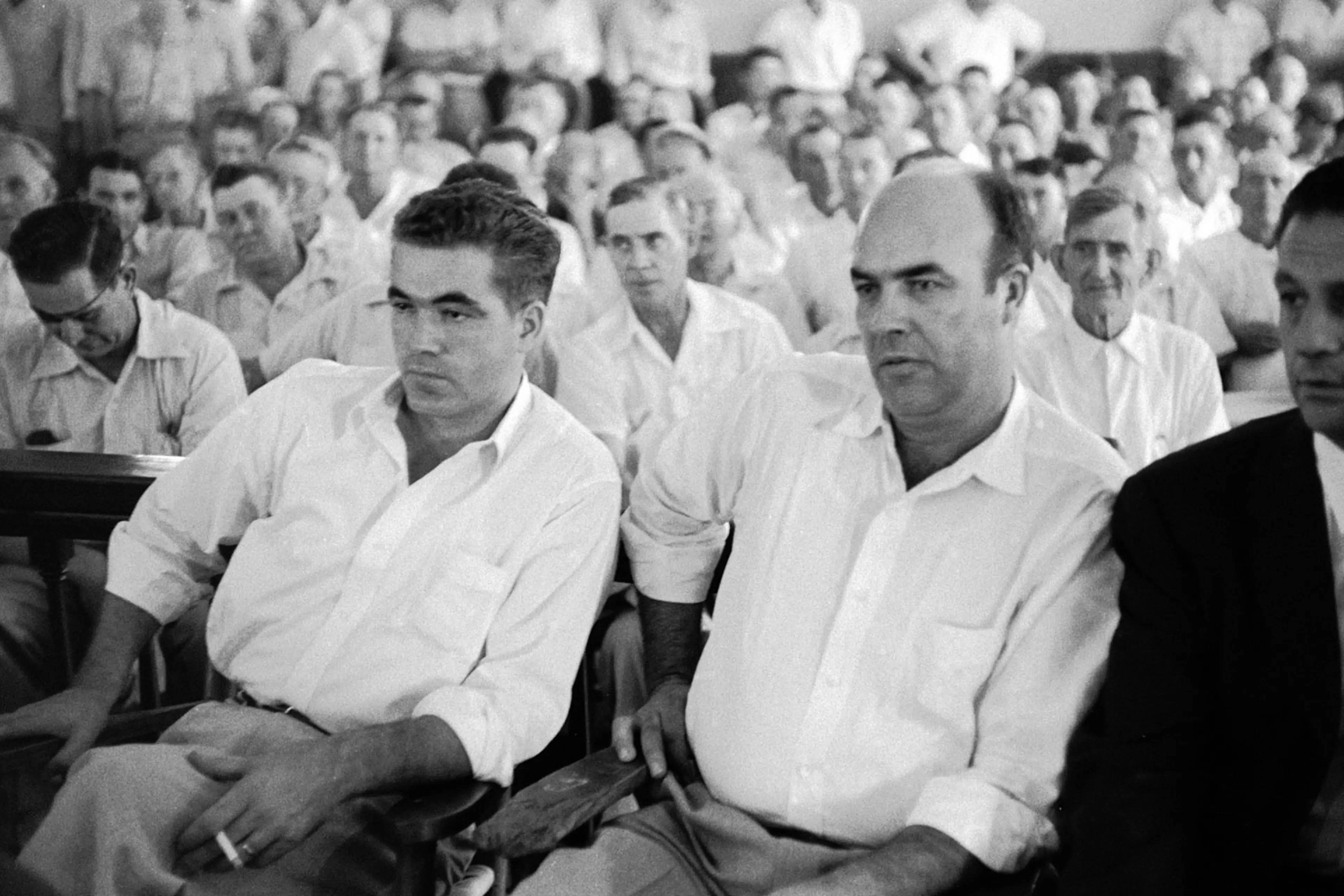
Roy Bryant, Carolyn's husband, and his half-brother J.W. Milam were arrested and charged with murder.
The body was identified by Moses Wright, Till's great-uncle, and by a ring bearing the boy's father's initials.
Wright would later testify he identified the abductors.
The source does not specify who first reported Till missing.
The source does not specify the exact time of the abduction beyond "middle of the night."
What the record does establish: a boy spoke, a man fetched his brother, and a fan from a gin was tied to a corpse.
How the investigation connected that fan to the accused is a question the record answers only in part.
The fan was traced. The men were charged. The body was returned to a mother who insisted the world see it.
The sequence ran from a reported whistle to a barbed-wire knot.
What the courtroom made of that sequence is a separate question.
THE TRIAL'S FIRST WITNESS
The trial opened on September 19, 1955, in Sumner, Mississippi, before an all-white jury.
The courtroom was a small, hot room in the Delta.
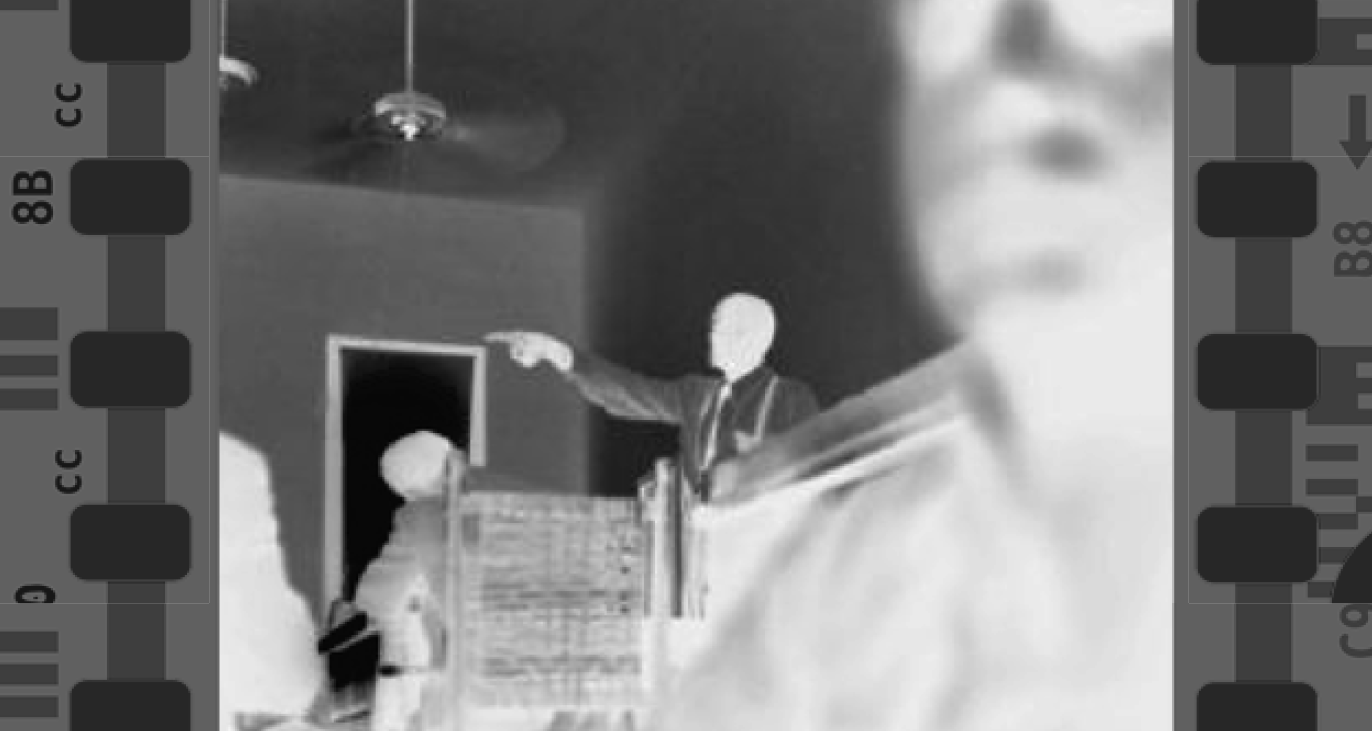
Moses Wright stood and pointed at Bryant and Milam in court.
He testified he identified the abductors.
He was Till's great-uncle.
He was the man who had opened the door that night.
Willie Reed testified he saw the two men with Till at a shed on a plantation.
Reed placed them together.
The prosecution built its case on the sequence: the whistle, the abduction, the fan.
Then Carolyn Bryant took the stand.
She testified that Till had grabbed her and made lewd remarks.
She was not cross-examined.
Not because the defense had nothing to ask.
But because the defense did not need to ask.
Her words stood.
The defense argued the body was not Till's.
The state had not proven the identity of the victim, they said.
The face was mutilated beyond recognition.
The ring was not enough.
The body could have been planted.
Some say the trial's first witness broke the timeline.
That is a theory.
The record does not identify who was literally the first witness called.
It names Moses Wright and Willie Reed as key witnesses.
It does not order their testimony.
What the record shows is a man pointing.
A witness describing a shed.
A woman whose testimony was never tested.
That would require evidence.
THE VERDICT AND THE CONFESSION
The jury deliberated for just over an hour.
Reportedly, they paused only for a soft drink break.
On September 23, 1955, the all-white male jury acquitted both defendants.
Roy Bryant and J.W. Milam walked out of the courtroom free men.
Not because the evidence was thin.
But because the state had failed to prove identity, the defense argued, and the body was unrecognizable.
Months later, protected by double jeopardy, they confessed.
In 1956, Look magazine published a paid interview by journalist William Bradford Huie.
The source does not specify the exact date of the confession beyond 1956 and "months later."
In the confession, they described how they beat Till, shot him, and dumped his body in the river.
They described a .45-caliber pistol.
They described the cotton gin fan and the barbed wire.
They described the night.
The confession confirmed the killing.
It confirmed what Moses Wright had pointed at.
It confirmed what Willie Reed had seen at the shed.
It arrived after the verdict, after the acquittal, after double jeopardy made it safe to tell.
No further charges were ever filed.
A confession that changed nothing in law.
A confession that changed everything in the record.
The jury's hour was done.
The story was not.
AND THE STORY STILL ISN'T OVER
Roy Bryant died in 1980. J.W. Milam died in 1981.
The case was reopened by the U.S. Department of Justice in 2004 after new information emerged. What that information was, the record does not specify.
In 2005, Emmett Till's body was exhumed. It was positively identified.
In 2007, a grand jury in Mississippi declined to indict anyone else. That included Carolyn Bryant, who by then had recanted parts of her testimony. The details of that recantation are not established by the record.
In 2022, an unserved arrest warrant for Carolyn Bryant was discovered. It dated from the original investigation. No charges were pursued.
The Emmett Till Antilynching Act, naming the case, was signed into federal law in 2022.
It is a law with his name. It is a warrant that was never served.
The men who confessed are dead. The woman who testified is not charged.
What remains is the record: the fan, the river, the identification, the acquittal. And the questions the record leaves open.
A warrant exists. A recantation is alleged. A federal reopening happened.
That would require evidence.
The story is not closed because the documents are not closed. The story is not closed because the law now carries his name. The story is not closed because a grand jury declined, not because the case was resolved.
She was never indicted. No one else was either.
The timeline runs from a cotton gin fan to a federal statute. It runs through an exhumation and a warrant found in a file. It does not end with a verdict.
It does not end.
Advertisement
You may also like
A tip from a truck driver led police to a parked Chevrolet Caprice — what they found inside
A truck driver made a call on October 24, 2002. The tip led police to a rest stop on Interstate 70 near Myersville, Maryland.…

The cellphone pings that placed Adnan Syed near Leakin Park — and the defense that never called one key witness
The cellphone records put Adnan Syed near Leakin Park around the time of the burial, according to the prosecution's case. A ping, a tower,…
The 1993 slumber party abduction that would take 64 days to resolve
The window was unlocked. On the night of October 1, 1993, an intruder entered through it at a home in Petaluma, California. Inside, twelve-year-old…
The cell tower data and Jay Wilds's story that freed Adnan Syed
She left Woodlawn High School on January 13, 1999, and never came home. Hae Min Lee was 18, a senior, and her body was…
The tip from a cellmate that sent two ex-cons to a Kansas farmhouse — but the safe was a lie
In 1959, a man in a prison cell told Richard Hickock about a safe. The man said he had once worked for Herbert Clutter,…
The 31-day gap and the nanny who never existed: Casey Anthony's first lie
She had a name before she had a body. On July 15, 2008, a two-year-old girl named Caylee Anthony was reported missing by her…