The phone records that placed a business associate near the McStay gravesite — and the search history that followed
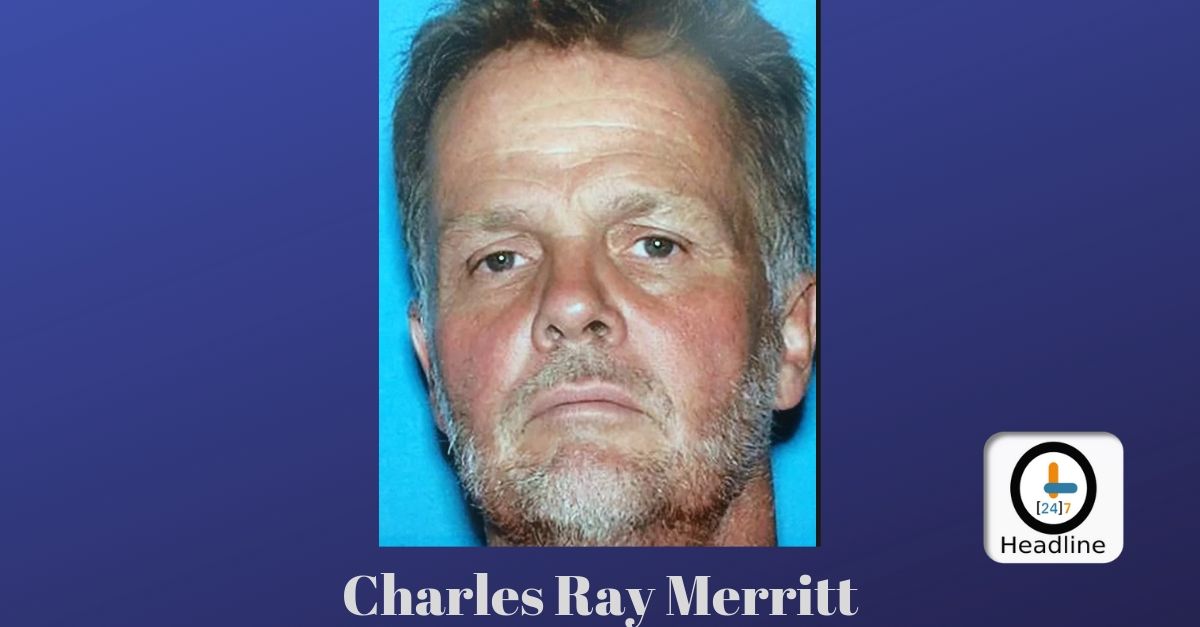
The last text message from Joseph McStay’s phone was sent to a business associate on the night of February 4, 2010.
It was the last known communication with him, according to investigation records.
The family would not be reported missing until the next day.
Cell phone records later placed that associate’s phone near the Mojave Desert gravesite, around the time of the disappearance.
Prosecution evidence put the phone there.
Not the man, not a witness — the phone.
The graves would not be discovered for nearly four years, by a motorcyclist.
How could a phone sit near a grave before the grave was known?
How could it move through the desert without a body to bury?
How could a tower ping where no one was supposed to be?
The same associate later searched online for information about the case, according to computer records.
He searched for the story while the story was still missing.
A theory circulating online holds that the phone data alone proves guilt.
That is a theory.
The record does not establish that the data alone proves anything.
It was part of a larger circumstantial case, built over years.
The phone kept moving.
The question is whether the man did too.
THE VANISHING
The house sat quiet at the end of the driveway.
The McStays' two vehicles were still parked there, engines cold.
The dogs were in the backyard, alive and unattended.
On February 4, 2010, Joseph McStay, his wife Summer, and their two young sons were reported missing from their Fallbrook, California home, according to the initial police report.
The front door was not forced.
The windows were intact.
Inside, the home showed no signs of a struggle, detective observations noted.
No overturned chairs.
No disturbed drawers.
No blood.
Just a family of four, gone between one hour and the next.
What happened inside that home that night — the record does not establish that.
Detectives initially considered the possibility of voluntary disappearance.
That theory was publicly floated.
It caused friction with the family, who insisted the McStays would never have left the dogs or the vehicles behind.
National media picked up the story.
Nancy Grace on HLN speculated about the case, turning the quiet San Diego County suburb into a cable-news mystery.
The phones rang.
The searches expanded.
The theories multiplied.
Voluntary disappearance.
Foul play.
A business deal gone wrong.
A random home invasion.
Each theory had a talking head.
None had a body.
The family's relatives made public appeals for information, their faces on the evening news, asking anyone who had seen the McStays to come forward.
Days turned into weeks.
Weeks turned into months.
The leads dried up.
The case went cold.
Four people had vanished from a home that showed no sign of struggle.
The dogs were fed.
The cars were parked.
The door was locked.
How does a family of four disappear without a trace?
The house does not say.
The driveway does not say.
The backyard does not say.
That would require evidence, and for nearly four years, there was none.
THE GRAVES IN THE DESERT
On November 11, 2013, a motorcyclist discovered human remains in two shallow graves in the Mojave Desert near Victorville, California.
The remains were later identified as the four McStay family members.
Joseph McStay had been beaten to death.
Summer and the two boys had been shot.
The murder weapon — a hammer for Joseph, a firearm for the others — was never recovered.
The exact date and time of the murders are not in the record.
The discovery ended the voluntary-disappearance theory.
It refocused the investigation.
Not because the desert gave up an answer.
Because the desert gave up a crime.
For nearly four years, the family had been missing.
The driveway did not say.
The backyard did not say.
The graves said.
The case was no longer a mystery to be solved.
It was a murder to be prosecuted.
The media, which had speculated about voluntary flight, turned to the question of who put the family there.
The search for answers had become a search for a suspect.
That would require evidence.
The graves provided the frame.
The phone records, the computer history, the last texts — they would come later.
But on that November day, the story changed.
It was no longer about a family that vanished.
It was about a family that was killed.
THE SEARCH HISTORY AND THE TRIAL
The investigation turned back to the man who had been interviewed early on.
Charles "Chase" Merritt was a business associate who had worked with Joseph McStay on fountain designs.
Prosecution exhibits placed Merritt's phone near the Mojave Desert gravesite around the time of the disappearance.
Computer records showed he had searched for information about the case.
Phone records showed he was the last person known to communicate with Joseph McStay, exchanging texts on the night the family vanished.
The trial began in January 2019.
The prosecution argued a financial dispute drove the killings.
Witnesses said Merritt had acted suspiciously after the family disappeared.
The defense called the evidence circumstantial and the phone data unreliable.
Was the phone data accurate?
Was it enough to convict a man of four murders?
Was it enough to send him to death row?
The record does not definitively resolve the reliability of that data.
It remains contested.
In June 2019, the jury found Merritt guilty on all four counts of first-degree murder.
In August 2019, he was sentenced to death.
The verdict ended a case that had haunted the public for nearly a decade.
It was a conviction built on a trail of signals, not a single smoking gun.
The weapon was never recovered.
The defense argued the case was never proven.
The jury decided it was.
AND THE STORY STILL ISN'T OVER
Charles Merritt remains on death row in California.
California has not executed anyone since 2006.
Legal challenges to the death penalty have stopped every execution since then.
No execution date is set. Appeals are pending.
When or whether an execution will occur is not established in the record.
The murder weapon was never recovered.
The hammer and the firearm are gone. The case file records that fact.
The McStay family members have spoken publicly since the conviction.
They expressed relief. The verdict, they said, brought a kind of closure the desert graves could not.
The case has been the subject of numerous documentaries and true-crime programs.
A 2017 documentary series examined the investigation.
These programs replay the same elements: the missing family, the shallow graves, the phone records, the search history.
They present the theory that the phone data alone proves guilt.
That is a theory. The record does not establish it.
The record shows the data was part of a circumstantial case.
A circumstantial case can be enough. The jury decided it was.
The jury decided it in June 2019. The sentence followed in August.
The courtroom story is closed.
The historical story is not.
The appeals move slowly. The state waits. The family waits.
Nancy Grace speculated on HLN when the family first vanished.
The speculation filled airtime. It did not fill the record.
The media moved on. The case went cold. The desert held the answer for nearly four years.
A motorcyclist found the graves in November 2013.
The remains were identified. The investigation turned. The trial came.
Merritt was convicted on all four counts.
He was sentenced to death.
He remains on death row.
The weapon is still missing.
The execution date is still unset.
The story is closed in court. It is not closed in history.
Advertisement
You may also like
The 1965 confession that never reached a trial — and the one name police could not clear
He confessed in 1965. He was already in custody, held for other crimes, when he gave a detailed account of the Boston Strangler murders.…
The 35,000-word manifesto that unmasked a killer after 17 years
A 35,000-word document arrived at two newspapers in 1995. Its title was "Industrial Society and Its Future." The writer demanded that it be published.…
The therapy tapes that turned a mob-style hit into a family murder case
The den was a room for family, for television, for the quiet end of a weekday night. On August 20, 1989, José and Kitty…
A tip from a truck driver led police to a parked Chevrolet Caprice — what they found inside
A truck driver made a call on October 24, 2002. The tip led police to a rest stop on Interstate 70 near Myersville, Maryland.…

The cellphone pings that placed Adnan Syed near Leakin Park — and the defense that never called one key witness
The cellphone records put Adnan Syed near Leakin Park around the time of the burial, according to the prosecution's case. A ping, a tower,…
The 1993 slumber party abduction that would take 64 days to resolve
The window was unlocked. On the night of October 1, 1993, an intruder entered through it at a home in Petaluma, California. Inside, twelve-year-old…