The fishing alibi that unraveled a Christmas Eve disappearance — what Scott Peterson told police
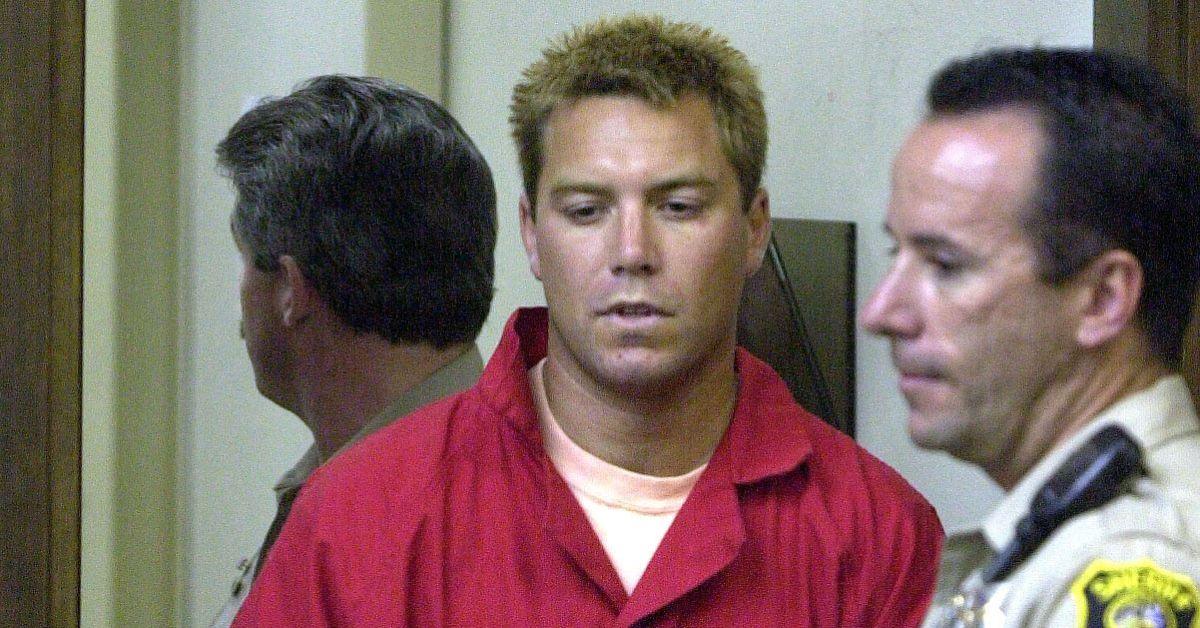
December 24, 2002, began with a missing-person report filed by a husband named Scott Peterson.
His wife, Laci, eight months pregnant, was gone from their home in Modesto, California.
He told police he had been fishing that morning at the Berkeley Marina, across the San Francisco Bay.
That was the claim. That was the alibi.
The exact details of that fishing trip are not in the record beyond Peterson's statement.
What the record does show is what came next: the cameras, the anchors, the round-the-clock cable coverage.
The case became one of the most closely followed criminal cases of the early 2000s.
The public's immediate reaction was a mix of sympathy and suspicion.
Sympathy for a pregnant woman missing on Christmas Eve.
Suspicion of the husband who went fishing instead of staying home.
Was he calm? Was he cold? Was he grieving?
The coverage asked those questions over and over, with no answers yet.
The documented record begins with Peterson's own words to police.
A fishing trip. A boat. A morning on the bay.
That simple alibi would soon unravel.
But on that first day, it was just a statement, given to detectives who had no body, no crime scene, no weapon.
Only a husband's story about where he had been.
She was missing.
He was fishing.
That was the tension the cameras fed on, night after night, with nothing else confirmed.
THE MISSING PERSON REPORT
It began with a missing-person report filed by Scott Peterson on December 24, 2002.
He told police his wife had been there when he left for the Berkeley Marina.
She was gone when he came back.
Police initially treated it as a possible abduction.

A pregnant woman vanished from her own home — that was the story, and the cameras believed it.
Suspicion soon shifted to Peterson.
Not because of one piece of evidence.
Because of what detectives found when they started pulling at the thread.
Lead detective Al Brocchini of the Modesto Police Department began with the house and the truck.
A search of Peterson's home and truck revealed evidence including a boat he had purchased shortly before the disappearance.
A 14-foot aluminum fishing boat.
The kind of boat you buy when you plan to fish.
The kind of boat you buy when you plan to do something else.
Detectives discovered that Peterson had told his mistress, Amber Frey, that his wife had died.
He said this before Laci's body was found.
Before anyone knew she was dead.
Before the Bay gave up its answer.
Frey came forward after the murder and cooperated with investigators.
She told them what he had said.
What he had promised.
What he had denied.
The exact timeline of when suspicion shifted is not specified in the source.
That would require evidence.
The community worried.
The detectives focused.
They found the boat.
They found the inconsistency.
They found the mistress.
She was missing.
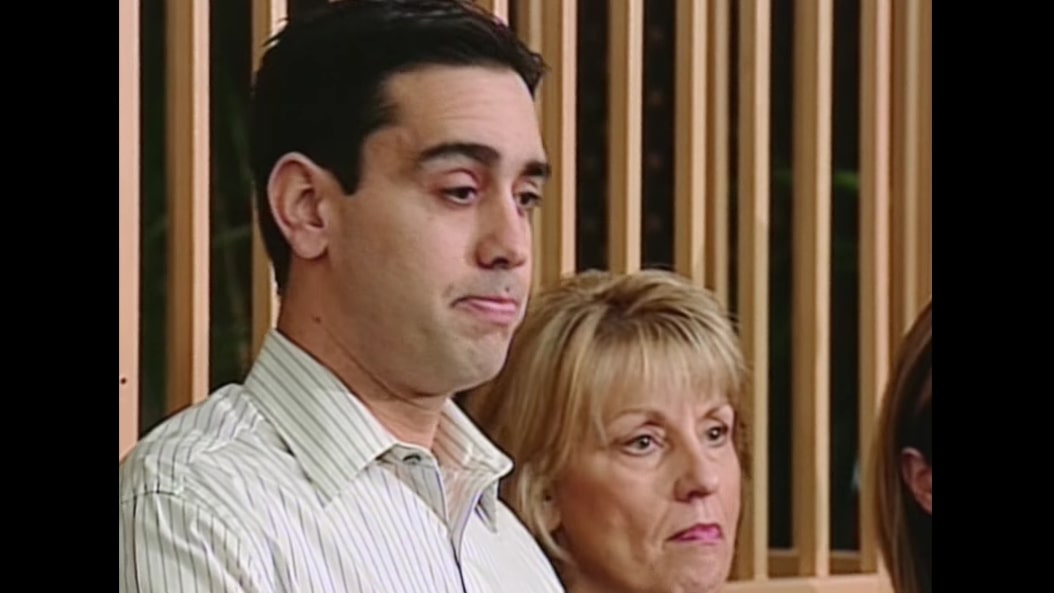
He was fishing.
The case was no longer a search.
THE BODIES AND THE BOAT
The body of a full-term male infant washed ashore in the Bay near Richmond, California, on April 13, 2003.
The following day, Laci Peterson's body was found nearby.
The medical examiner determined that the infant had been alive at the time of the mother's death.
Both had died from homicidal violence, according to the medical examiner.
The exact cause of death could not be determined due to decomposition.
That remains unestablished.
The prosecution argued that Peterson had killed his wife and disposed of her body in the Bay.
He had made concrete anchors, prosecutors said, to weigh her down.
The defense suggested that Laci had been abducted by strangers while walking the family dog.
Not because the evidence pointed that way, but because the prosecution's case was circumstantial.
Scott Peterson's boat, a 14-foot aluminum fishing boat, was central to the prosecution's case.
He had purchased it shortly before the disappearance, according to investigators.
No murder weapon was ever recovered.
The boat was examined. The truck was examined. The home was examined.
What was found was a story that did not hold.
He had told police he was fishing at the Berkeley Marina that morning.
Investigators found inconsistencies in that account, according to the record.
The bodies were the end of the search.
They were also the beginning of the trial.
THE TRIAL AND THE MEDIA CIRCUS
The trial began in June 2004 in Redwood City, California, after a change of venue from Stanislaus County due to extensive pretrial publicity.
Two narratives collided in that courtroom.

The prosecution, led by the Stanislaus County District Attorney's Office, argued that Peterson had killed his wife to escape his marriage and his impending fatherhood.
The defense, led by Mark Geragos, argued that the prosecution's case was circumstantial and that Laci had been abducted by strangers.
It was a story of a man who wanted out.
It was also a story of a woman who vanished on a morning walk.
Amber Frey took the stand.
Frey, a Fresno massage therapist, testified about her affair with Peterson and his misleading statements to her.
She told the jury he had said his wife was dead — before Laci's body had been found.
Her testimony was a pivotal moment in the trial.
The cameras were always there.
The media frenzy surrounding the case included saturation coverage of Frey's role and intense scrutiny of both families.
Laci's mother, Sharon Rocha, spoke publicly. Peterson's mother, Jackie Peterson, spoke publicly. His half-sister, Anne Bird, later wrote a book.
The case became a turning point in the era of 24-hour cable news crime coverage, widely analyzed by media critics.
The public watched every moment.
The public chose sides.
Did the coverage shape the verdict?
Did it shape the public's perception of guilt before the jury even deliberated?
The exact influence of media coverage on the trial's outcome is not established in the record.
That would require evidence no document provides.
What is documented is the reaction itself: the headlines, the broadcasts, the families under the glare.
The trial was a spectacle.
The verdict would come later.
AND THE STORY STILL ISN'T OVER
The jury returned its verdict on November 12, 2004.
Guilty on both counts.
The penalty phase followed, and the jury recommended death.

Judge Alfred Delucchi sentenced Peterson to death on March 16, 2005.
It did not end there.
In 2020, the California Supreme Court overturned the death sentence, citing errors in jury selection.
The murder convictions stood.
In December 2021, Peterson was resentenced to life in prison without the possibility of parole.
He is incarcerated at Mule Creek State Prison in Ione, California.
He has maintained his innocence.
He has continued to pursue appeals.
The outcome of those appeals is not in the record.
It is a case that refuses to close.
Sharon Rocha, Laci's mother, has remained active in victim advocacy.
She has spoken publicly about the case.
The cameras that once circled the courthouse have moved on, mostly.
The documentaries have been made.
The books have been written.
The retrospectives air every few years, and the old footage returns.
Amber Frey's face appears again.
The Berkeley Marina appears again.
The theories appear again.
What was documented is documented: the verdict, the sentence, the reversal, the resentencing.
What remains is the pursuit.
Not because the evidence changed.
But because Peterson says it should.
That would require evidence the record does not establish.
The fascination endures.
The families endure.
The story still isn't over.
Advertisement
You may also like
Emmett Till's body was found by a cotton gin fan — but the trial's first witness changed everything
The fan was tied around his neck with barbed wire. Four days after the abduction, Emmett Till's body came up from the Tallahatchie River.…
The Glasgow smile and the letters that named no killer
The letters came to the Los Angeles Herald-Express in the weeks after the body was found. They claimed responsibility for the murder. The envelope,…
The 1968 letter that promised a killer's name but never revealed it
It arrived at a California newspaper in 1968, a letter with a promise inside. It said the writer would reveal the killer’s name in…
The bushy-haired intruder Dr. Sam Sheppard said he saw — but the blood spatter told a different story
The neighbor found him calling out on the lawn. It was July 4, 1954, in Bay Village, Ohio, a lakeside suburb of Cleveland. Dr.…
The Chattahoochee River splash that turned a stakeout into the Atlanta Child Murders' turning point
The bridge over the Chattahoochee River was quiet that night. Police were staked out on it, watching the water below. They had come after…
The 3:15 a.m. scream heard by a neighbor who shouted back — then silence for 10 minutes
At approximately 3:15 a.m. on March 13, 1964, Catherine "Kitty" Genovese, 28, was attacked outside her apartment building at 82-70 Austin Street in Kew…