The cellmate confession that cracked the Manson Family case wide open
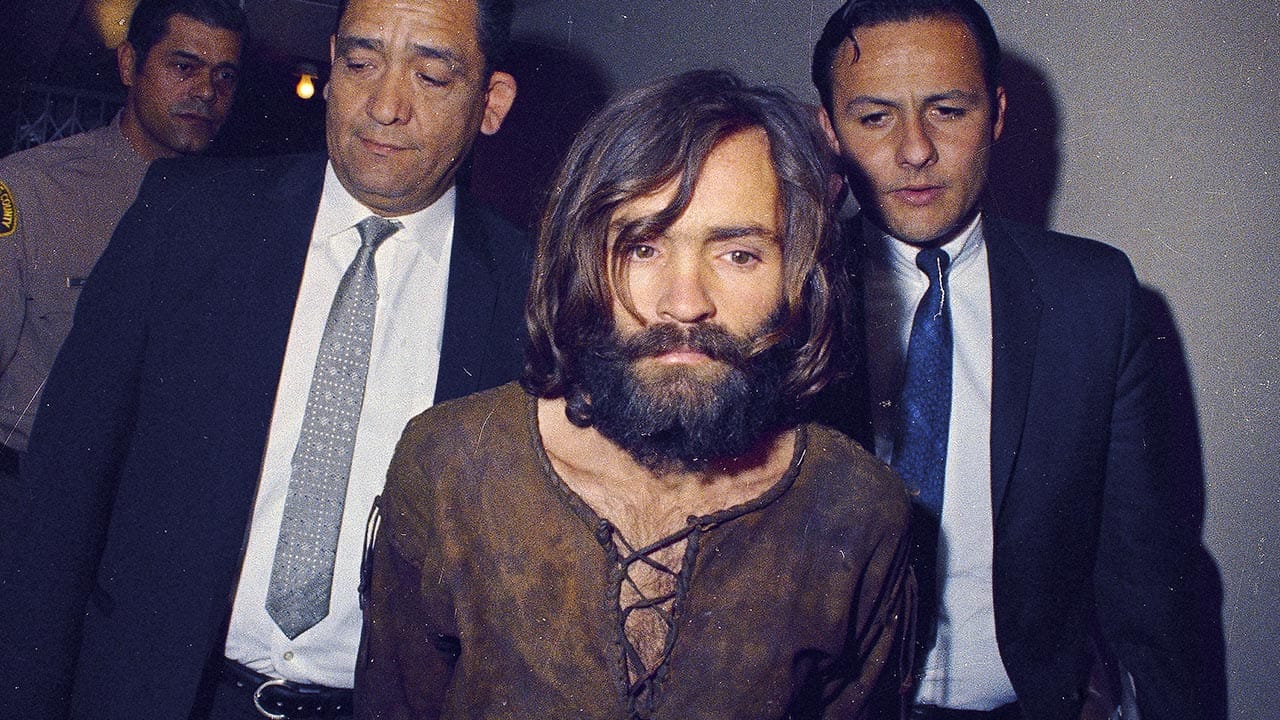
She was in custody on unrelated charges when she started talking.
She told cellmates about the murders — the break that led to arrests.
The investigation record says her statements broke the case open.
Not forensic brilliance. Not a lucky witness.
A jailhouse confession.
The exact content of that confession is not in the record.
What the record does establish: she named names, and the arrests followed.
Before that, the investigation was stalled.
The initial investigation was hampered by a lack of obvious motive.
Seven people dead over two nights in August 1969, and no reason why.
The victims were strangers to each other — an actress, an heiress, a hairstylist, a young visitor, a couple in their home.
No robbery. No personal grudge.
The detectives had bodies and no through-line.
Then the woman in custody talked.
The murder weapons — a gun, a knife, and a fork — were never recovered.
The gun was later linked to the crimes through ballistics.
A .22-caliber revolver, matched to the shootings.
But the gun itself?
Its current whereabouts are unknown.
That would require evidence.
The knife and the fork, too, are gone.
The case broke on words, not on the physical proof.
The gun is still out there, or it was destroyed, or it sits somewhere unnamed.
The record does not say.
She was on the ground below, and the confession came from a cell, not a lab.
TWO NIGHTS IN AUGUST
The first night ended with five bodies inside a house on Cielo Drive.
The actress was eight and a half months pregnant, according to the case record.
The coffee heiress was there, and her boyfriend, and the celebrity hairstylist, and a young man who had come to visit the property's caretaker.
The house sat in Benedict Canyon, above the city, behind a gate that did not hold.
The maid found them the next morning.
The newspapers did not yet have a name for what had happened.
They had a location, a body count, and a question that would not resolve: who would do this, and why.
The killers' identities were not known at the time.
The motive was not yet established.
Then the second night came.
August 10, 1969, in Los Feliz, two more people were murdered in their own home.
A husband and a wife, killed after the first five, their bodies found the following morning by a family member.
The city woke to a pattern.
Two nights. Seven dead. No suspects named in the record.
The public read the headlines and saw randomness, not design.
The police had a crime scene, not a direction.
The gun was still out there, or it was destroyed, or it sits somewhere unnamed.
The record does not say.
What the record does say is that the first night was not the last, and that the second night proved it.
THE BREAK AND THE ARRESTS
The break came from a jailhouse confession.
A woman in custody on unrelated charges told cellmates about the murders.
The investigation record does not say how long she waited before speaking.
It does not say what finally pushed her to talk.
The exact timeline between the confession and the arrests is not specified in the record.
What is specified is that her statements led to arrests.
The arrests came months after the second night in Los Feliz.
The public had been waiting that long for a name.
Newspapers had filled the gap with theories, with fear, with the image of a city under siege.
Now there were names, and the names belonged to a drifting commune led by a man who had never met the victims.
The prosecution's case relied heavily on the testimony of a witness who was granted immunity.
She had been present during the first night's murders.
She was never charged.
The trial record shows her testimony carried the weight the physical evidence could not.
Fingerprints and blood evidence linked the defendants to the scenes.
The evidence record is precise on that point.
It is also precise on what was missing.
The gun was never found.
The knife was never found.
The fork was never found.
The gun was later linked to the crimes through ballistics, but the gun itself remained absent.
A case built on a jailhouse confession.
A case built on an immunized witness.
A case built on fingerprints and blood.
It was enough to charge five people with first-degree murder and conspiracy.
It was enough to hold them through a trial that would begin in June 1970.
The record does not say whether it was enough to satisfy the public.
The record only says what the jury decided.
THE TRIAL AND THE VERDICT
The trial opened in June 1970 with five defendants charged with first-degree murder and conspiracy.
The courtroom was a spectacle before the first witness was sworn.
The leader and the three female defendants did not sit quietly.
They sang. They chanted. They stared at the jury.
The specific nature of that disruptive behavior is not detailed in the record.
It is enough to say the judge had to gavel them down, and the record does not say how often.
The prosecution built its case on the testimony of a woman granted immunity.
She described the nights, the houses, the orders.
The defense argued the cult had acted alone, without direction.
The jury deliberated, and in January 1971 the verdict came back.
All five were convicted.
The sentence was death.
Then the California Supreme Court abolished the death penalty in 1972, and the sentences were commuted to life.
One defendant, tried separately, was also convicted.
The courtroom emptied.
The public had followed every day, every outburst, every headline.
What the record does not establish is whether the verdict satisfied them.
It records only that the jury decided, and that the decision stood.
AND THE STORY STILL ISN'T OVER
The leader died in prison on November 19, 2017, at age 83.
One convicted woman died in prison in 2009.
One convicted woman was granted parole in 2023 and released after 53 years.
Two convicted individuals remain incarcerated.
The case is closed legally.
It is not closed physically.
The murder weapons — a gun, a knife, and a fork — were never recovered.
The gun was linked to the crimes through ballistics, but the gun itself stayed missing.
The knife stayed missing.
The fork stayed missing.
The current whereabouts of the unrecovered weapons are unknown.
That is not established by the record.
It is not established by any search.
It is not established by any confession.
It is simply where the evidence stops.
The public had followed the trial in headlines, in broadcasts, in paperback.
They followed the convictions.
They followed the commutations when the death penalty was abolished in 1972.
They followed the paroles, one after another, across decades.
What they never followed was the gun.
It was a .22-caliber revolver, described in testimony.
It was fired, the record says, and it was never produced.
So the story persists because the object persists — somewhere.
Not because the verdict is doubted.
But because a piece of the physical case never surfaced.
The case record closes with names and dates and sentences.
The evidence record closes with a gap.
She was on the ground below, the public read, and the weapon that put her there was never shown.
That is the part that remains open.
Advertisement
You may also like
The cell tower data and Jay Wilds's story that freed Adnan Syed
She left Woodlawn High School on January 13, 1999, and never came home. Hae Min Lee was 18, a senior, and her body was…
The tip from a cellmate that sent two ex-cons to a Kansas farmhouse — but the safe was a lie
In 1959, a man in a prison cell told Richard Hickock about a safe. The man said he had once worked for Herbert Clutter,…
The 31-day gap and the nanny who never existed: Casey Anthony's first lie
She had a name before she had a body. On July 15, 2008, a two-year-old girl named Caylee Anthony was reported missing by her…
The 51-day standoff that turned a Texas ranch into a national flashpoint
The smoke rose over the Texas prairie on April 19, 1993, and the cameras caught every second of it. The fire at the Mount…
The Ryder truck axle that cracked the Oklahoma City bombing case — and the traffic stop that came first
The rear axle of a rented Ryder truck landed several blocks from the Alfred P. Murrah Federal Building. It was 9:02 a.m. on April…
The phone records that placed a business associate near the McStay gravesite — and the search history that followed
The last text message from Joseph McStay’s phone was sent to a business associate on the night of February 4, 2010. It was the…