The 31-day gap in Casey Anthony's timeline that no one could explain
The 911 call came in on July 15, 2008, from a grandmother in Orlando, Florida.
Cindy Anthony told the dispatcher that her 2-year-old granddaughter, Caylee, was missing.
She said her daughter, Casey Anthony, had not been seen with Caylee for 31 days.
She also said Casey’s car smelled like decomposition.
That number — 31 days — was the detail that would not let go.
It was the gap between the last time anyone could place Caylee alive and the moment the family reported her gone.
It was the gap the media would repeat for years, in headlines, in chyrons, in the opening lines of every segment.
It was the gap that turned a missing-child case into a national obsession.
What happened in those 31 days?
What did Casey do, and where was she, and why did no one call the police?
What did the smell in that car mean?
The record does not establish what happened during those 31 days.
That is the central mystery, and it remains one.
The call itself was not the beginning of the story.
It was the moment a private family crisis became a public one, and the public wanted an answer the phone lines could not provide.
Cindy’s voice on that recording was the first piece of evidence the world heard.
It was not a confession, and it was not a solution.
It was a question, asked with a month of silence behind it.
That month would dominate coverage and speculation for years.
It still does.
THE PHANTOM BABYSITTER
She told police the child was with a babysitter.
The babysitter had a name: Zenaida Fernandez-Gonzalez.
Casey said Caylee had been kidnapped, and the kidnapper was this woman.
Investigators looked for Zenaida Fernandez-Gonzalez.
They could not find her.
They determined she did not exist.
The name was a phantom, and the story began to collapse around it.
Casey was arrested on July 16, 2008.
The charges were child neglect and providing false information to law enforcement.
It was one day after her mother called 911.
One day after the 31-day gap became a public fact.
The lead detective in the case was involved in the unraveling, though his name is not confirmed in the news coverage of that week.
The exact nature of the investigation's early steps is not fully detailed in the source.
What is documented is the speed: a story offered, a story checked, a story failing.
Nancy Grace on HLN made the phantom babysitter a nightly refrain.
Viewers heard the name repeated, then heard it evaporate.
The public asked how a mother could invent a kidnapper.
The public asked what else she might have invented.
The public asked where the child really was.
That would require evidence, and the evidence was still missing.
Casey's story was not the only thing that unraveled.
Her freedom unraveled with it, day by day, charge by charge.
The suspicion against her grew in the space where Zenaida Fernandez-Gonzalez was supposed to stand.
No one was standing there.
THE REMAINS AND THE DUCT TAPE
A utility worker found the remains on December 11, 2008, in a wooded area near the Anthony family home.
He was Roy Kronk, and he had reported the location earlier.
The record says he was not initially taken seriously.
Dental records confirmed the remains were Caylee's.
The medical examiner ruled the death a homicide.
The cause of death could not be determined.
That was the finding: homicide by undetermined means.
Duct tape was found near the skull.
The circumstances of the body's disposal were cited in the homicide ruling.
What the tape did, exactly, is not established.
The defense argued the tape was placed after an accidental drowning.
Prosecutors rejected that theory.
The public had already been watching for months.
Nancy Grace had made the case a nightly spectacle.
Commentators filled the gap with speculation.
They asked what happened in those 31 days.
They asked why the car smelled.
They asked why the babysitter did not exist.
The discovery gave the questions a grim answer.
A child's skeleton in the woods.
The remains were not found sooner, and the investigation was criticized for delays.
The area had been searched before, but not thoroughly enough.
Roy Kronk had flagged the spot, and the flag was waved off.
The gap between the report and the recovery stretched from July to December.
The frustration was plain in the coverage.
The remains were the end of the search.
They were not the end of the questions.
THE TRIAL AND THE VERDICT
The trial began on May 3, 2011, in Orlando, Florida.
The prosecution argued that Casey killed Caylee to free herself from parental responsibility.
The defense argued that Caylee had accidentally drowned in the family pool and that Casey had panicked.
The defense also claimed Casey had been abused by her father, George Anthony.
George denied the claim.
The courtroom was packed, and the cameras were fixed on the same faces they had followed for three years.
The prosecution laid out its theory in careful steps: the lies, the trunk, the duct tape.
The defense answered with a story of accident and fear.
It was one narrative against another.
It was a family drama played out in open court, with Nancy Grace narrating from the outside.
On July 5, 2011, the jury acquitted Casey of murder, aggravated child abuse, and aggravated manslaughter.
It convicted her on four counts of providing false information to law enforcement.
The verdict landed like a shockwave.
Commentators sputtered.
The public shouted.
The courtroom was silent.
She was sentenced to four years, with credit for time served.
She had already served the maximum.
/jose-baez-1-c5cc5e9bf1ef40618009a54f4c07593e.jpg)
On July 17, 2011, she was released.
The acquittal was a legal outcome.
It was not a factual resolution.
The prosecution's theory was not proven.
The defense's theory was not proven either.
The record establishes what the jury decided.
The record does not establish what happened to Caylee.
That gap remains open.
AND THE STORY STILL ISN'T OVER
She was released on July 17, 2011, having already served the maximum time.
She has maintained her innocence.
George and Cindy Anthony have remained in Florida.
George has spoken publicly about the case.
He has denied all allegations of abuse.
No other person has been charged in Caylee’s death.
That is not speculation.
That is the record.
What actually happened to Caylee remains unestablished.
The verdict did not resolve it.
The acquittal did not resolve it.
The years since have not resolved it.
The case remains a subject of ongoing public and media fascination.
Documentaries revisit the evidence.

Podcasts revisit the verdict.
Commentators revisit the 31-day gap.
They replay the 911 call.
They replay the testimony.
They replay the moment the jury said not guilty.
The public obsession has not faded.
It is a story with a verdict.
It is a story without an ending.
The prosecution argued that Casey killed Caylee to free herself from parental responsibility.
The jury rejected that argument.
The defense argued that Caylee drowned accidentally.
The jury rejected that argument too.
The jury convicted Casey of four counts of providing false information.
She served her time.
She walked out.
The cameras were there.
The questions were there.
The questions remain.
Who moved the body, if anyone?
Who placed the duct tape, if anyone?
Who waited 31 days, and why?
That would require evidence.
The record does not provide it.
Advertisement
You may also like
The cell tower data and Jay Wilds's story that freed Adnan Syed
She left Woodlawn High School on January 13, 1999, and never came home. Hae Min Lee was 18, a senior, and her body was…
The tip from a cellmate that sent two ex-cons to a Kansas farmhouse — but the safe was a lie
In 1959, a man in a prison cell told Richard Hickock about a safe. The man said he had once worked for Herbert Clutter,…
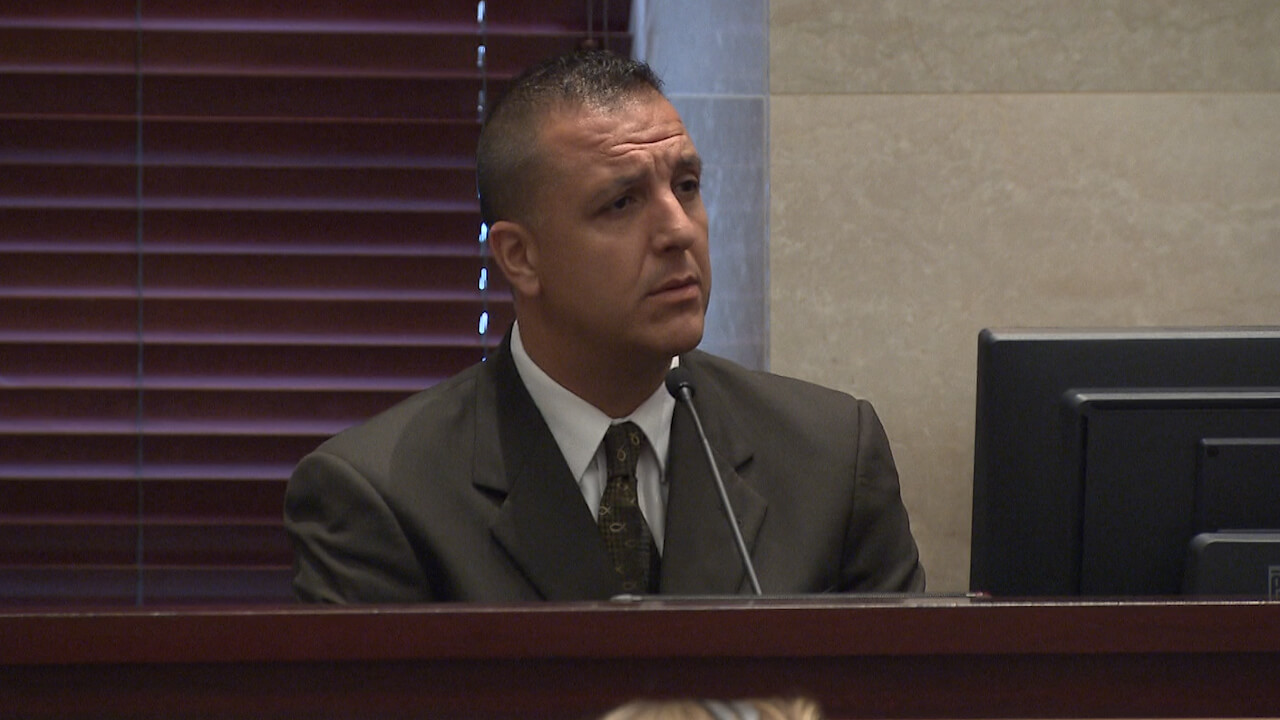
The 31-day gap and the nanny who never existed: Casey Anthony's first lie
She had a name before she had a body. On July 15, 2008, a two-year-old girl named Caylee Anthony was reported missing by her…
The 51-day standoff that turned a Texas ranch into a national flashpoint
The smoke rose over the Texas prairie on April 19, 1993, and the cameras caught every second of it. The fire at the Mount…
The Ryder truck axle that cracked the Oklahoma City bombing case — and the traffic stop that came first
The rear axle of a rented Ryder truck landed several blocks from the Alfred P. Murrah Federal Building. It was 9:02 a.m. on April…
The phone records that placed a business associate near the McStay gravesite — and the search history that followed
The last text message from Joseph McStay’s phone was sent to a business associate on the night of February 4, 2010. It was the…