Love letters scattered in the lane — the 1922 murder that made the front pages for years
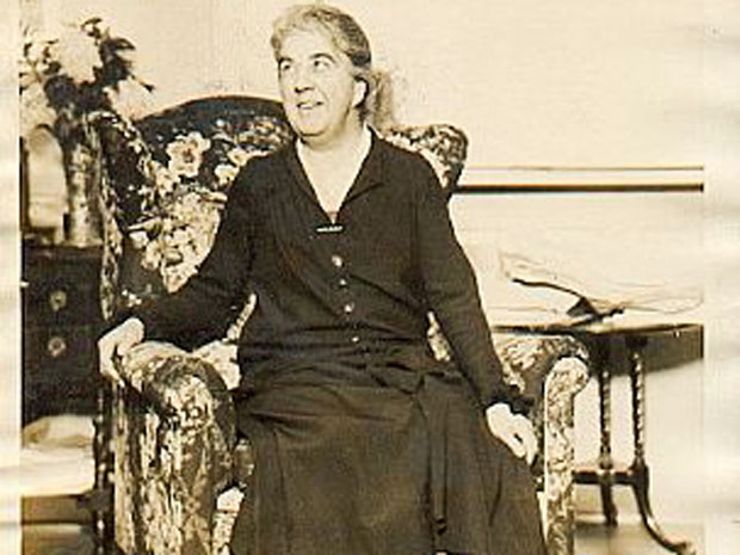
The note was still pinned to the crabapple tree when the bodies were found.
It read "Mrs. Mills."
Not a confession. Not an accusation. A name, written and left behind.
The bodies were discovered on the night of September 14, 1922, beneath a crabapple tree in a secluded lane called Lovers' Lane, in Phillipsburg, New Jersey, near New Brunswick.
Reverend Edward Wheeler Hall lay with his head resting on his coat.
Mrs. Eleanor Reinhardt Mills was nearby, her throat cut.
He was the married pastor of St. John's Episcopal Church in New Brunswick.
She was a choir singer in his congregation.
Both had been shot.
Love letters between them were scattered at the scene, as if someone had emptied a pocket or a satchel and walked away.
Who wrote the note and pinned it to the tree is not established by the record.
Who left the letters in the open is not established either.
The lane was a known meeting place, a quiet spot for couples, and on that night it held two bodies and a folded piece of paper.
A passerby found them.
The paper was still there, fixed to the bark, saying the one thing the scene already made plain.
She was Mrs. Mills.
The name did not explain the throat cut, or the gunshot wounds, or why a minister's coat was folded under his head like a pillow.
It did not say who fired, or who cut, or who walked out of the lane before dawn.
It only named her.
That would be enough to pull the case onto the front pages for years.
THE FRONT PAGES, 1922–1926
The papers had the story by morning, and they did not let it go.
Front pages carried the reverend and the choir singer for years.
Adultery, a bungled investigation, and two bodies under a crabapple tree: it was a story built for print.
The initial investigation was widely criticized as sloppy.
Police failed to secure the crime scene, and evidence was mishandled.
What exactly the police mishandled is not detailed in the record beyond the general criticism.
That lack of detail did not slow the headlines.
The case went cold until 1926, when a new prosecutor, Alexander Simpson, reopened it.
He based the reopening on the testimony of a woman who claimed she had been in the lane on the night of the murders.
She said she had seen Frances Hall, her brothers, and another man at the scene.
She said it from a hospital bed, dying of cancer, and she had sold her story to a newspaper first.
The mix was everything tabloid journalism of the Jazz Age wanted.
A minister. A choir singer. A widow. A witness on her deathbed.
Class tension ran under every paragraph.
Four years of headlines pressed on a cold case, and the public read each one.
How much of the story was made for print?
The record does not say.
The record shows the criticism, the cold case, and the reopening on one woman's word.
It shows the front pages, year after year, waiting for an answer that would not come for four years.
And then it shows a trial built on that word.
THE WITNESS IN THE HOSPITAL BED

The trial opened in November 1926 in Somerville, New Jersey.
It lasted nearly a month.
The prosecution's case was built largely on the testimony of a farmer's wife who claimed she had been in the lane on the night of the murders.
She said she saw the three defendants at the scene.
She said this from a hospital bed, dying of cancer.
The newspapers set up outside her room.
They waited for each word she had sold them.
The defense attacked her credibility.
They noted her criminal record.
They noted she had sold her story to a newspaper.
The record shows the criticism of her, the illness, the deal with the press.
Whether she actually saw what she claimed is not established.
Her testimony was disputed by the defense.
The front pages wanted a witness.
The courtroom had a dying woman in a bed.
The prosecution called her its star.
The defense called her a commodity.
The jury heard her voice, transmitted from the sickroom.
The papers printed her story, bought and paid for.
The trial rested on that transaction.
It was a trial built on a word.
It was a word sold in advance.
THE VERDICT AND THE UNANSWERED QUESTION
The three defendants — Frances Hall and her two brothers — were charged with first-degree murder.
The trial was built on a word, and the word was the dying witness's.
The prosecution also put the love letters before the jury.
The letters suggested a motive for Frances Hall.
They were scattered at the scene in 1922.
They were read aloud in a Somerville courtroom in 1926.
The physical evidence was largely circumstantial.
The defense argued the whole case rested on the word of an unreliable witness.
The witness had a criminal record.
The witness had sold her story to a newspaper.
The witness was dying of cancer and testified from a hospital bed.
The defense called it a media-driven witch hunt.
The jury deliberated for just over five hours.
Five hours, after four years of front pages.
Five hours, after a month of testimony.
Five hours, for three lives.
The verdict was not guilty for all three.
What the jury believed during deliberation is not in the record.
It is not established who convinced whom, or what evidence tipped the scale.
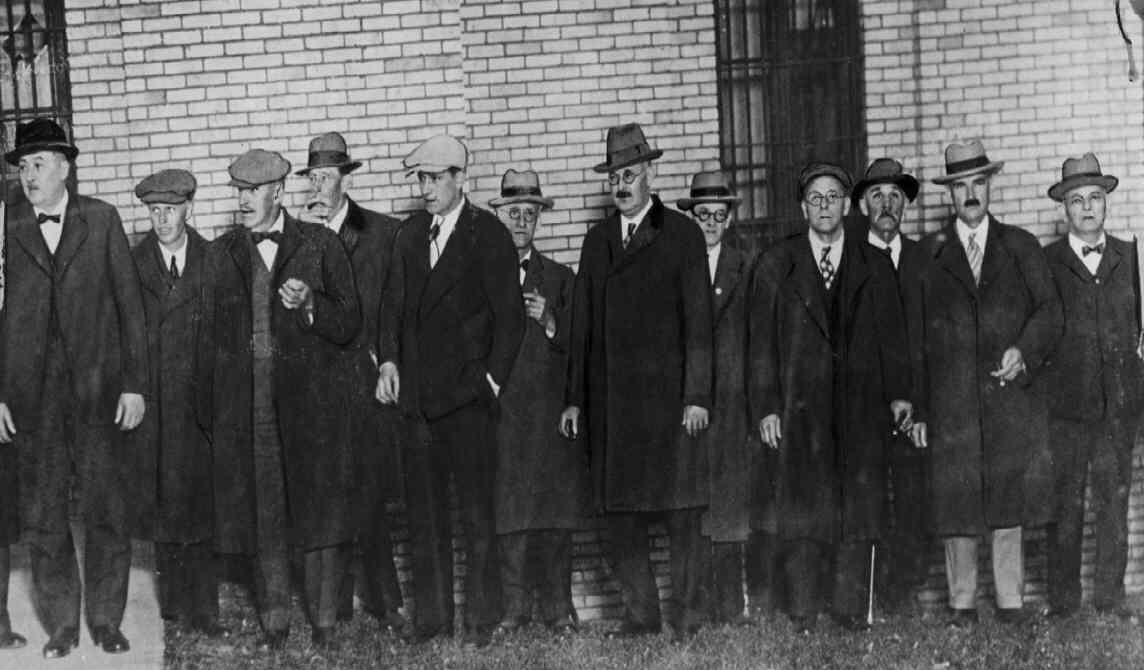
The courtroom emptied.
The defendants returned to private life.
The case was never reopened.
No one else was ever charged.
The front pages moved on.
The question did not.
AND THE STORY STILL ISN'T OVER
The case remains officially unsolved.
No one else was ever charged, and the file never closed.
Frances Hall and her brothers returned to private life.
They largely avoided the public eye.
Jane Gibson died shortly after the trial.
The dying witness who testified from a hospital bed took her story with her.
The weapons were never recovered.
A .32-caliber revolver and a knife — the exact instruments of the killings — were never found.
Who committed the murders is not established.
That is where the record stops.
The murder site, once a popular tourist attraction, is now a quiet, overgrown spot.
The crabapple tree is gone, and the lane is hard to find.
People used to picnic there.
They took photographs.
They stood where the bodies lay and tried to feel something.
Now the spot is just grass and brambles.
The case has been the subject of numerous books and documentaries.
It remains a landmark example of how media pressure can shape — and distort — a criminal investigation.
The front pages screamed for years.
They printed love letters.
They printed theories.
They printed a witness's dying words sold to a newspaper.
What they never printed was proof.
The physical evidence was circumstantial.
The testimony was attacked.
The defense argued a media-driven witch hunt, and the jury agreed.
The verdict was not guilty for all three.
The story stayed on the front pages anyway.
Not because it was solved.
But because it was never solved.
The question did not die with the headlines.
It outlived the witnesses, the defendants, and the publicity.
It remains an open file.
It remains a quiet, overgrown spot.
It remains a case where the difference between what is viral and what is documented is the difference between a dying witness's story and the weapons that were never recovered.
Advertisement
You may also like
The fishing alibi that unraveled a Christmas Eve disappearance — what Scott Peterson told police
December 24, 2002, began with a missing-person report filed by a husband named Scott Peterson. His wife, Laci, eight months pregnant, was gone from…
The 9:02 a.m. blast that left a city asking who, and why — before any name was known
At 9:02 a.m. on April 19, 1995, a truck bomb exploded outside the Alfred P. Murrah Federal Building in Oklahoma City. The blast destroyed…
The August 1969 headlines that turned a murder case into a national obsession
The first headlines arrived before the bodies were cold. Five people were dead at a Benedict Canyon home, among them actress Sharon Tate, eight…
A fishing trip, a missing pregnant wife, and the boat Scott Peterson bought just weeks before
He told police he went fishing that morning at the Berkeley Marina. He said he returned to find his wife gone. Laci Peterson, 27…
The 2008 deal that kept Epstein's federal charges secret — and the detective who never got to finish
A mother in Palm Beach, Florida, told police in 2005 that her 14-year-old stepdaughter had been sexually abused by an older man. That complaint…
The fiber and dog hair evidence that linked Wayne Williams to the Atlanta murders
The body of Nathaniel Cater came out of the Chattahoochee River on May 22, 1981. He was 27 years old. The next night, an…