The 9:02 a.m. blast that left a city asking who, and why — before any name was known
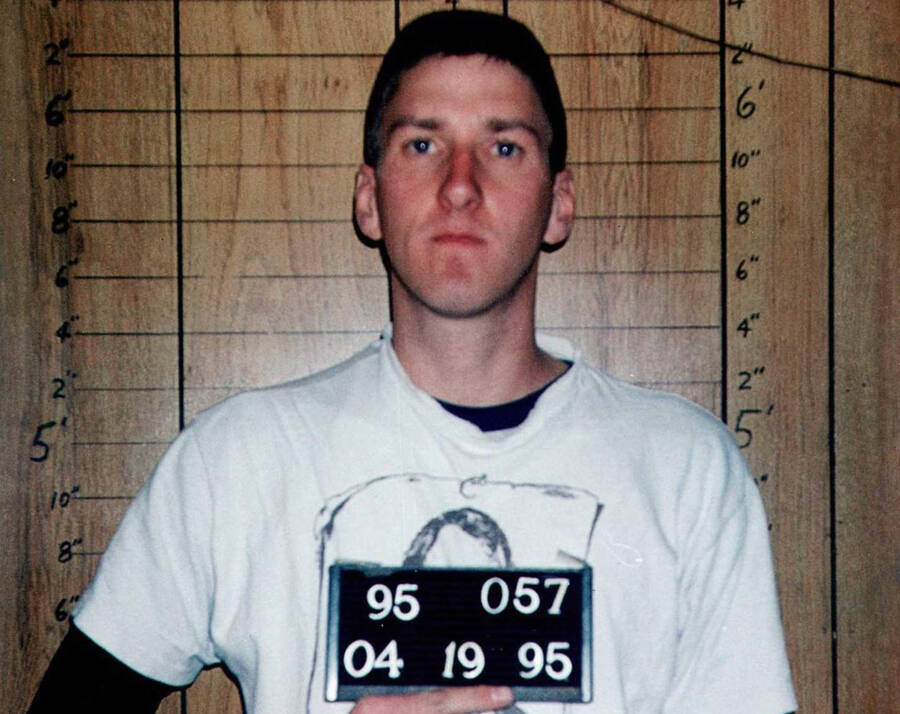
At 9:02 a.m. on April 19, 1995, a truck bomb exploded outside the Alfred P. Murrah Federal Building in Oklahoma City.
The blast destroyed the north face of the nine-story building.
It killed 168 people, including 19 children in a day-care center, and injured more than 500 others.
It was the deadliest act of domestic terrorism in U.S. history at the time.
The sound came first.
Then the glass, then the dust, then the questions.
Who did this?
Why this building?
Why these people?
That would require evidence.
Hours passed before the last survivor was pulled from the rubble.
The public and the media asked who and why before any name was known.
No perpetrator is named yet in this narrative.
The identity of the bomber is not yet established.
What is established is the morning: a Tuesday, a federal office, a rental truck.
What is established is the count: 168 dead, 19 of them children.
What is established is the wreckage of the north face, open to the sky.
What is not established is the face behind the trigger.
The question hung in the air with the dust.
It would take days to answer, and longer to believe.
THE TRAFFIC STOP AND THE TRUCK
Ninety minutes after the blast, a state trooper stopped a 27-year-old Gulf War veteran near Perry, Oklahoma.
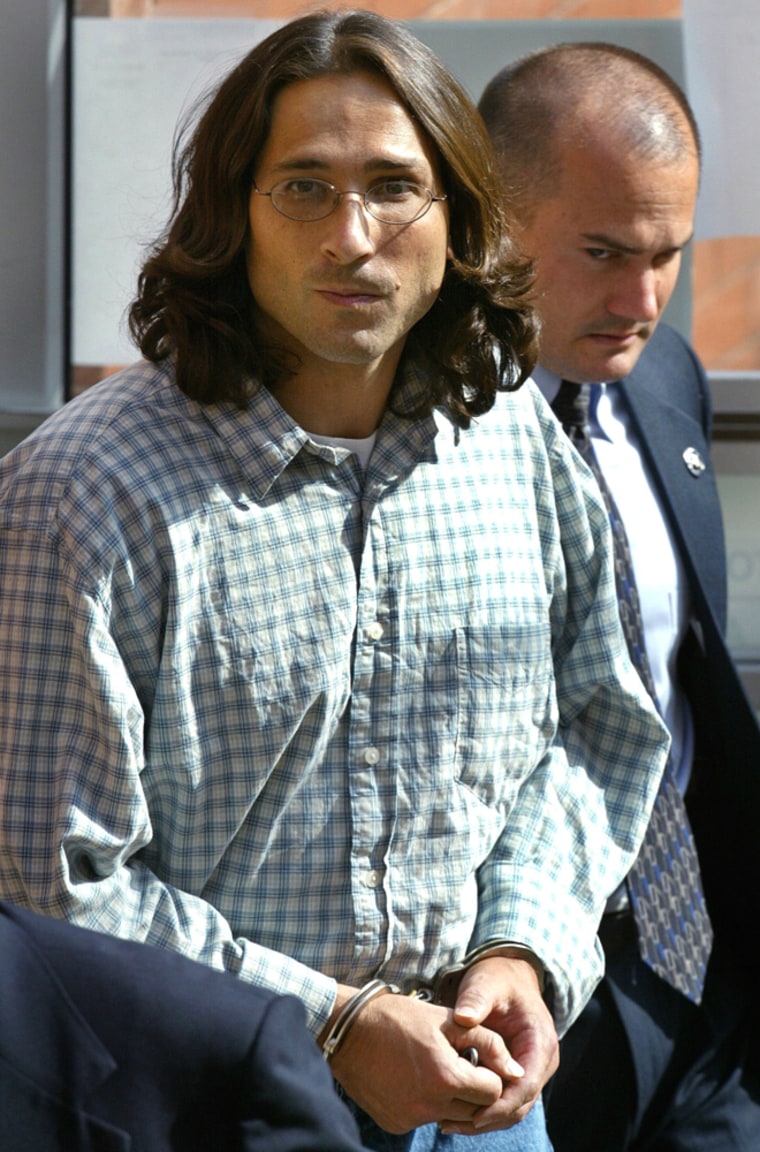
The car had no license plate, and the driver was carrying a concealed weapon.
Timothy McVeigh was arrested on the spot.
He did not know, and neither did the trooper, that the truck bomb that had just killed 168 people was being traced back to him.
Within hours, investigators pulled the truck's axle and VIN from the blast site.
The numbers led to a Ryder rental agency in Junction City, Kansas.
Witnesses there identified McVeigh, who had rented the truck under his own name.
The exact sequence of that VIN trace is not detailed in the record.
Only that it happened within hours.
The speed was almost unbelievable.
A routine traffic stop had become a national case.
Terry Nichols, a former Army friend of McVeigh, was arrested days later.
Michael Fortier, another associate, later cooperated with prosecutors.
The public watched the names emerge one by one on the evening news.
The face behind the trigger was being named.
It was not the face many had imagined.
THE EVIDENCE AND THE DEFENSE
The evidence was heavy, and it was public.
McVeigh’s fingerprints sat on a receipt for ammonium nitrate fertilizer, a key bomb ingredient.
His arrest record from the traffic stop placed him in the state, in the hours after the blast.
The FBI launched one of the largest criminal investigations in its history, with over 200 agents working the case.
They worked the axle, the VIN, the rental counter, the witnesses.
They worked the receipt, the fingerprints, the timeline.
It was a mountain of documentation.
The defense argued the opposite.
Stephen Jones, McVeigh’s lead attorney, called his client a scapegoat.
He argued that others were involved, including a man the public had come to call "John Doe No. 2."
The name spread on television and in newspapers, a shadow behind the known suspect.
Was there a second man?
A third?
The record does not establish that "John Doe No. 2" existed.
No such person was ever identified.
No such person was ever charged.
The public watched the two narratives collide.
The prosecution had receipts and fingerprints and a rental truck.
The defense had a theory and a name that never materialized.
Then Michael Fortier took the stand.
Fortier, who had prior knowledge of the plot, testified against McVeigh and Nichols.
He was a cooperator, not a mystery.
He was a real man with a real name, and he told the jury what he knew.
The other name stayed a ghost.
It remains a ghost.
THE TRIAL AND THE VERDICT
The trial opened in Denver, Colorado, after a change of venue.
Judge Richard Matsch oversaw the proceedings.

The lead prosecutor was Joseph Hartzler.
Stephen Jones led the defense.
The jury heard from Michael Fortier, who testified against his former friends.
Fortier told the jury what he knew.
On June 2, 1997, McVeigh was convicted of 11 counts of conspiracy and first-degree murder.
He was sentenced to death.
Terry Nichols was tried separately.
Nichols was convicted of conspiracy and involuntary manslaughter.
He was sentenced to life in prison without the possibility of parole.
Michael Fortier was sentenced to 12 years for failing to alert authorities.
The courtroom was a long way from Oklahoma City.
The families sat through it all.
They watched the verdicts come down, one by one.
McVeigh’s appeals failed.
He was executed by lethal injection on June 11, 2001, in Terre Haute, Indiana.
The specific evidence presented at trial beyond these convictions is not established in the record.
What remains is the timeline: the arrest, the trial, the sentence, the execution.
Four years passed between the blast and the execution.
That is a long time for a family to wait.
AND THE STORY STILL ISN'T OVER
Terry Nichols remains in federal prison, serving a life sentence.
Michael Fortier was released from prison in 2006.
The Oklahoma City National Memorial & Museum now stands on the site of the former federal building, honoring the 168 victims.
The memorial was dedicated on April 19, 2000, the fifth anniversary of the bombing.
Five years to the day.
A field of empty chairs now marks where the north face collapsed.
One chair for each of the 168.
Nineteen of them are smaller than the rest.
Several victims' relatives, including Bud Welch, have spoken publicly about forgiveness and reconciliation.
Welch lost a daughter in the blast.
He spoke against the death penalty for McVeigh.
What remains is the memorial itself, and the questions it does not answer.
Who else might have been involved?
What did they know, and when?
What would have happened if the traffic stop had come later?
The record does not say.
No future legal actions or appeals are mentioned in the source.
That is not established.
The story is closed in the way a sentence is closed: the verdict stands, the appeals failed, the execution was carried out.
But the memorial is not a period.
It is a place where the date is always April 19, 1995, 9:02 a.m.
The gates stand where the building stood.
The Survivor Tree still grows across the street.
People visit, and they ask the same questions, and the memorial answers only with the names.
That is the legacy.
That, and the relatives who chose to speak of forgiveness.
Not because the record proves it was easy.
But because they said it out loud.
Advertisement
You may also like
Emmett Till's body was found by a cotton gin fan — but the trial's first witness changed everything
The fan was tied around his neck with barbed wire. Four days after the abduction, Emmett Till's body came up from the Tallahatchie River.…
The Glasgow smile and the letters that named no killer
The letters came to the Los Angeles Herald-Express in the weeks after the body was found. They claimed responsibility for the murder. The envelope,…
The 1968 letter that promised a killer's name but never revealed it
It arrived at a California newspaper in 1968, a letter with a promise inside. It said the writer would reveal the killer’s name in…
The bushy-haired intruder Dr. Sam Sheppard said he saw — but the blood spatter told a different story
The neighbor found him calling out on the lawn. It was July 4, 1954, in Bay Village, Ohio, a lakeside suburb of Cleveland. Dr.…
The Chattahoochee River splash that turned a stakeout into the Atlanta Child Murders' turning point
The bridge over the Chattahoochee River was quiet that night. Police were staked out on it, watching the water below. They had come after…
The 3:15 a.m. scream heard by a neighbor who shouted back — then silence for 10 minutes
At approximately 3:15 a.m. on March 13, 1964, Catherine "Kitty" Genovese, 28, was attacked outside her apartment building at 82-70 Austin Street in Kew…