He walked into a bar to report the six bodies — but the first account did not match
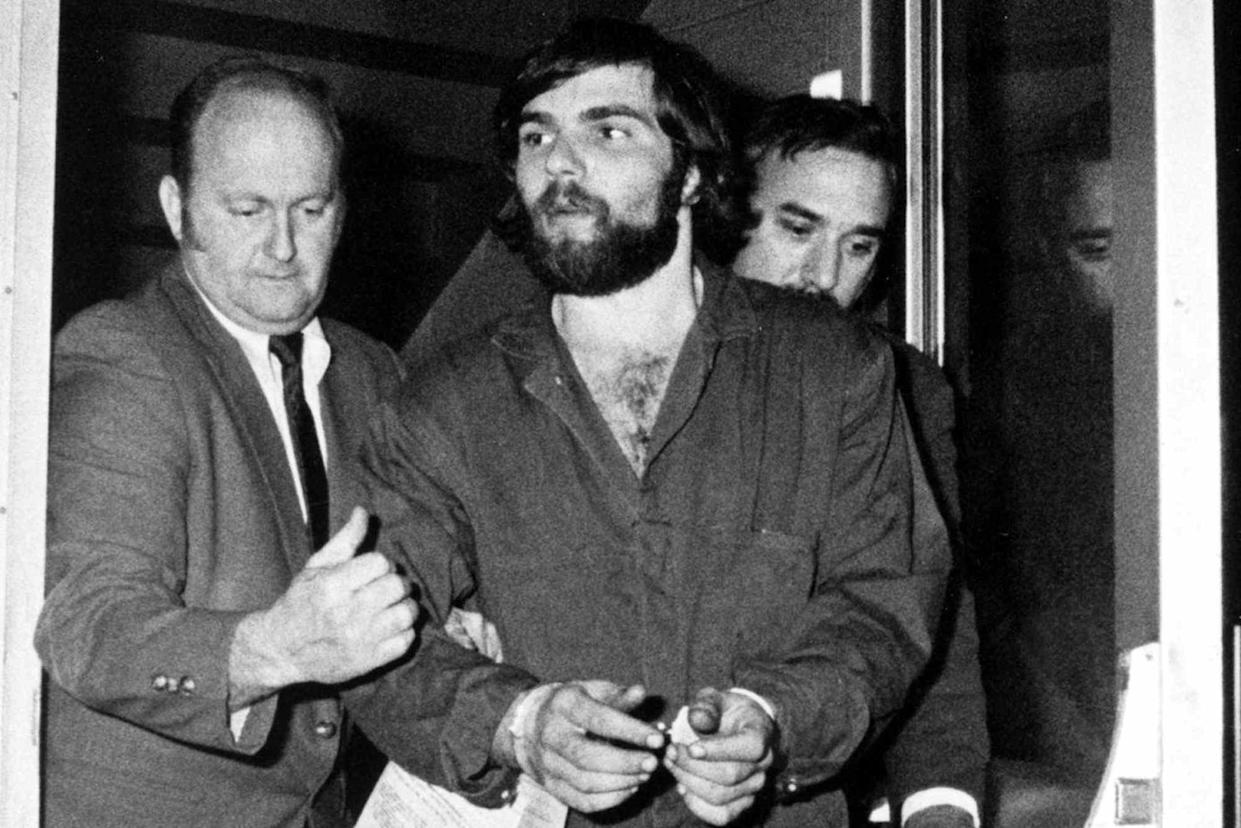
The bar was on a quiet stretch of Long Island, a place where a man could walk in and order a drink before noon without anyone raising an eyebrow.
On November 13, 1974, Ronald DeFeo Jr. walked into that bar and told the patrons his family had been shot.
What exactly he said in the bar is not in the record.
Only that he told them.
Police arrived at the house on Ocean Avenue and found six bodies, each shot with a .35 caliber Marlin rifle, all lying face-down in their beds.
The father, the mother, four siblings.
A whole family, gone before breakfast.
Not because the neighbors heard nothing.
But because the neighbors heard nothing, and that was the problem.
A family killed without a single gunshot reported?
The media descended on the suburban street before the bodies were even removed.
Television crews lined the sidewalk.
Reporters shouted questions at anyone who walked past.
The first story was a mob hit.
Organized crime, the early speculation went — six people executed in their beds, face-down, methodical.
That theory was never substantiated.
No evidence tied anyone outside the family to the rifles.
No witnesses placed a stranger near the house.
No motive emerged from the underworld.
So the question hung in the air, unanswered on every front page: why would a son walk into a bar to report his own family's murder?
Why would he sit among strangers and say the words?
Why would he wait?
The record does not say what he was thinking.
The record does not even say what he said, beyond the bare fact.
It says he told them.
And that was enough to bring the police, the cameras, and the speculation that would follow the house for decades.
THE FIRST ACCOUNT
He told the patrons at the bar that his family had been shot.
He said he had been away from the house and returned to find the bodies.
That was the first account, and it was the one the neighbors heard before the police arrived.
The exact timeline of when he left the house and when he returned is not in the record.
What the record does show is what happened next at the station.
Under questioning, he confessed, telling detectives he had committed the murders.
The lead detective documented the confession.
The story shifted there, from a son reporting a massacre to a suspect admitting one.
Then it shifted again.
He later gave conflicting accounts, at various times claiming he had heard voices and that a conspiracy involving family members was responsible.
Voices.
A conspiracy.
Neither account held the shape of the first one.
The media had already framed the crime as a mob-style hit, and early speculation centered on organized crime connections.
Those connections were never substantiated.
The weapon, a .35 caliber Marlin rifle, was recovered from a nearby river.
It was the same rifle used on all six victims.
The neighbors had heard nothing, and the press kept asking how a family could be killed without a sound.
The question hung over the reporting.
It still does.
The confession made the question strange in a different way.
It was not a mystery of who.
It was a mystery of why, and of which story to believe.
THE TWO STORIES
The defense called it paranoid schizophrenia.
The man who confessed to six murders, his lawyer argued, heard voices and was not responsible for his actions.
The prosecution answered with a different story: a plan, a rifle, a deliberate act.
Each side put its narrative to the jury, and the courtroom became the place where the two accounts collided.
The specific evidence the prosecution used to show planning is not detailed in the source.
It is not established how the state proved deliberation, only that it presented such a case.
The defense's medical argument was rejected.
The jury found him guilty on all six counts of second-degree murder.
Judge Thomas Stark then imposed the sentence: six consecutive terms of 25 years to life.
That meant the man would serve the terms one after another, not at the same time.
The verdict settled the legal question of guilt.
It did not settle the question of why, and the public was left with two competing portraits.
One portrait showed a man crippled by mental illness, incapable of choice.
The other showed a man who methodically shot his family while they slept.
The media at the time had already speculated about mob hits and impossible silences.
The trial replaced those theories with a starker binary.
Madness or malice.
Voices or volition.
The jury chose the latter, and the sentence made the choice permanent.
What the jury heard in the courtroom, and what the public read in the papers, was not the same story.
It was a story about a man who confessed, and a story about a man who planned.
One of them won.
The other became the seed of a legend that would outgrow the trial entirely.
THE HOUSE THAT ECHOED
The same house where the six were found face-down in their beds became a landmark.
The book and the film called it "The Amityville Horror," and the property at 112 Ocean Avenue was said to be haunted.
That story outsold the trial.
It outlasted the conviction.
It outshone the documented record of a confession and a guilty verdict on six counts.
The supernatural claims were widely disputed.
They were eventually admitted by the defense attorney to have been fabricated.
He said so himself.
The specific details of the haunting claims are not in the record.
Only the dispute is in the record.
Only the admission of fabrication is in the record.
What remains is a house that was renovated.
What remains is an address that was changed to avoid gawkers.
What remains is the irony: the invented legend became the public memory, while the documented tragedy of six victims faded into the background.
The DeFeo family's surviving relatives have largely stayed out of the public eye.

They did not write the book.
They did not make the film.
They did not haunt the house.
The house did not haunt them back.
That would require evidence.
AND THE STORY STILL ISN'T OVER
He has asked for parole again and again.
Each time, the board has said no.
He remains in prison in New York, the same state where the six bodies were found face-down in their beds.
The exact date of the most recent denial is not in the record.
That would require documentation no one has produced.
The legal case is closed.
The jury found him guilty on all six counts, and Judge Thomas Stark sentenced him to six consecutive terms of 25 years to life.
He has served decades.
He will likely serve more.
The murders alone drew the cameras to Amityville in 1974.
Reporters and television crews descended on the quiet suburban neighborhood, chasing a story that looked like a mob hit.
That theory was never substantiated.
Then the house itself became the story.
A book claimed it was haunted.
A film spread the claim further.
The haunting narrative became a cultural phenomenon, outlasting the trial, outlasting the headlines, outlasting any need for proof.
The defense attorney later admitted the haunting story was fabricated.
He said so plainly.
That admission did not end the phenomenon.
The story kept selling.
The house was renovated, its address changed to avoid gawkers.
The gawkers kept coming anyway.
It is a closed case.
It is also an open wound in the culture.
The confession stands.
The conviction stands.
The haunting does not.
Not because the house is quiet.
But because the record says the haunting was made up.
That should settle it.
It has not settled it.
Fifty years on, the question is no longer who fired the rifle.
That question was answered in a courtroom.
The question now is why the story refuses to die.
The answer may be simpler than the ghost story.
People remember the house.
They remember the six bodies.
They remember the bar.
They do not always remember the fabrication.
He remains incarcerated.
The story remains free.
Advertisement
You may also like
Inside Dahmer's confession: how one man spent four days leading detectives through a drip of details on 17 killings
He was handcuffed, and he was talking fast. Tracy Edwards had flagged down two Milwaukee police officers on July 22, 1991, after escaping the…
Love letters scattered in the lane — the 1922 murder that made the front pages for years
The note was still pinned to the crabapple tree when the bodies were found. It read "Mrs. Mills." Not a confession. Not an accusation.…
The bloody glove found on O.J. Simpson's estate after detectives scaled a fence
The fence at 360 North Rockingham Avenue was seven feet tall, and Detective Mark Fuhrman climbed over it. He was there to notify O.J.…
The $5,800 in ransom cash that surfaced on a riverbank 9 years after the jump
Eight years after the jump, a boy was walking the sand of the Columbia River in Washington. He found a rotting bundle of cash,…
The ladder's wood that led detectives to Hauptmann's door—and the tool mark that sealed it
The ladder was the only thing the kidnapper left behind. A homemade wooden ladder, propped against the window of a nursery near Hopewell, New…
The smell from Gacy's crawl space that made police dig again
The smell hit the officers before they reached the trapdoor. It was December 1978, and police were searching the home of a building contractor…