The smell from Gacy's crawl space that made police dig again
The smell hit the officers before they reached the trapdoor.
It was December 1978, and police were searching the home of a building contractor and part-time clown performer in Norwood Park Township, Illinois.
A strong odor filled the house, thick enough to stop conversation.
The officers found a trapdoor leading to a crawl space beneath the floorboards.
The smell was so distinctive that it made them dig again.
They kept digging.
Over several days, dozens of bodies were recovered from that crawl space.
The exact source of the odor is not specified in the record.
It is described only as "strong."
That is all the documents say.
The scale of the discovery shocked the public.
It dominated national news for weeks.
A ring belonging to a missing person was found inside the house, adding to the suspicion.
Officers kept working in the smell, pulling remains from the earth.
The crawl space kept giving up what it held.
Each dig revealed more.
Each body raised the same question: how many more were down there?
The odor was the clue that would not let them stop.
It was physical.
It was almost unbearable.
It was the reason they went back down.
The house sat in a quiet suburb, and the smell was the first thing that did not belong.
THE MISSING BOY
On December 11, 1978, Elizabeth Piest reported her 15-year-old son Robert missing.
Robert had told her he was going to meet a contractor about a construction job.
He had left the pharmacy where he worked part-time, and he never came home.
She pushed the police to act, and the report went out.
Police traced the contractor to a house in Norwood Park Township.
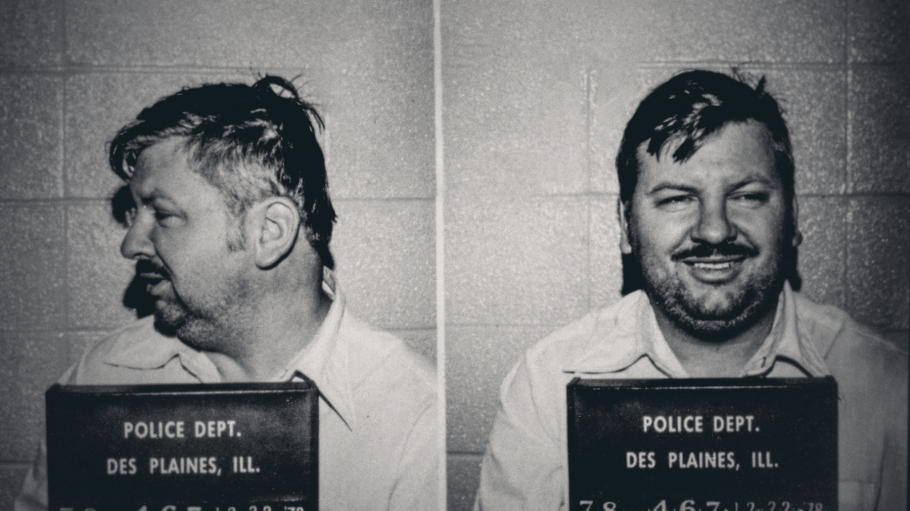
The house belonged to John Wayne Gacy, a building contractor who sometimes performed as a clown.
A search warrant was obtained for Gacy's home on December 13, 1978.
Officers searched the house and found things that did not belong.
They found a ring belonging to a missing person.
They found a trapdoor leading to a crawl space beneath the house.
The exact order of those discoveries is not detailed in the source.
The record does not establish precisely when the ring was found or how the trapdoor was opened.
What is documented is the smell, and the decision to dig.
Gacy was arrested on December 21, 1978.
The first body was discovered on December 22, 1978.
One body, then another, then another.
Twenty-seven bodies would come out of that crawl space.
The mother's report had started it.
Not because she knew what was under the house.
Because she would not stop asking where her son was.
THE DIG
The dig began in the crawl space beneath the house.
Over several days, 27 bodies were recovered from that space.

Four more bodies were found in the Des Plaines River.
Two other victims were identified later.
The medical examiner supervised the forensic recovery.
Dental records and personal effects were used to identify the victims.
The exact number of days the dig lasted is not specified in the record.
What is specified is the scale.
The recovery effort was massive.
It drew national media attention.
It dominated news coverage for weeks.
The public was horrified.
Not because the details were told in full.
Because the details kept coming.
One body.
Then another.
Then another.
The crawl space kept giving.
The news kept counting.
The scale of the discovery shocked the nation.
It became one of the most extensively studied serial murder cases in American history.
The house was a building contractor's home.
The man who lived there was a part-time clown performer.
The crawl space was beneath the floor.
The bodies were beneath the crawl space.
The odor had made police dig again.
The odor had told them something was there.
Now the excavation told them how much.
Twenty-seven from the crawl space.
Four from the river.
Two more identified later.
Thirty-three in all, the record would eventually say.
The public watched the numbers climb.
The news reported each recovery.
The horror grew with each count.
It is a methodical horror.
It is a grim accounting.
The dig was not a single moment.
It was a process.
A process that kept revealing the same answer.
There were more.
There were always more.
THE CONFESSION AND THE TRIAL
It began in February 1980.
The trial opened in Cook County Circuit Court, with the prosecutor, Terry Sullivan, laying out the case.
He presented the bodies recovered from the crawl space.
He presented Gacy's confession.
He presented testimony from witnesses who had seen the accused with young men.
The prosecution's case was a catalogue of what had been dug from the ground.
The defense argued something else.
Gacy, they said, was legally insane at the time of the murders.
Not a man who planned. A man who could not tell what he was doing.
The courtroom heard the details of the confession, the specific accounts of each killing.
It also heard that Gacy later recanted parts of that confession.
What exactly he retracted, and why, is not fully documented in the record.
That remains unclear.
The jury was asked to choose between guilt and madness.
They chose guilt.
On March 12, 1980, Gacy was found guilty of all 33 murders.
He was sentenced to death.
The verdict was a relief.
It was also a number: 33.
The public had watched the dig on the news, then watched the trial in the papers.
The headlines had asked how one man could do this.
The verdict said he did.
The insanity plea had hung in the air, a question the evidence could not quite answer.
The record shows the confession and the bodies.
It shows the conviction.
What it does not show is a madness that the law accepted.
That would require evidence, and the jury found none.
AND THE STORY STILL ISN'T OVER
The house at 8213 West Summerdale Avenue was demolished in 1979.
The crawl space was filled in. The lot sat empty.
John Wayne Gacy was executed by lethal injection on May 10, 1994, at Stateville Correctional Center in Illinois.
That closed the legal record.
The echoes did not stop there.
Elizabeth Piest became an advocate for missing children.
She was involved in founding the National Center for Missing and Exploited Children.
Her son's disappearance changed how missing persons reports were handled.
Police departments began to take runaways seriously. The public learned a new word: serial murder.
Several victims remained unidentified for years.
Advances in DNA technology have since identified some of them.
The exact number identified through DNA is not specified in the source.
What the record does not establish is a precise tally.
The case remains one of the most extensively studied serial murder cases in American history.
It is studied in criminology classrooms. It is studied in forensic textbooks. It is studied in true-crime documentaries.
What it does not establish is a single, simple explanation.
The house is gone. The man is gone. The questions persist.
How many more might have been found if the earlier reports had been connected?
How many families waited years for a name on a grave marker?
How much of the story depends on a smell that made officers dig again?
That would require evidence, and the evidence has been excavated.
The bodies were recovered. The confession was recorded. The conviction was upheld.
She was on the ground below, in the crawl space, in the dark.
The story is over. It is also not over.
Advertisement
You may also like
Love letters scattered in the lane — the 1922 murder that made the front pages for years
The note was still pinned to the crabapple tree when the bodies were found. It read "Mrs. Mills." Not a confession. Not an accusation.…

The bloody glove found on O.J. Simpson's estate after detectives scaled a fence
The fence at 360 North Rockingham Avenue was seven feet tall, and Detective Mark Fuhrman climbed over it. He was there to notify O.J.…

The $5,800 in ransom cash that surfaced on a riverbank 9 years after the jump
Eight years after the jump, a boy was walking the sand of the Columbia River in Washington. He found a rotting bundle of cash,…
The ladder's wood that led detectives to Hauptmann's door—and the tool mark that sealed it
The ladder was the only thing the kidnapper left behind. A homemade wooden ladder, propped against the window of a nursery near Hopewell, New…
He walked into a bar to report the six bodies — but the first account did not match
The bar was on a quiet stretch of Long Island, a place where a man could walk in and order a drink before noon…
The Christmas Eve phone call that broke Laci Peterson's mother
December 24, 2002, was a Tuesday. Laci Peterson, 27 and eight months pregnant, was last seen at the family home in Modesto. That evening,…