The 35,000-word manifesto that unmasked the Unabomber after years of missed clues
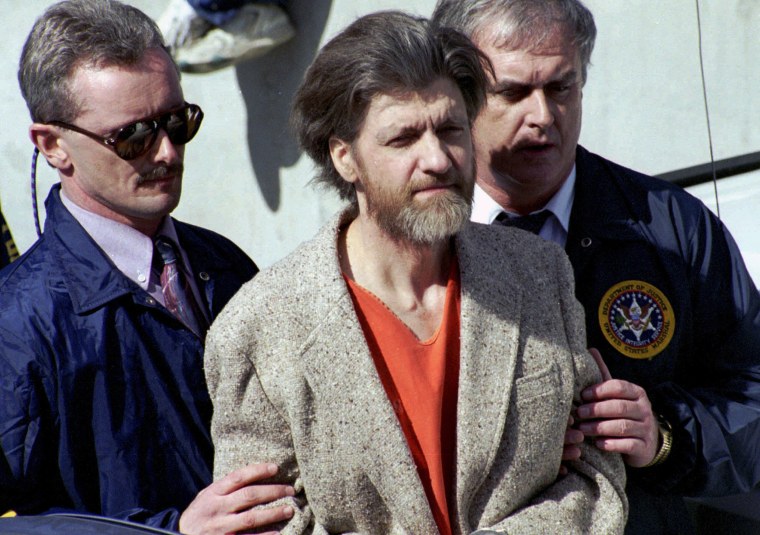
In 1995, the Unabomber sent a demand: print my 35,000-word manifesto, or the bombs keep coming.
The Washington Post, urged by Attorney General Janet Reno, published it.
A 35,000-word manifesto is a strange piece of evidence.
It is not a fingerprint. It is not a fragment of a bomb.
It is language, laid out in paragraphs, signed by no one.
The FBI had the document before anyone else.
The FBI had the document, and the record shows they missed its significance.
They did not connect the words to a name.
They did not connect the words to a cabin in Montana.
Whether any investigator recognized the manifesto's author before the public read it is not established.
The record does not establish that any clue in the manifesto was spotted by investigators before publication.
Not a phrase. Not a structure. Not a single turn of sentence.
That would require evidence.
So the manifesto sat, a published document with no owner.
Then David Kaczynski read it.
He read the style. He read the language.
He recognized his brother Theodore.
He contacted the FBI.
The break came not from forensic science, but from a brother's memory of how a voice sounds on paper.
The manifesto was the turning point.
It is a fact that the FBI initially failed to recognize its significance.
It is also a fact that the delay cost time.
The bombs had already killed three people by then.
The last one had already landed.
She was on the ground below, and the manifesto was already in print.
What the record leaves open is simple: how long the FBI held the key before anyone thought to turn it.
That question has no answer in the case file.
1978–1995: THE BOMBS
The first bomb, in May 1978, was found at a Chicago university.
The final attack, in April 1995, killed the president of a timber industry lobbying group in Sacramento, California.
Between those two dates, mail bombs killed three people and injured nearly two dozen others across the United States.
The bombs were sent to universities, airlines, and other targets.
They were constructed from wood, metal, and other materials, and sent through the U.S. Postal Service.
The FBI investigated under the code name UNABOM.
The trail was scattered.
A computer store owner was killed in 1985.
An advertising executive was killed in 1994.
The Sacramento victim died in 1995.
Survivors included a Yale professor and a geneticist.
Each attack appeared isolated.
Each bomb seemed like its own mystery.
Connecting them took years.
The exact number of bombs is not fully enumerated in the record.
The full list of targets is not fully enumerated in the record.
What the record does show is a pattern of violence spread across seventeen years.
It is a timeline without a single obvious thread.
It is a case that waited for a break.
That break would not come from the bombs themselves.
It would come from words.
THE MISSED CLUES
The FBI cast a wide net in those years.
Agents chased hundreds of leads, from disgruntled academics to airline employees.
One suspect, a man named John Butz, was publicly suspected and later cleared.
The task force, led by an FBI agent, worked the case for years without a clear lead.
It is a case of early mistakes and missed opportunities.
The most significant mistake, according to the record, was the initial failure to recognize the significance of the manifesto.
When the Unabomber’s 35,000-word essay was published in 1995, the FBI did not immediately connect it to Theodore Kaczynski.
That delay cost time.
It cost focus.
It cost the investigation a chance to move faster.
What other clues were missed is not detailed in the record.
That remains open.
Agents examined the bombs, the packaging, the postmarks.
They studied the language of the letters.
They built profiles and theories.

None of it produced a name.
The break came from outside the task force.
It came from a brother reading the published manifesto.
David Kaczynski recognized the writing style and language as his brother’s.
He contacted the FBI.
That was the turning point.
Not a forensic breakthrough.
Not a confession.
A family member reading words in a newspaper.
The investigation had the manifesto in hand before that.
The record does not say why its significance was missed at first.
It only says it was.
Frustration is the natural response.
How close did they come?
How long did it take?
The answer is in the timeline: years of struggle, then a single phone call.
That would require evidence to answer fully.
The record provides the outline, not the interior.
THE CABIN SEARCH
The call was made.
David Kaczynski contacted the FBI.
Agents searched Theodore Kaczynski's Montana cabin.
They found bomb-making materials.
They found journals.
They found a live bomb.
The evidence was overwhelming.
Kaczynski was arrested in 1996.
He has remained in custody since.
The exact date of the cabin search is not in the record.
Not because the search did not happen.
But because the record does not provide that detail.
It is a fact that the search occurred.
It is also a fact that the date is missing.
What the agents saw inside the cabin is described in the record.
What they did not see is not described.
The journals were there.
The materials were there.
The live bomb was there.
The cabin itself survived the investigation.
It was preserved.
It has been displayed in museums.
Visitors can see the structure where he lived.
They cannot see what the agents saw that day.
The record offers the outline.
The interior remains closed.
AND THE STORY STILL ISN'T OVER
He was charged with multiple federal counts, including three murders.
He sought to represent himself at first.
He resisted the mental health defense his attorneys wanted to mount.
The trial began in January 1998 in Sacramento.
The prosecutors sought the death penalty.
Then he attempted to fire his attorneys.
He pleaded guilty in January 1998 instead.
The trial never reached its verdict.
He was sentenced to life without parole.
He is serving that sentence at the federal supermax prison in Florence, Colorado.
His brother has spoken publicly about the case since.
His brother has advocated against the death penalty.
No further attacks have been linked to him.
The record does not establish any pending legal motions or future hearings.
The case closed the way it did because a brother read a published manifesto.
Not because the FBI recognized the writing first.
But because David Kaczynski did.
That is the turn the record supports.
Everything else is the weight that remains.
Advertisement
You may also like
The FBI named the wrong man the night before the Tsarnaev brothers were caught
On April 18, 2013, the FBI released images of two suspects taken from Lord & Taylor surveillance footage. That same night, the FBI initially…
The love letters that vanished from police custody after the 1922 double killing
The crabapple tree stood in a lane called Lovers' Lane, in Phillipsburg, New Jersey, near New Brunswick. On the evening of September 14, 1922,…
The clip-on tie that held no answers after the skyjacker vanished — FBI's 45-year puzzle
The clip-on tie sits in an FBI evidence file, a strip of fabric no wider than a man's hand. It was recovered from the…
The 8:44 p.m. video on Paul Murdaugh's phone that cracked Alex's alibi
He called at 10:07 p.m. On June 7, 2021, Alex Murdaugh told emergency dispatchers in Colleton County, South Carolina, that he had found the…
The parole agent who spotted a face in a sketch — and what it took to bring Polly home
A parole agent looked at a composite sketch and saw a face he knew. The date was December 4, 1993. The face belonged to…
The unpaid $33.5 million judgment the Goldman family still pursues after Simpson's death
A jury in a 1997 civil trial found O.J. Simpson liable for the wrongful deaths of Nicole Brown Simpson and Ronald Goldman. The award…