The 911 call that led police to a surgical tech, his wife, and his 13-year-old niece
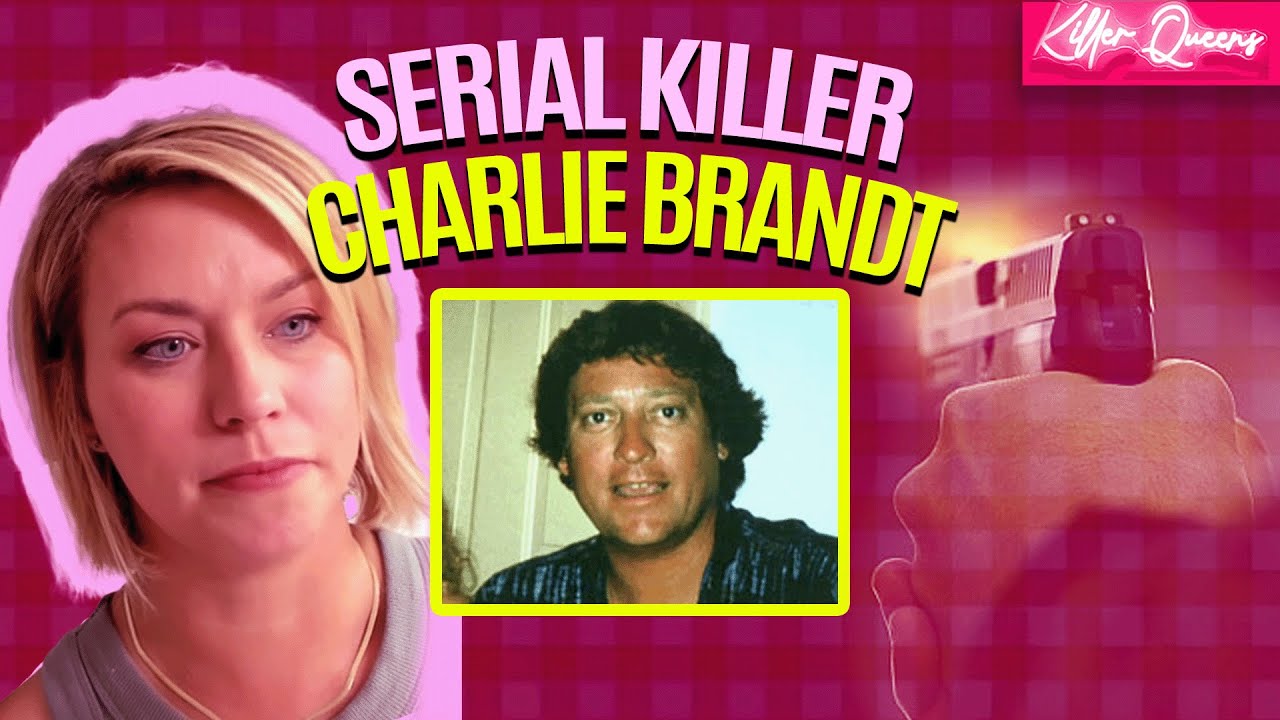
The 911 call came in on September 14, 2004.
A man told the dispatcher he had killed his wife and his niece.
The caller was Charlie Brandt, a 47-year-old surgical technician.
Police in Winter Park, Florida, were dispatched to the Brandt home on Kensington Drive.
The call is the pivot on which everything else turns.
Before it, there is a house on a quiet street.
After it, there are three bodies.
The exact words of the call are not in the record.
Only the admission is noted.
Not the tone.
Not the pauses.
Not whether the voice was calm or breaking.
That would require a transcript, and the source does not provide one.
What officers knew, as they drove toward Kensington Drive, was this: a man said he had killed two people.
What they did not know was who was waiting behind the door.
Was the caller still alive?
Were the victims still alive?
Was there a weapon in the house?
The record does not say what the dispatcher asked or what Brandt answered.
It says only that he said he had killed his wife and his niece.
And that officers were sent to the house.
The call set the investigation in motion.
It is also where the record goes quiet.
What happened inside the house next would answer some questions.
It would raise others that no one could answer at all.
THE SCENE ON KENSINGTON DRIVE
The first officers through the door found her in the master bedroom.
She had been strangled.
In another room they found the 13-year-old niece, the daughter of Charlie Brandt's brother.
She had been stabbed.
Charlie Brandt was in the garage, dead by hanging.
The medical examiner later ruled the deaths of the wife and niece homicides.
It ruled Charlie Brandt's death a suicide.
Three bodies.
One house on Kensington Drive.
The Winter Park Police Department and the Orange County Sheriff's Office ran the investigation.
They worked the scene as a triple death, then as a double homicide and a suicide.
The exact layout of the home is not specified.
The order in which officers discovered the bodies is not specified either.
The record does not say which room officers entered first, or whether they heard anything before they saw anything.
It does not say who found whom, or in what sequence.
What is known is what the autopsies established: strangulation, stabbing, hanging.
What is known is who called them there.
The caller had already said it.
He had killed his wife and niece.
By the time police arrived, all three were dead.
The house held no one left to question.
THE MICHIGAN CONNECTION
The house held no one left to question.
But the name Charlie Brandt did not begin in Florida.
Investigators traced it back to Michigan, to a killing from 1971.
Brandt was 13 years old then.
He had killed his mother, the Orlando Sentinel reported.
He had also shot his father, who survived.
At the time, Brandt told police he acted in self-defense.
He said his mother attacked him with a knife.
The 1971 killing was ruled self-defense then.
No charges were filed against a 13-year-old boy.
In 2004, after the bodies were found in Winter Park, Michigan authorities reopened the case.
They concluded the 1971 killing was not self-defense.
They called it a homicide.
The specific evidence that led them to that conclusion is not detailed.
Michigan authorities closed the case without charges.
The perpetrator was dead.
What remains is a pattern.
A boy who killed his mother at 13.
A man who killed his wife and niece at 47.
The same hands, thirty-three years apart.
The record shows the first killing was reclassified.
The record does not show what changed their minds.
That would require evidence.
The evidence is in a closed file.
Brandt is in the ground.
His father, who survived the shooting, is not named in the coverage.
His brother, whose daughter died in that house, is not named either.
The Michigan case is closed.
The Florida case is closed.
Only the question of what began in 1971 stays open.
THE DOUBLE LIFE
The Florida investigation revealed that Brandt had been living a double life.
Detectives found evidence suggesting he had stalked women for years.
They found a history of violent fantasies.
They found stockpiled weapons and surveillance equipment.
They found a man who appeared ordinary and was not.
The Orlando Sentinel reported that investigators looked into Brandt's possible connection to unsolved murders and disappearances of women in Florida.
They looked at a case in Key West in 1996.
They looked at other unsolved cases.
What they found in those files is not established.
The specific evidence linking Brandt to the Key West case is not established.
It remains a possible connection only.
No charges were ever filed in these cases.
Brandt was dead.
He had hanged himself in the garage on September 14, 2004.
The medical examiner ruled his death a suicide.
The Michigan case is closed.
The Florida case is closed.
The double life is the part that stays open.
AND THE STORY STILL ISN'T OVER
There was no trial.
Charlie Brandt died by suicide on September 14, 2004, before any charges could be filed.
The Orange County Medical Examiner's Office ruled his death a suicide.
The Michigan investigation into the 1971 killing was closed without charges, as the perpetrator was dead.
No additional charges were ever brought.
Not because the evidence ran out. Because the suspect was gone.
The case has been the subject of true-crime documentaries and podcasts exploring Brandt's possible role in other unsolved murders.
Those shows ask whether he killed before 2004. They ask whether he killed after 1971. They ask whether he stopped.
A definitive link between Brandt and other unsolved cases is not established.
The case is closed.
The Brandt family has largely remained out of the public eye.
They have not spoken about the dead. They have not spoken about the living. They have not asked for the cameras to return.
The 1971 killing was reclassified as a homicide, not self-defense.
That reclassification answers one question and opens another.
A 13-year-old boy told police his mother attacked him with a knife. He was not charged then. He could not be charged now.
She was his mother.
He was her son.
The record does not say what happened in that Michigan kitchen beyond what the boy said at the time.
It is a cold file.
It is a closed file.
It is a file with a dead perpetrator, a dead victim, and a question that will not be settled in court.
Some answers will never come.
That is the part that stays open.
Advertisement
You may also like
The 911 call a mother made at 5:52 a.m. — the ransom note that followed
The 911 call came at 5:52 a.m. December 26, 1996, in Boulder, Colorado. Patsy Ramsey's voice on the line, reporting her 6-year-old daughter, JonBenét,…
The brother's call that ended a 17-year bombing spree
The manifesto arrived in 1995. It was 35,000 words, titled "Industrial Society and Its Future," and it was mailed to The New York Times…
The newspaper clipping and note in the Black Dahlia case that still defy explanation
A newspaper clipping and a note, reportedly carrying the killer's taunts, sat in the evidence file. They were key evidence, the investigation summary says.…
The 1969 letter that came with a victim's bloody shirt and a promise
The package arrived at the San Francisco Chronicle in 1969. Inside was a piece of a shirt. The shirt was bloody. It belonged to…
The tarot card left at a D.C. sniper scene that said 'Call me God'
The card was on the ground beside the body. October 19, 2002. Falls Church, Virginia. A victim shot while loading groceries. Police found a…
Afeni Shakur scattered her son's ashes at his childhood home — the case that still haunts Vegas
Afeni Shakur carried her son's ashes back to Marin City. She scattered them at his childhood home, a private act in a small California…