The anonymous tip that sent police to Adnan Syed — and the cell tower data that sealed his fate
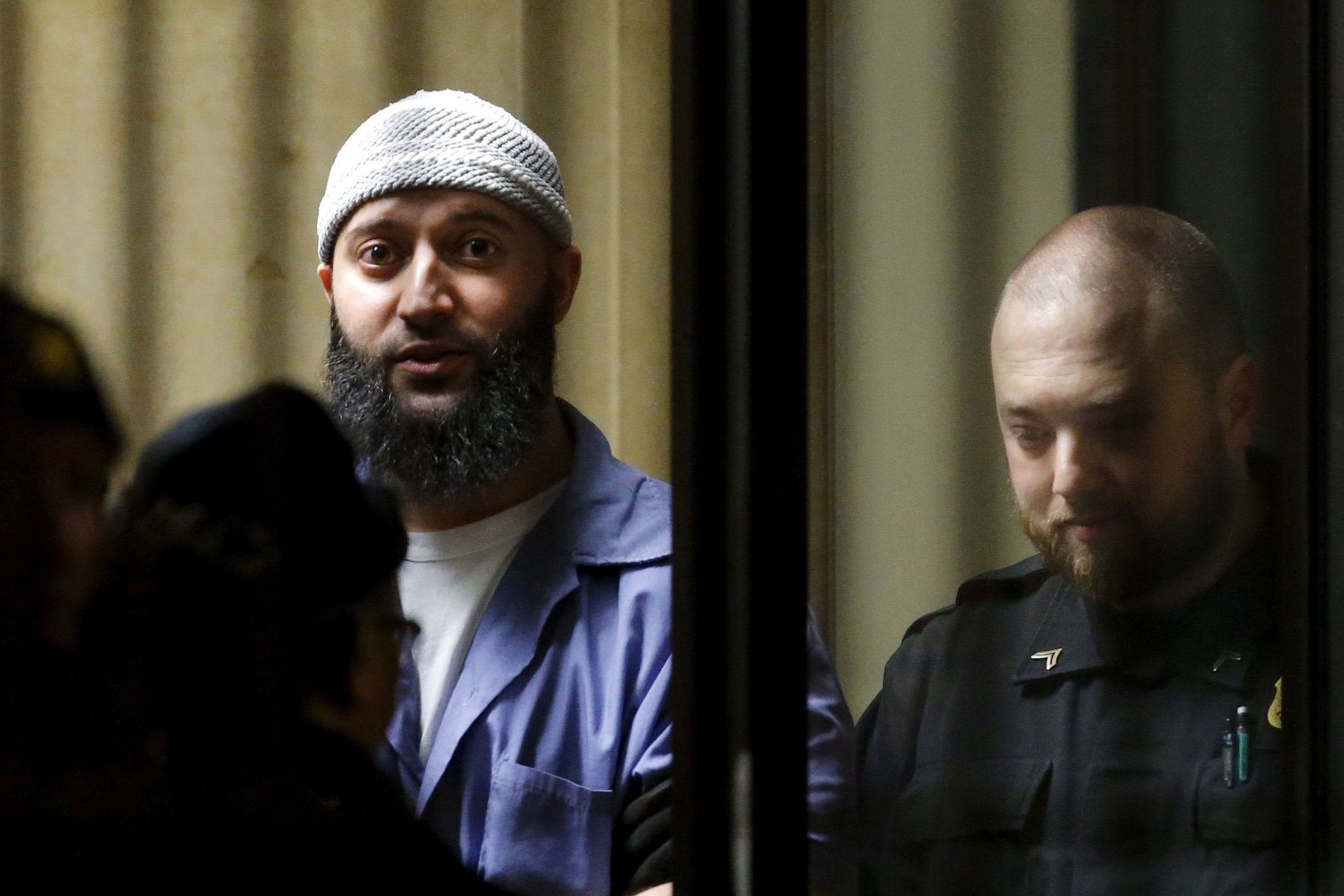
The call came on February 12, 1999.
Three days after Hae Min Lee was reported missing, police received an anonymous phone call directing them to look into Adnan Syed.
He was 17 at the time.
Her body had not been found yet.
That would not happen until February 28, 1999, in Leakin Park.
The source of the call is not identified in the record.
It is described only as anonymous.
This tip is the pivot point that turned police attention toward Syed.
The call preceded the discovery of the body.
It preceded the cell tower data.
It preceded the trials, the conviction, the appeals, the reversal, the reinstatement, the vacating, the release.
Who was on the other end?
A classmate?
A friend?
A stranger who knew something?
The record does not name the caller.
Online theories about the call's origin circulate, but the record does not establish the identity of the anonymous caller.
That would require evidence.
The record offers none.
So the case begins with a voice that no one can place.
A phone call, logged, dated, and unexplained.
It set everything in motion.
And it remains, after all these years, a single unanswered question.
THE MISSING REPORT
She was eighteen. She was a senior at Woodlawn High School in Baltimore County, and she was an athlete.
Hae Min Lee was reported missing on February 9, 1999.
She had failed to pick up her younger cousin from daycare that day.
The report went in. The search began. Her friends and family waited.
Nineteen days later, on February 28, her body was found in Leakin Park, a wooded area in Baltimore.
The medical examiner ruled the death a homicide.
The cause was ligature strangulation, a cord or cloth pulled tight around the neck.
The weapon was a ligature. The specific object was not widely reported.
That detail remains unestablished in the record, a gap that would matter later.
Police interviewed Adnan Syed after the anonymous tip that pointed to him.
He initially denied involvement.
The case was open for weeks before that call came in, and it was open for weeks after.
A missing teenager becomes a murder investigation.

A popular student becomes a victim.
The urgency of the first days—the flyers, the calls, the hope—hardened into something else.
Leakin Park is not a place for a young woman to end up. It is wooded, it is dark, and it is where her body was found.
The timeline is short: missing on the ninth, found on the twenty-eighth.
The timeline is also contested: what happened in between, and who was where, would become the entire case.
For now, the record holds only the dates and the cause of death.
The rest is argument. It always has been.
THE CELL TOWER DATA
The prosecution's case built around cell phone records, which placed Syed in the Leakin Park area around the time of the murder, according to the prosecution.
A key witness, a friend of Syed's, testified that Syed had asked for a ride and later said he needed to get rid of a body.
The defence argued that the cell phone evidence was unreliable and that the witness had a motive to lie.
There were documented errors in the investigation, including a failure to test certain evidence and a timeline that the defence said did not add up.
Experts later debated the reliability of the cell tower data.
It is not established as definitive.
The record shows the calls and the towers they pinged.
It does not show where the phone's owner was standing, or whether the phone was even with him.
One witness placed Syed at the scene by word alone.
One technology placed him there by signal.
The witness had a story to tell; the technology had a margin of error.
The defence asked the jury to weigh both, and to weigh them against a timeline that did not fit.
The prosecution asked the jury to trust the pattern: the calls, the tower, the confession the witness said Syed made.
That would require evidence.
The investigation, meanwhile, left gaps.
Certain evidence was never tested.
Certain witnesses were never called.
The timeline, the defence said, did not add up.
Was the cell tower data a map or a guess?
Was the witness a friend telling the truth or a man with a reason to lie?
The questions were posed in court, and the answers were argued.
The record holds the arguments, not the resolution.
THE TRIALS
He was charged with first-degree murder, kidnapping, robbery, and false imprisonment.
The charges came in 1999, months after her body was found in Leakin Park.
His first trial ended in a hung jury.
The jury could not agree.
A second trial began in January 2000.
The prosecution argued Syed killed Lee in a jealous rage after she broke up with him.

They built the case on the cell tower data and the friend who said Syed asked for a ride.
The defence presented an alibi witness who said Syed was at a library at the time of the murder.
That witness was not called during the first trial.
Not because the defence forgot. Because the record shows she was never put on the stand the first time.
What difference would her testimony have made?
That is the question the appeals court would wrestle with years later.
The answer is disputed.
The record does not establish whether her words would have changed the first jury's mind.
The second jury heard her.
They convicted him anyway.
Syed was found guilty of first-degree murder and kidnapping.
He was sentenced to life in prison plus 30 years.
The sentence meant he would serve decades behind bars.
It would stand for over twenty years.
The conviction carried the weight of the anonymous call, the cell tower pings, and the friend's testimony.
It carried all of it, and it held.
AND THE STORY STILL ISN'T OVER
In 2016, a Maryland appeals court overturned the conviction, citing ineffective assistance of counsel for failing to call the alibi witness.
The state appealed.
In 2019, the Maryland Court of Appeals reinstated the conviction, ruling that the alibi witness’s testimony would not have changed the outcome.
Then, in 2022, a Baltimore judge granted a motion to vacate his conviction.
Prosecutors acknowledged flaws, including unreliable cell phone evidence and a failure to disclose information about the key witness, according to court records.
The state later dropped all charges.
Syed was released from prison in September 2022.
He had been inside for over two decades.
No one else has been charged.
Hae Min Lee’s family maintains they believe Syed is guilty.
Syed maintains his innocence.
Whether he is guilty or innocent is not established by the record.
The case remains unresolved in the public eye.
It is unresolved in the courts, too.
The conviction was vacated; the charges were dropped; the questions remain.
What the anonymous caller knew, what the cell tower pings meant, what the friend’s testimony was worth — none of it was settled.
It was argued, re-argued, overturned, reinstated, and vacated.
That would require evidence the record does not provide.
Syed has been living in Maryland and working.
The case continues to be the subject of documentaries and legal commentary.
It is a case with an ending.
It is also a case without one.
Advertisement
You may also like
The 911 call a mother made at 5:52 a.m. — the ransom note that followed
The 911 call came at 5:52 a.m. December 26, 1996, in Boulder, Colorado. Patsy Ramsey's voice on the line, reporting her 6-year-old daughter, JonBenét,…
The brother's call that ended a 17-year bombing spree
The manifesto arrived in 1995. It was 35,000 words, titled "Industrial Society and Its Future," and it was mailed to The New York Times…
The newspaper clipping and note in the Black Dahlia case that still defy explanation
A newspaper clipping and a note, reportedly carrying the killer's taunts, sat in the evidence file. They were key evidence, the investigation summary says.…
The 1969 letter that came with a victim's bloody shirt and a promise
The package arrived at the San Francisco Chronicle in 1969. Inside was a piece of a shirt. The shirt was bloody. It belonged to…
The tarot card left at a D.C. sniper scene that said 'Call me God'
The card was on the ground beside the body. October 19, 2002. Falls Church, Virginia. A victim shot while loading groceries. Police found a…
Afeni Shakur scattered her son's ashes at his childhood home — the case that still haunts Vegas
Afeni Shakur carried her son's ashes back to Marin City. She scattered them at his childhood home, a private act in a small California…