The Army vet and the teen who met in Antigua — what made them a sniper team
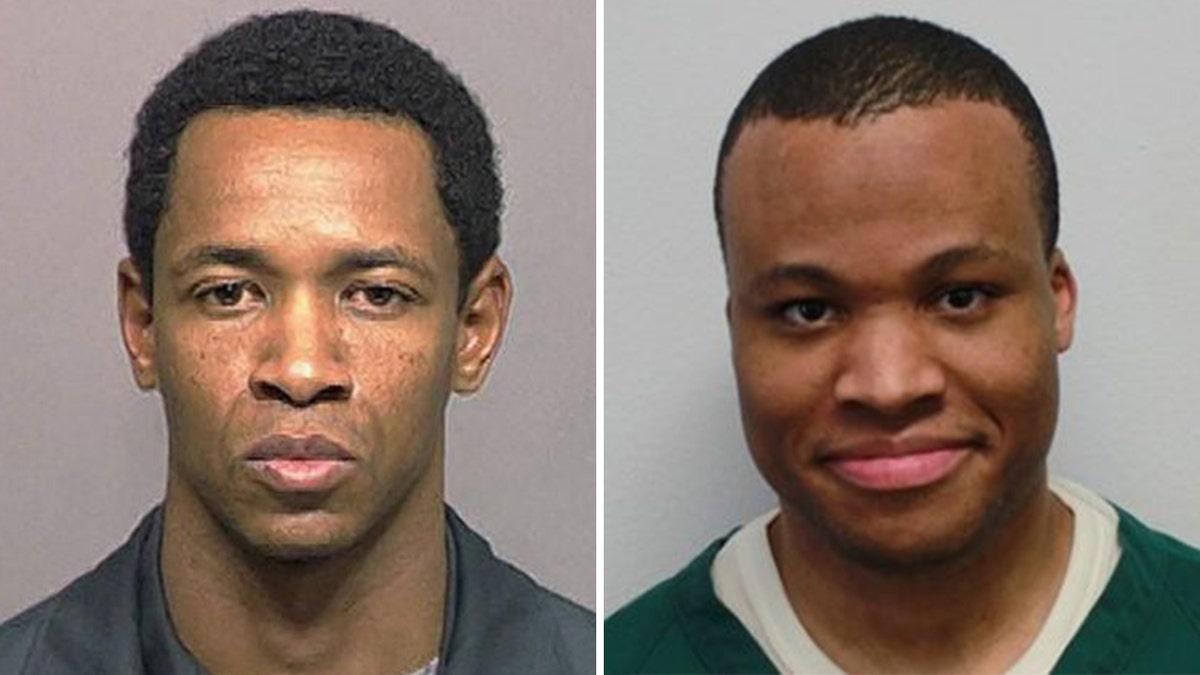
He was forty-one, an Army veteran with firearms training from the Gulf War.
She was seventeen, a teenager from Jamaica.
They met in Antigua.
That is where the record begins: a meeting between a veteran and a teenager, on an island neither called home.
The exact nature of their relationship before the attacks is not detailed in the source.
Only that they met there.
What brought them together is a question the record leaves open.
What they did together is a matter of arrest records and ballistics.
On October 24, 2002, they were found sleeping in a Chevrolet Caprice at a rest stop off Interstate 70 near Myersville, Maryland.
A truck driver who had heard an FBI alert about the vehicle spotted the car.
Inside the car was a Bushmaster .223-caliber rifle, later identified as the murder weapon.
The source states that as a fact of the arrest.
The veteran had training.
The teenager had none.
The rifle linked them to a series of shootings that killed ten people and wounded three others across Maryland, Virginia, and Washington, D.C.
The first killing occurred on October 2 outside a grocery store in Wheaton, Maryland.
The final shooting took place on October 22 on a bus in Aspen Hill, Maryland.
The record does not explain how a forty-one-year-old veteran and a seventeen-year-old from Jamaica formed a bond that led to a killing spree.
It states only that they met in Antigua.
It states that they were arrested together.
It does not state what made them a team.
That would require evidence.
THE SHOOTINGS
Between October 2 and October 24, 2002, a series of shootings killed 10 people and wounded 3 others across Maryland, Virginia, and Washington, D.C., according to the source.
The first killing occurred on October 2 outside a grocery store in Wheaton, Maryland.
The final shooting took place on October 22 on a bus in Aspen Hill, Maryland, killing the driver.
Victims were shot while pumping gas, mowing a lawn, sitting on a bench, or walking into a store.
The source describes the attacks as appearing random.
One man was killed at a gas station in Manassas, Virginia, on October 9.
That was the killing for which both men were tried in Virginia, per the source.
Three others were wounded.
One of the wounded was a 13-year-old boy outside a middle school in Bowie, Maryland.
The source names this as a wounding, not a killing.
A woman was wounded outside a craft store in Falls Church.
A man was wounded in a parking lot in Silver Spring.
The shootings spanned 22 days.
They spanned three jurisdictions.
They stopped on October 24, when the two were arrested while sleeping in a Chevrolet Caprice at a rest stop off Interstate 70.
The source does not specify which shootings were committed by which individual.
It only says the two were arrested together and linked to the rifle.
Was one the shooter and the other the driver?
Was the rifle passed between them?
Did they take turns?
That would require evidence.
The record establishes the range of the attacks.
It establishes the randomness.
It does not establish the division of roles.
THE ARREST AND THE EVIDENCE
The break came on October 24, when a truck driver alerted authorities that a Chevrolet Caprice matched the description of a car seen fleeing one of the shootings.
The car was found at a rest stop off Interstate 70 near Myersville, Maryland.
Inside were Muhammad and Malvo, sleeping.
Also inside was a Bushmaster .223-caliber rifle.
The source identifies the rifle as the murder weapon.
Ballistics evidence linked the rifle to multiple shootings.
The record states that as a fact of the investigation.
What the record does not state is whether the rifle was the only weapon used.
A tarot card left at one crime scene carried the message "Dear Policeman, I am God."
The card was later linked to Malvo's handwriting.
The source describes the card as a key piece of evidence.
It does not specify which shooting the card was left at.
The investigation was one of the largest in U.S. history.
The FBI was involved.
The ATF was involved.
Multiple local police departments were involved.
Montgomery County Police Chief Charles Moose became the public face of it all.
The pair had also been linked to earlier shootings in Alabama, Louisiana, and Georgia.
Those were not part of the Virginia trial.
Muhammad was also suspected of killing his ex-wife's friend in Tacoma, Washington, in February 2002.
He was never tried for that crime.
The relief of the arrest was real.
The evidence was heavier.
A rifle in the car.
A tarot card in the record.
A handwriting match.
The randomness of the shootings had a shape now.
It just was not a shape anyone could fully explain.
THE TRIALS AND THE TWO STORIES
Muhammad went to trial first.
Virginia, 2003.
He was charged with capital murder for the killing of Dean Harold Meyers, a man shot at a gas station in Manassas.
Prosecutors argued that Muhammad was the mastermind.
Malvo, they said, was the shooter.
The older man planned; the teenager fired.
That was the prosecution's story.
Muhammad's jury heard the ballistics, the rifle, the car.
They convicted him.
The sentence was death.
Then Malvo stood trial separately, also in Virginia, 2003.
Also for the murder of Dean Harold Meyers.
His defense argued something different.
Muhammad had brainwashed him.
The teenager was not a partner but a tool, shaped by an older man's will.
The jury heard that story too.
They convicted Malvo as well.
His sentence was life in prison without parole.
Two trials.
Two juries.
Two verdicts.
One dead man at a gas pump.
Which narrative was true?
The mastermind and his weapon?
Or the manipulator and his victim?
The record does not establish either.
It reports the arguments.
It reports the verdicts.
It does not report the truth of the bond between them.
What remains is what the evidence showed: a 41-year-old Army veteran with firearms training, a 17-year-old from Jamaica, a car, a rifle.
And a question the trials never answered.
AND THE STORY STILL ISN'T OVER
Muhammad was executed by lethal injection on November 10, 2009, in Virginia.
Malvo remains in prison, serving multiple life sentences.
In 2022, Malvo's attorneys filed a motion seeking resentencing.
They argued that his life sentence violated the Supreme Court's ruling on juvenile sentencing.
As of recent reports, that motion was pending.
The outcome is not in the record.
It remains a question the courts have not answered.
The families of the victims have remained active.
They have continued advocating for victims' rights.
They have watched a legal battle unfold long after the shootings ended.
Muhammad's case closed with his execution.
Malvo's case did not.
Not because the evidence changed.
Because the law changed, and his lawyers say it applies to him.
That would require evidence.
That would require a judge to decide.
That would require a ruling that has not come.
The record shows a conviction and a sentence.
It does not show what happens next.
The story is not over because the legal arguments are not over.
The story is not over because the families are still speaking.
The story is not over because a 17-year-old who was sentenced to die in prison is now a man asking the courts to look again.
What remains is a motion filed in 2022.
What remains is a question about how the law treats a child who committed murder.
What remains is the families, the advocates, and the unanswered part of the case.
He was on the ground below, and the record holds him there.
Advertisement
You may also like
The note that bought a one-way ticket to nowhere: D.B. Cooper’s 1971 demand
The note was folded, passed hand to hand at 8,000 feet. November 24, 1971. A man calling himself Dan Cooper bought a one-way ticket…
The bloody glove found at O.J. Simpson's estate that didn't fit in court — and the 9-month trial it defined
The dog came first. A passerby on Bundy Drive saw it, alone, and followed. The dog led him to the bodies, discovered around midnight…
The glove that wouldn't fit and the 9-month trial that split America
The glove sat on the courtroom table, dark with dried blood, and Simpson took it in his hands. He struggled with it. He pulled,…
The blood word 'PIG' on Sharon Tate's door, and the Helter Skelter clue detectives couldn't crack
The front door at 10050 Cielo Drive held a word written in blood: "PIG." On the night of August 9, 1969, five people were…
The confession that changed: DeFeo's shifting story on the night his family was shot
The bar on Ocean Avenue opened early on a Wednesday morning, or perhaps it had never closed. A young man walked in and told…
The last sounds a mother never heard — and the river kept them
The sound came first. On May 22, 1981, police staking out the Chattahoochee River heard a splash. They stopped a car driven by Wayne…