Arrest at Dahmer's apartment follows escape; 15 murder charges filed
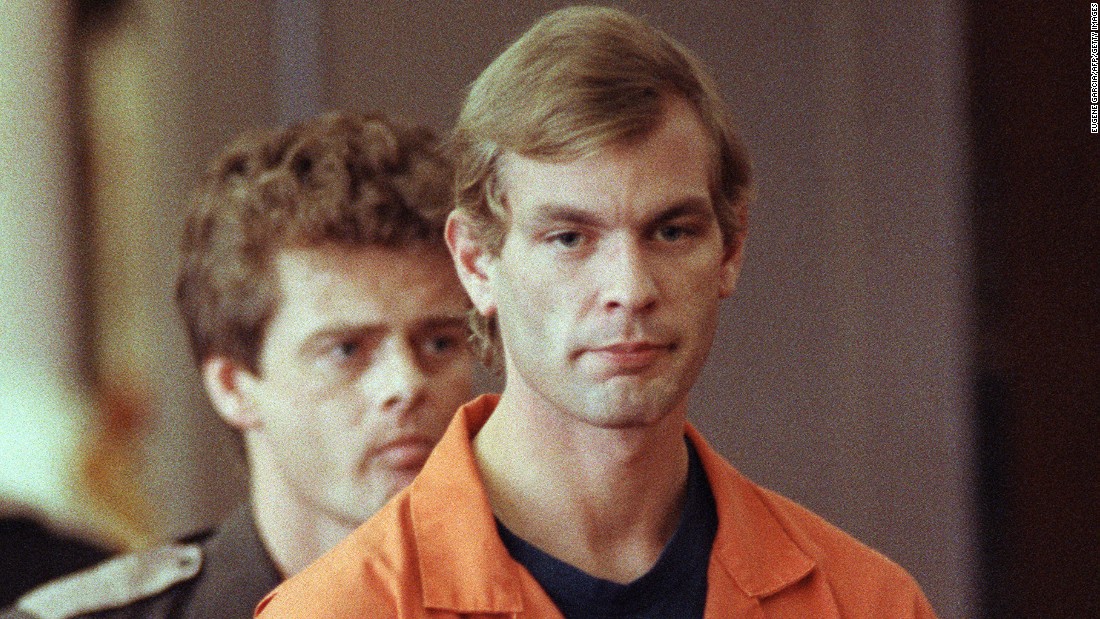
On the night of July 22, 1991, a man flagged down two police officers on a Milwaukee street. He was handcuffed, disoriented, and told them he had just escaped from an apartment. That man, later widely reported as Tracy Edwards, led officers to the apartment of Jeffrey Dahmer, a 31-year-old chocolate factory worker. Inside, according to police reports, they found photographs of dismembered bodies, a severed head in the refrigerator, and other human remains. Dahmer was arrested at the scene.
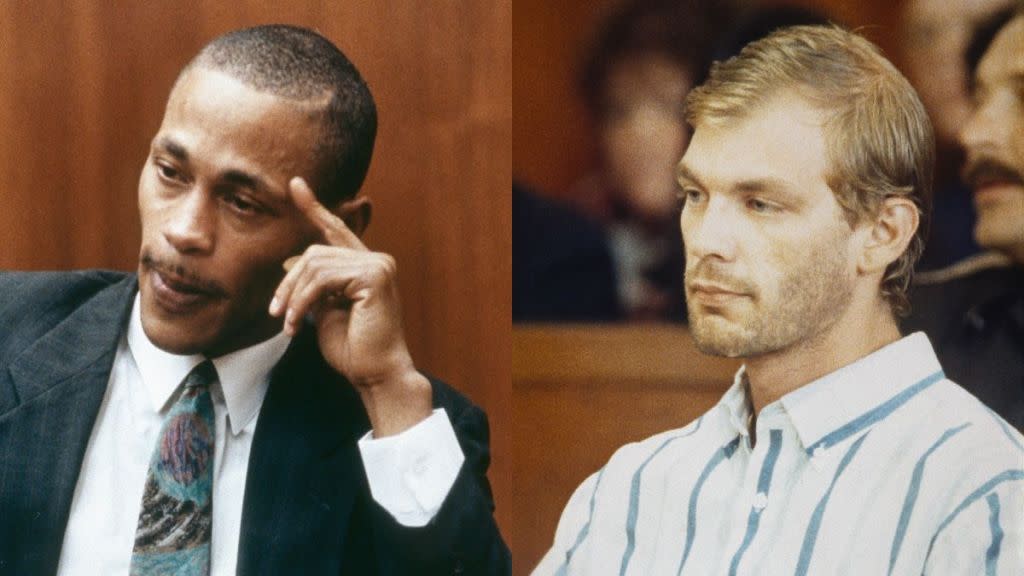
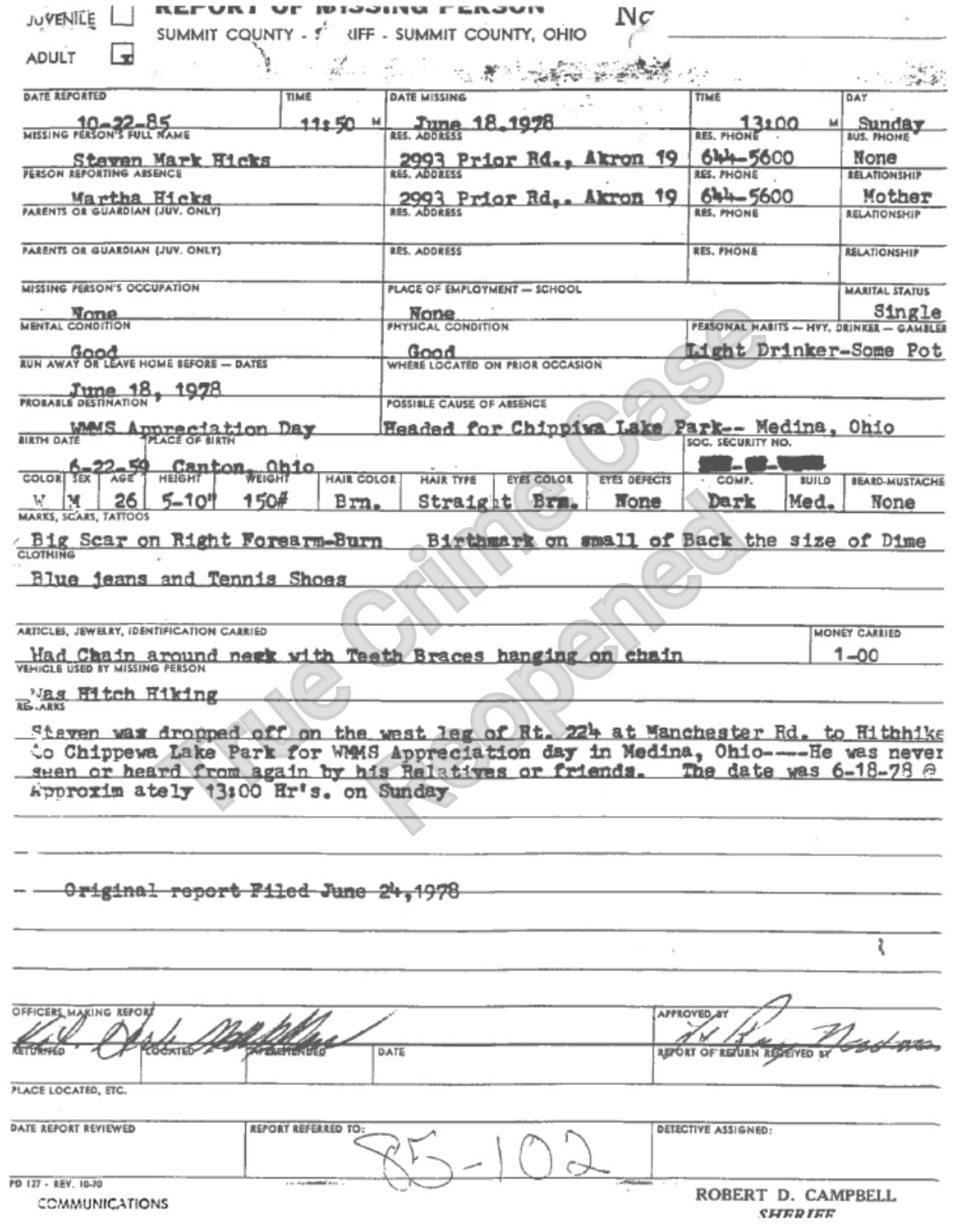
The arrest opened a case that would stretch back more than a decade. According to the source material, Dahmer murdered seventeen young men and boys between 1978 and 1991, primarily in Milwaukee, Wisconsin, with earlier killings in Ohio. The first killing occurred in 1978 in Bath Township, Ohio, where Dahmer killed a hitchhiker named Steven Hicks. The remaining murders took place in Milwaukee between 1987 and 1991.
After his arrest, Dahmer confessed to the killings in detail, according to the source. He described how he drugged, strangled, and dismembered his victims, and in some cases kept body parts. He cooperated with police, leading them to other remains. Evidence collected from the apartment included a Polaroid camera, photographs of victims in various states of undress and dismemberment, skulls, a torso, a drill, acid, and a barrel he reportedly used to dissolve bodies.

The investigation also brought to light a critical earlier incident. In May 1991, police responded to a call about a naked, drugged boy wandering the street. That boy was later identified as Konerak Sinthasomphone, a fourteen-year-old. Officers spoke with Dahmer, who claimed the boy was his adult boyfriend, and they returned the boy to him. The boy was later found dead. According to the source, that mistake became a central focus of public outrage and an internal police review.
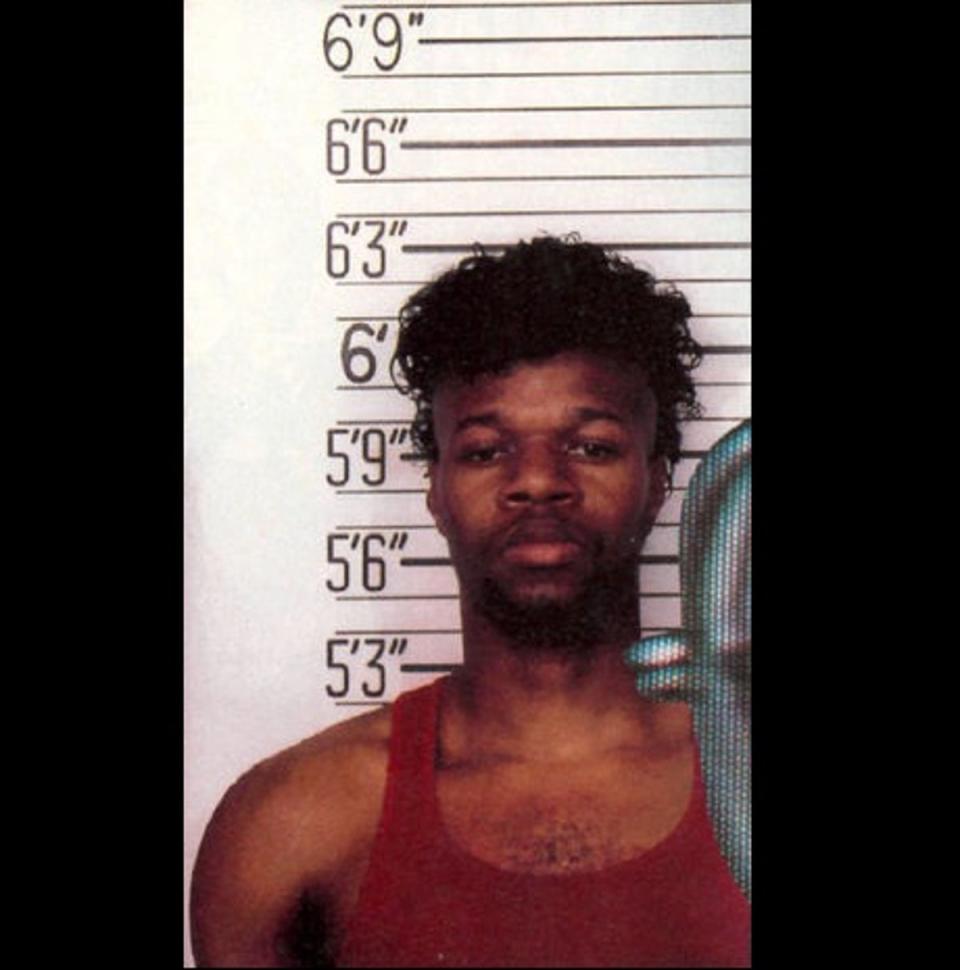
Dahmer was charged with fifteen counts of murder in Milwaukee County. He was not charged for the Ohio killing, which fell under a different jurisdiction and was later addressed separately. He pleaded guilty but argued he was insane at the time of the killings. The trial began in January 1992. The prosecution argued Dahmer was legally sane and knew his actions were wrong. The defense presented evidence of his necrophilia, alcohol abuse, and personality disorders. The jury rejected the insanity defense and found him guilty on all fifteen counts.

He was sentenced to fifteen consecutive life terms, totaling about 957 years in prison. He did not appeal the conviction. In Ohio, he was later charged with the 1978 murder of Steven Hicks, but he was not tried for it; he pleaded guilty to that charge in 1992 and received an additional life sentence.
What is still unknown, according to the source, is the full scope of Dahmer's motives and the exact number of victims he may have intended to harm. The source states he murdered seventeen, but the investigation and confession left some details unresolved. Additionally, prison officials did not confirm the motive claimed by Christopher Scarver, the fellow inmate who killed Dahmer on November 28, 1994, at Columbia Correctional Institution in Portage, Wisconsin. Scarver said he acted because Dahmer taunted him with food-shaped objects made from human flesh, but that was not confirmed by officials.
The case remains one of the most studied examples of serial murder and police failure in American criminal history. The Milwaukee apartment building where Dahmer lived was demolished in 1992. The police department changed procedures after the Sinthasomphone incident, and several officers were disciplined. Dahmer's father, Lionel Dahmer, later published a memoir and became a public figure speaking about his son's crimes. The case is closed in the legal sense, but the questions it raised about police conduct and the handling of vulnerable victims continue to be examined.
Advertisement
You may also like
FBI says Laundrie's notebook admits killing Gabby Petito; case closed
On September 11, 2021, Gabby Petito's mother filed a missing person report. The 22-year-old from Long Island, New York, had not returned from a…
John Wayne Gacy convicted of 33 murders after jury deliberates less than two hours
CHICAGO — The verdict came fast. After a trial that began in February 1980, the jury deliberated for less than two hours before convicting…
Leopold and Loeb sentenced to life plus 99 years for 1924 murder of Bobby Franks
On September 10, 1924, in a Chicago courtroom, Judge John R. Caverly pronounced the sentence that would end one of the most sensational murder…
Manson followers convicted in 1970 after trial marked by disruptions
On the night of August 9, 1969, five people were murdered at a rented home on Cielo Drive in the Benedict Canyon area of…

From 1974 disappearances to 1989 execution: the full timeline of the Ted Bundy case
In January 1974, a University of Washington student vanished from her off-campus apartment in Seattle. It was the first widely reported disappearance in a…
Zodiac Killer case never solved: no trial, suspect Allen died without charges
The Zodiac Killer case began in December 1968 with the murders of two teenagers in Benicia, California, though the killer’s first confirmed attack occurred…