John Wayne Gacy convicted of 33 murders after jury deliberates less than two hours
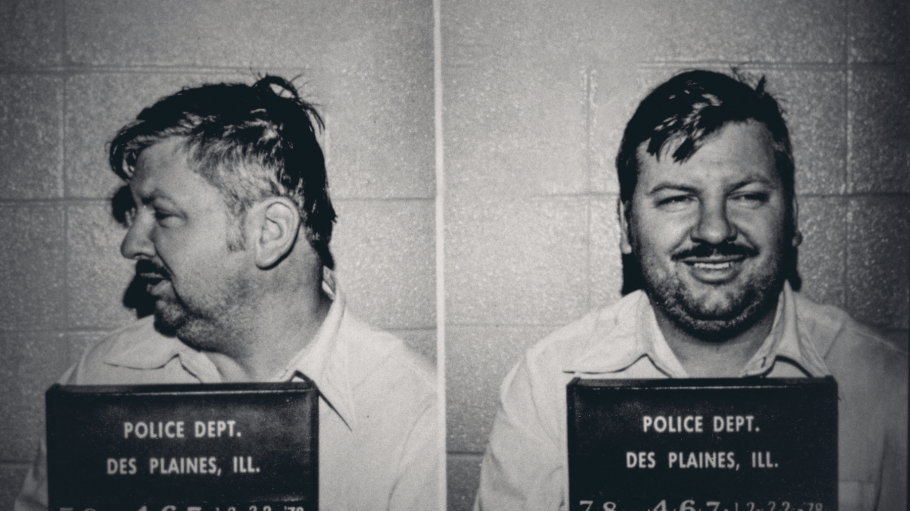
CHICAGO — The verdict came fast. After a trial that began in February 1980, the jury deliberated for less than two hours before convicting John Wayne Gacy on all 33 counts of murder. The courtroom was quiet as the foreman read the decision. Gacy, a building contractor and part-time clown performer from the Chicago suburb of Norwood Park, Illinois, stood accused of killing at least 33 young men and boys between 1972 and 1978.
The case began with a missing-person report. On December 11, 1978, a 15-year-old pharmacy employee named Robert Piest disappeared. He had last been seen at a drugstore where Gacy was a customer. Police initially treated it as a routine missing-person case. But witnesses placed Gacy at the pharmacy that day, and Gacy denied any involvement. Investigators obtained a search warrant for his home.

What they found changed everything. In the crawl space, there was a foul odor. A cadaver dog alerted to the area. Digging uncovered the first body. Over the following weeks, forensic teams recovered 29 bodies from the crawl space and four more from the Des Plaines River. In all, 33 victims were identified. Gacy was arrested on December 21, 1978.
Gacy later confessed to the killings, though he gave shifting accounts of some details. He admitted to luring victims to his home with offers of construction work or money. Many of the victims were young men and teenage boys, often runaways or transient workers. Gacy was a married man, a Democratic precinct captain, and a volunteer clown known as “Pogo” who performed at children’s parties and hospitals. His double life would become central to the case.
At trial, Gacy pleaded not guilty by reason of insanity. His defense argued that he suffered from a severe personality disorder and was unable to control his actions. Prosecutors countered with evidence of careful planning — the methods of luring victims, the disposal of bodies, and a set of tools and restraints found in his home, along with photographs of young men. They argued he was legally sane.
The jury agreed with the prosecution. After less than two hours of deliberation, they convicted Gacy on all 33 counts of murder. In the penalty phase, the same jury recommended the death penalty. The judge sentenced Gacy to death. Appeals followed, including arguments about the admissibility of his confession and the conduct of the trial, but all were rejected. Gacy spent 14 years on death row.

The case had earlier missteps. Police had interviewed Gacy in 1978 regarding a missing young man but had not searched his property at that time. Investigators also found that Gacy had been previously convicted of assault in Iowa in 1968, a fact that had not prevented his early release. Those details became part of the broader criticism of how the case was handled.
What is still unknown: Several victims were never identified. In recent years, law enforcement has used DNA technology to match some remains to families. The house where the murders occurred was demolished in 1979. Gacy’s name remains a reference point in discussions of serial murder, and his art — paintings made while in prison — has been sold, with proceeds sometimes going to victims’ families.
Gacy was executed by lethal injection at Stateville Correctional Center in Illinois on May 10, 1994. He was 52 years old. His body was cremated after some victims’ families sought to prevent any public display of his remains. The case led to changes in Illinois law regarding missing-person reporting and police procedures. Families of the victims have continued to advocate for better handling of missing-person cases.
Advertisement
You may also like
Arrest at Dahmer's apartment follows escape; 15 murder charges filed
On the night of July 22, 1991, a man flagged down two police officers on a Milwaukee street. He was handcuffed, disoriented, and told…
Leopold and Loeb sentenced to life plus 99 years for 1924 murder of Bobby Franks
On September 10, 1924, in a Chicago courtroom, Judge John R. Caverly pronounced the sentence that would end one of the most sensational murder…
Manson followers convicted in 1970 after trial marked by disruptions
On the night of August 9, 1969, five people were murdered at a rented home on Cielo Drive in the Benedict Canyon area of…

From 1974 disappearances to 1989 execution: the full timeline of the Ted Bundy case
In January 1974, a University of Washington student vanished from her off-campus apartment in Seattle. It was the first widely reported disappearance in a…
Zodiac Killer case never solved: no trial, suspect Allen died without charges
The Zodiac Killer case began in December 1968 with the murders of two teenagers in Benicia, California, though the killer’s first confirmed attack occurred…
O.J. Simpson acquitted of 1994 murders of ex-wife Nicole Brown Simpson and Ronald Goldman
The verdict came after less than four hours of deliberation. On October 3, 1995, a Los Angeles jury found O.J. Simpson not guilty of…