Manson followers convicted in 1970 after trial marked by disruptions
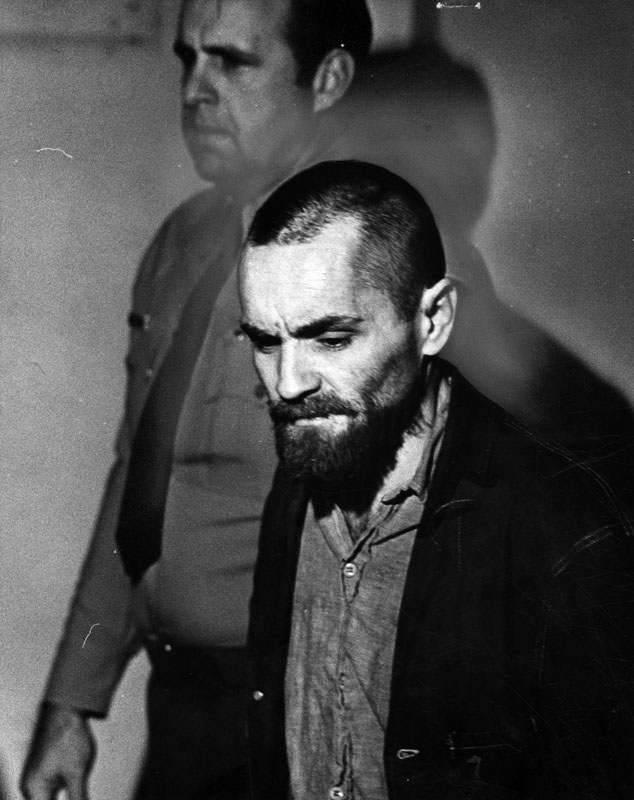
On the night of August 9, 1969, five people were murdered at a rented home on Cielo Drive in the Benedict Canyon area of Los Angeles. The victims were actress Sharon Tate, who was eight months pregnant, and four others: Jay Sebring, Wojciech Frykowski, Abigail Folger, and Steven Parent. The next night, August 10, grocery store executive Leno LaBianca and his wife Rosemary were murdered in their Los Angeles home.
The crimes were discovered the following morning — by a housekeeper at the Tate scene, and by a friend at the LaBianca home. At first, police treated the Tate killings as drug-related. But the LaBianca murders were soon linked by investigators to the same group.

The man behind both attacks, according to prosecutors, was Charles Manson. He orchestrated the killings; his followers carried them out. The Tate murders were committed by Tex Watson, Susan Atkins, and Patricia Krenwinkel, with Linda Kasabian acting as a lookout. The LaBianca murders were committed by Watson, Krenwinkel, and Leslie Van Houten.
For months, the investigation stalled. Police focused on a drug motive and missed a key clue: a pair of eyeglasses found at the Tate scene that belonged to a Manson associate. They also failed to connect the two crime scenes quickly.
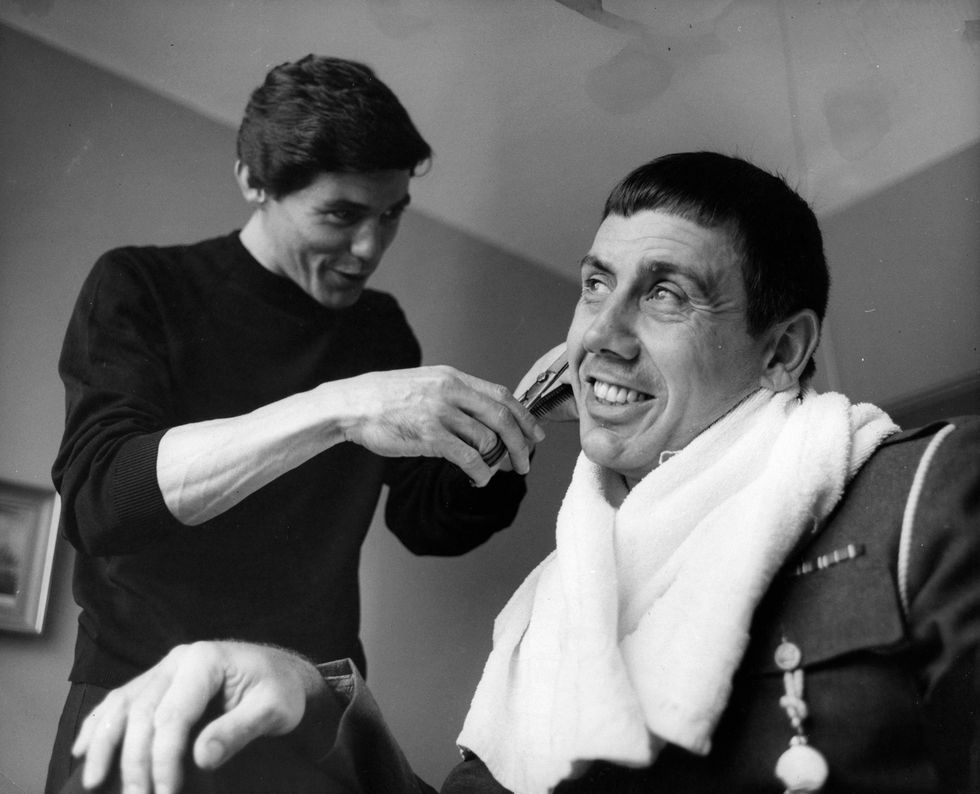
The break came when Susan Atkins, in jail on unrelated charges, told cellmates about the murders. Her statements led police to link the Tate and LaBianca killings. Evidence later included fingerprints, a knife found near the LaBianca home, and testimony from Linda Kasabian, who was granted immunity. The prosecution’s case relied heavily on Kasabian’s testimony and on Atkins’s statements — though Atkins later recanted.
In June 1970, the trial began in Los Angeles. Charles Manson, Tex Watson, Susan Atkins, and Patricia Krenwinkel were charged with seven counts of first-degree murder and conspiracy. Leslie Van Houten was charged separately for the LaBianca murders.
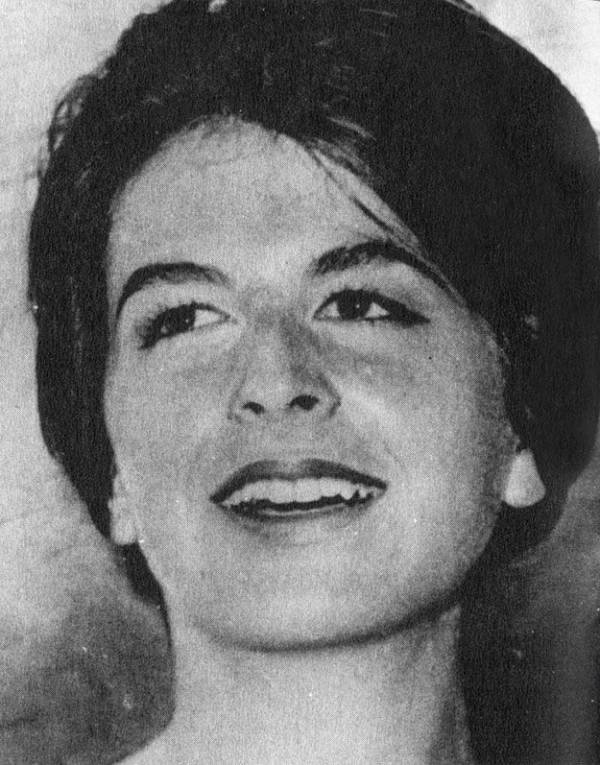
The proceedings were marked by disruptions from the defendants. Court records describe outbursts and unruly behavior, though the source material does not detail specific incidents. Despite the chaos, the jury found all four defendants guilty. Manson, Watson, Atkins, and Krenwinkel were sentenced to death. Van Houten was also convicted and sentenced to death.
Those death sentences did not stand. In 1972, the California Supreme Court abolished the death penalty, and the sentences were commuted to life in prison with the possibility of parole. Linda Kasabian, granted immunity for her testimony, was never charged.
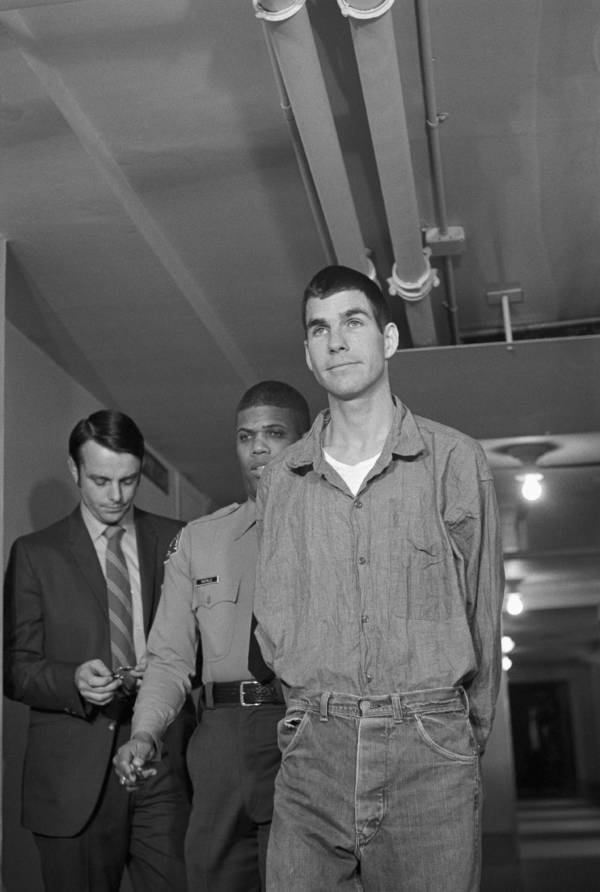
What is still unknown, even decades later, is how much of Manson’s motive — the so-called “Helter Skelter” race-war theory, later detailed by prosecutor Vincent Bugliosi in his book — was accepted by the jury, and how much was simply not needed for conviction. The source material does not record the jury’s reasoning or any statements from the defendants at sentencing.
Where things stand now: Charles Manson died in prison on November 19, 2017, at the age of 83. Susan Atkins died in prison in 2009. Tex Watson and Patricia Krenwinkel remain in prison, denied parole multiple times. Leslie Van Houten was granted parole multiple times, but those grants were reversed by governors; she was released in 2023 after a court ruling. The Manson Family, as the group became known, has largely disbanded, though some former members have spoken publicly about the case. The Cielo Drive house was demolished in 1994.

The weapons used were knives and a gun; the killers drove a car, but specific details are not widely reported.
For the families of the victims, the verdicts in 1970 brought an end to the trial — but not to the questions. The case remains one of the most studied in American criminal history, and the legal battles over parole continue to this day.
Advertisement
You may also like
Arrest at Dahmer's apartment follows escape; 15 murder charges filed
On the night of July 22, 1991, a man flagged down two police officers on a Milwaukee street. He was handcuffed, disoriented, and told…
John Wayne Gacy convicted of 33 murders after jury deliberates less than two hours
CHICAGO — The verdict came fast. After a trial that began in February 1980, the jury deliberated for less than two hours before convicting…
Leopold and Loeb sentenced to life plus 99 years for 1924 murder of Bobby Franks
On September 10, 1924, in a Chicago courtroom, Judge John R. Caverly pronounced the sentence that would end one of the most sensational murder…
From 1974 disappearances to 1989 execution: the full timeline of the Ted Bundy case
In January 1974, a University of Washington student vanished from her off-campus apartment in Seattle. It was the first widely reported disappearance in a…
Zodiac Killer case never solved: no trial, suspect Allen died without charges
The Zodiac Killer case began in December 1968 with the murders of two teenagers in Benicia, California, though the killer’s first confirmed attack occurred…
O.J. Simpson acquitted of 1994 murders of ex-wife Nicole Brown Simpson and Ronald Goldman
The verdict came after less than four hours of deliberation. On October 3, 1995, a Los Angeles jury found O.J. Simpson not guilty of…