The brothers who sold their shotguns before police could find them
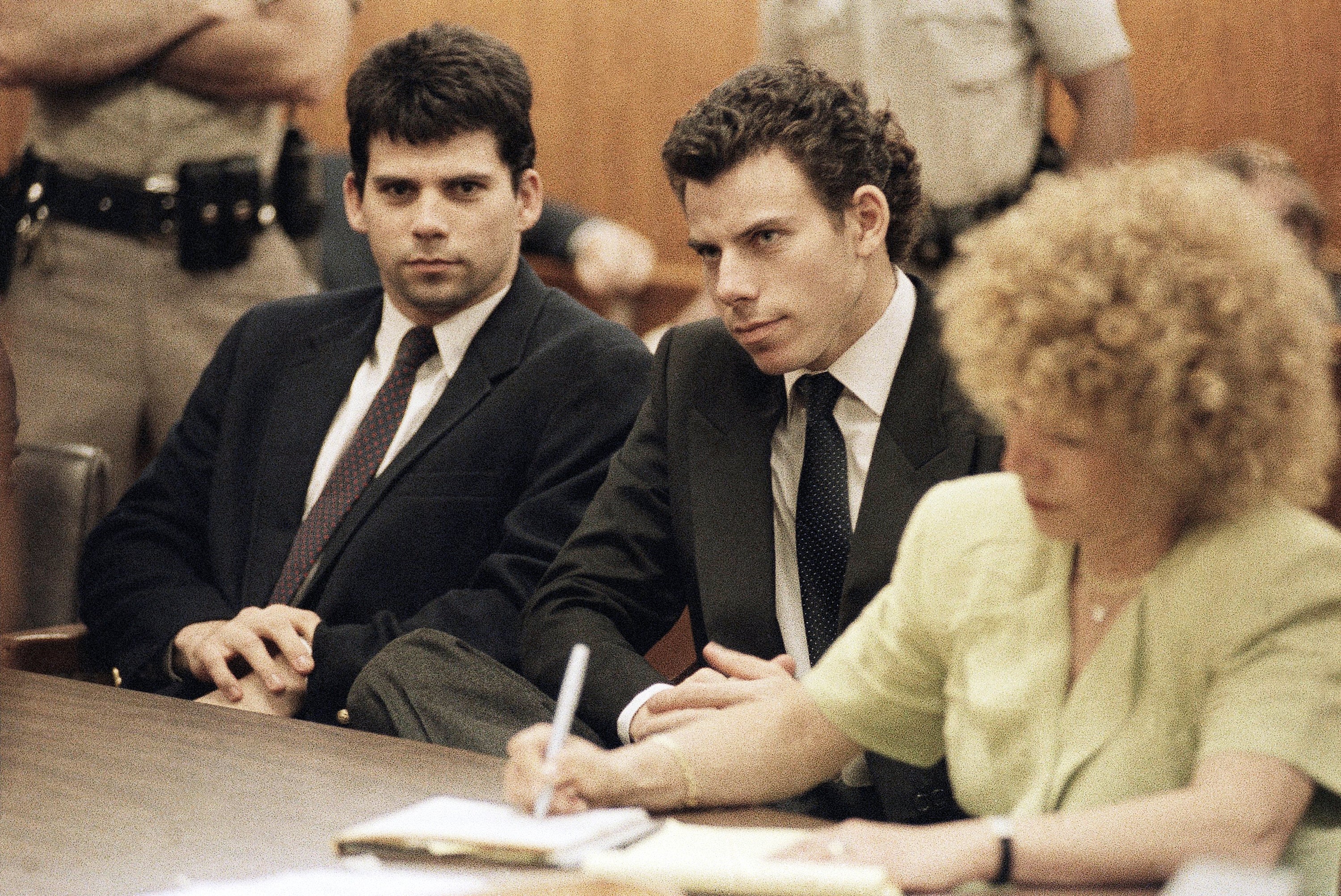
Two 12-gauge shotguns were used in the killings.
That much the case evidence established.
The shotguns were never recovered.
The investigation record is clear on that point, too.
The brothers sold the victims' possessions, including the shotguns.
Police allowed the brothers to move freely after the murders.
Not because the case was solved. Because the investigation had accepted their story.
The brothers told police the killings were a mob hit, tied to their father's business connections.
The Beverly Hills Police Department, led by Detective Leslie Zoeller, initially accepted that account.
So the sons of the dead were left to walk through the house, to handle what remained, to sell what they could.
The weapons went with the rest.
Who bought the shotguns is not in the record.
Where they are now is not in the record.
That would require evidence.
The investigation record describes the sale as fact.
It does not describe the buyer.
It does not describe a search that found the guns.
The crime scene was not secured properly.
The brothers were the ones who called 911 on August 20, 1989.
They said they had found the bodies after returning from the movie theater, after seeing *Batman*.
The parents had been shot multiple times.
Two shotguns, fired more than once, in a family room in Beverly Hills.
And the weapons were simply gone.
The record shows the brothers sold them.
The record does not show anyone stopping them.
THE 911 CALL
The 911 call came at 11:47 p.m.
Lyle Menendez was on the line, sobbing, according to the call record.

He told the dispatcher his parents had been shot.
He said he and Erik had just returned from seeing *Batman* at the theater.
They found the bodies in the family room of the Beverly Hills mansion at 722 North Elm Drive.
The parents were dead.
José Menendez had been shot multiple times.
Kitty Menendez had been shot multiple times.
The brothers' account, the case record shows, was that they drove to the movies, came home, and discovered the scene.
Whether they actually went to the theater is not independently verified in the source.
It is a detail the record repeats.
It is a detail the record does not confirm.
The brothers told police they believed the killings were a mob hit.
Their father, José, had business connections, they said.
The police reports note the brothers offered that theory early.
They offered it consistently.
They offered it before the detectives asked much of anything.
Lead detective Leslie Zoeller took the statement.
The timeline felt off to some observers.
A movie, a drive home, a discovery of two bodies — and no blood on the brothers' clothes.
The case record does not describe their clothing.
It does not describe their demeanor beyond the call.
The parents were shot with two 12-gauge shotguns.
The brothers told police they had sold their father's guns days earlier.
The shotguns were never recovered.
The brothers moved freely through the house that night.
The crime scene was not secured properly.
The investigation accepted the mob theory at first.
It was a theory that held for months.
It was a theory that fell apart when a psychologist's former patient went to the police.

THE THERAPY SESSION
Erik Menendez began seeing Dr. Jerome Oziel, a psychologist, in the months after the killings.
That fact comes from trial testimony, not from any single dramatic moment.
During a session, Erik confessed to the murders.
Dr. Oziel testified to that confession on the stand.
The confession did not stay in the room.
Oziel’s former patient, Judalon Smyth, later told police what she knew.
Smyth’s report to the police is what cracked the mob theory open.
It is what led to the brothers’ arrest in March 1990.
The arrest record is plain on that sequence: confession, report, handcuffs.
But the confession was never a clean piece of evidence.
The defense argued that Oziel had manipulated the situation.
They argued that the confession was unreliable.
Was it voluntary?
Was it coerced?
That question remains disputed.
The record does not establish either answer.
What the record establishes is that a psychologist’s patient talked.
What the record establishes is that the brothers were arrested.
What the record establishes is that the case turned on a confession whose origins were immediately attacked.
The prosecution built its case on that session.
The defense spent years chipping at it.
Neither side ever produced a recording of what happened in Oziel’s office.
There is only testimony.
There is only Smyth’s version of events.
There is only the word of a therapist whose methods were questioned.
The confession cracked the case.
It also made the case harder to close.
TWO TRIALS
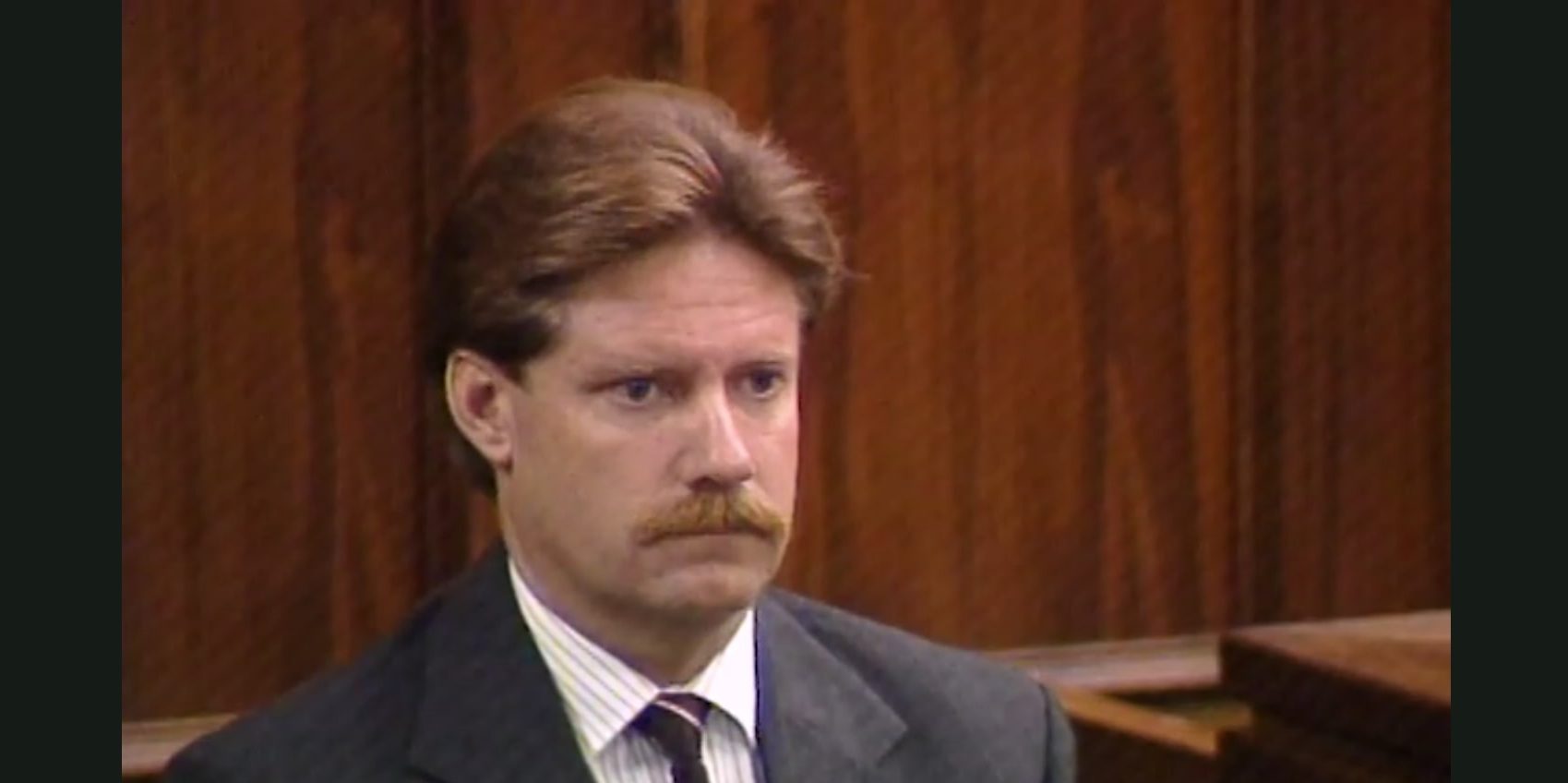
The prosecution argued the motive was financial gain, as the brothers stood to inherit a substantial estate.
The defense presented a narrative of years of sexual abuse by the father.
The prosecution argued that narrative was fabricated.
Whether the abuse allegations were true is not established by the record.
The brothers were charged with two counts of first-degree murder with special circumstances — lying in wait and multiple murders.
The charge made them eligible for the death penalty.
The first trial began in July 1993.
In January 1994, it ended in a mistrial.
The jury could not reach a verdict.
Deadlocked on whether the killings were premeditated or committed in the heat of passion.
The second trial, in 1995, was held before Judge Stanley Weisberg.
There was no jury.
The judge ruled that the defense's evidence of sexual abuse was inadmissible.
So the abuse narrative never reached the finder of fact.
The brothers were convicted of first-degree murder.
They were sentenced to life in prison without the possibility of parole.
Two stories had been told in court.
One story explained the killings by money.
One story explained them by years of abuse.
The second story was barred from the retelling.
The first story carried the conviction.
Which story explains the killings?
That question required a jury.
That question required the evidence.
That question, in the end, required the judge to let the jury hear both.
He did not.
AND THE STORY STILL ISN'T OVER
:max_bytes(150000):strip_icc():focal(749x0:751x2)/pamela-bozanich-menendez-trial-100724-3-4020c329cace46f0917d36d6ad7e7962.jpg)
They are still inside.
Lyle and Erik Menendez are serving life sentences without parole at separate California prisons, according to prison records.
They have filed multiple appeals.
All of them unsuccessful, according to court records.
Then 2023 arrived with something new.
A letter allegedly written by Erik to a cousin referencing the abuse surfaced, according to 2023 news reports.
A former member of the boy band Menudo claimed José Menendez had abused him, according to that same year's reporting.
The Los Angeles County District Attorney's office announced a review of the case in 2023.
The record does not establish what that review will produce.
It does not establish that the letter is authentic.
It does not establish that the Menudo claim is true.
It does not establish that any of it changes the conviction.
As of the latest reports, no new trial has been ordered.
That is the current status.
The brothers remain in prison.
So the question hangs over the file: will the new evidence change anything?
That would require a ruling.
That would require the review to conclude.
That would require a court to act.
None of that has happened yet.
The shotguns were never recovered.
The confessions were heard.
The verdicts were read.
And the story still is not over, because the evidence keeps arriving long after the case was closed.
It is a case about what was sold and what was kept.
It is also a case about what was heard and what was dismissed.
The brothers wait.
The review proceeds.
The question stays open.
Advertisement
You may also like
The FBI named the wrong man the night before the Tsarnaev brothers were caught
On April 18, 2013, the FBI released images of two suspects taken from Lord & Taylor surveillance footage. That same night, the FBI initially…
The love letters that vanished from police custody after the 1922 double killing
The crabapple tree stood in a lane called Lovers' Lane, in Phillipsburg, New Jersey, near New Brunswick. On the evening of September 14, 1922,…
The clip-on tie that held no answers after the skyjacker vanished — FBI's 45-year puzzle
The clip-on tie sits in an FBI evidence file, a strip of fabric no wider than a man's hand. It was recovered from the…
The 8:44 p.m. video on Paul Murdaugh's phone that cracked Alex's alibi
He called at 10:07 p.m. On June 7, 2021, Alex Murdaugh told emergency dispatchers in Colleton County, South Carolina, that he had found the…
The parole agent who spotted a face in a sketch — and what it took to bring Polly home
A parole agent looked at a composite sketch and saw a face he knew. The date was December 4, 1993. The face belonged to…
The unpaid $33.5 million judgment the Goldman family still pursues after Simpson's death
A jury in a 1997 civil trial found O.J. Simpson liable for the wrongful deaths of Nicole Brown Simpson and Ronald Goldman. The award…