The calling card with initials 'J.H.' that detectives could not explain in the Hall-Mills murders
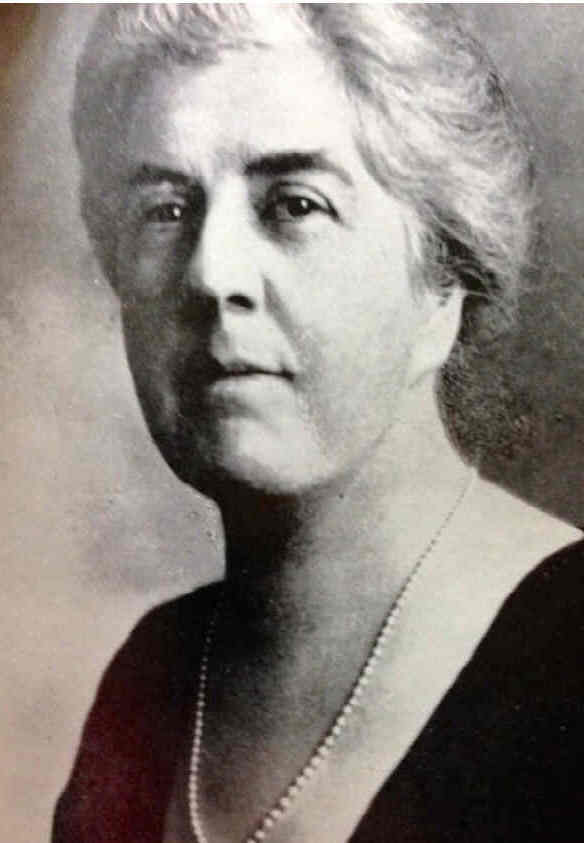
The calling card sat near the body, two letters printed on it: J.H.
The woman was found with her throat cut. The man was found with his hat placed over his face.
Both had been shot.
The date was September 16, 1922, and the bodies of Reverend Edward Wheeler Hall and Mrs. Eleanor Reinhardt Mills lay beneath a crabapple tree near a lovers' lane in New Brunswick, New Jersey.
A local resident found them and reported the scene to police.
The card was there, close to Mills's body, and the detectives picked it up.
It looked like a clue. It looked deliberate.
Who was J.H.? A name, a warning, a taunt?
The case became a national sensation within days. The press speculated about a love triangle: Hall, a married Episcopal priest, and Mills, a choir singer in his congregation.
Every detail was printed. Every theory was repeated.
But the card with the initials J.H. was later dismissed. The record says it was revealed to be a red herring, possibly planted.
Who placed it there? That is not established by the record.
Whether it was a genuine clue or a planted distraction? Also not established.
What is established is that the card existed, that it was found near her body, and that the investigation could not explain it to anyone's satisfaction.
The detectives moved on. The case went cold.
The card stayed in the files, a small piece of paper with two letters and no answer attached.
SEPTEMBER 16, 1922 — THE DISCOVERY
The resident who found them did not leave a name in the record.
Neither did the hour of the discovery.
What the record holds is the report itself: two bodies beneath a crabapple tree, near a path known as Lovers' Lane, in New Brunswick, New Jersey.
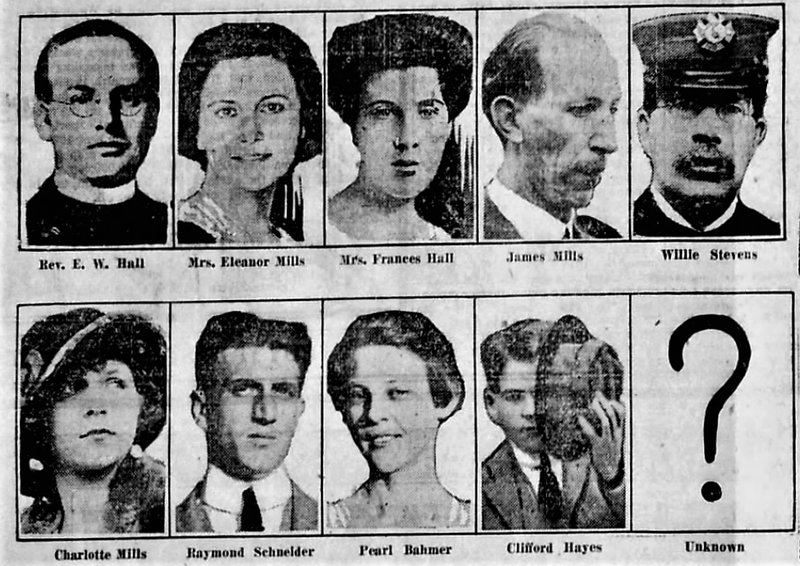
Hall was on his back, his hat placed over his face.
Mills lay nearby, her throat cut.
Both had been shot, the source summary states.
A calling card with the initials "J.H." sat near her body.
The detectives arrived, but the scene was already compromised.
The bodies were not examined by a medical examiner until hours after discovery.
The crime scene was not properly secured.
A .32 caliber revolver was reported as the likely weapon.
The exact firearm was never recovered.
What was handled, what was moved, what was lost in those hours — the record does not say.
The card was collected. The bodies were taken.
The investigation began with a theory already forming, and the physical evidence was left to speak late.
It did not speak clearly.
THE INVESTIGATION AND THE PIG WOMAN
For years, nothing moved.
The case went cold, and no arrests were made.
Then, in 1926, a new grand jury was convened.
The prosecution built its case on one voice: a woman known in the press as the "Pig Woman."
She claimed to have watched the murders from her farm near the crime scene.
Her testimony was dramatic.
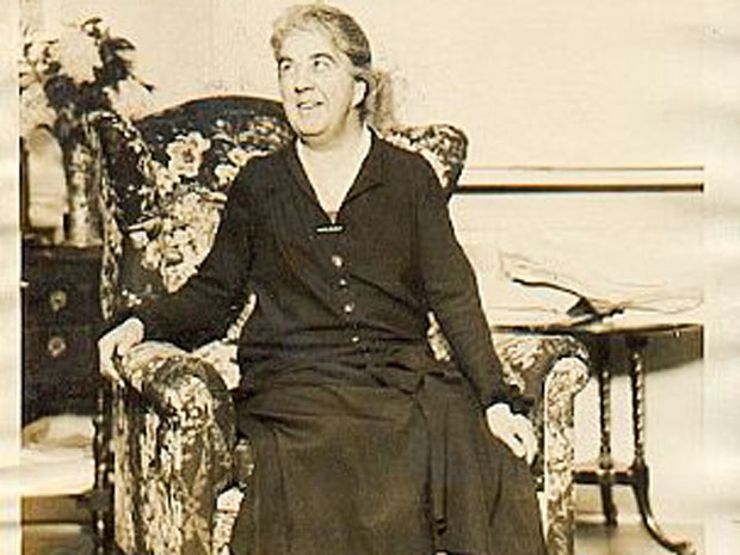
It was also contradicted by other evidence.
She was later found to have a criminal record.
Her real name is not in the record.
The specifics of that record are not in the record either.
So the trial rested on a witness whose past could not be verified.
The defense did not let that pass.
They attacked her credibility, piece by piece.
The investigation itself drew criticism over its handling of potential evidence.
A possible second weapon was raised.
It was never resolved.
Was there one gun or two?
Did the Pig Woman see what she said she saw?
Did she see anything at all?
That would require evidence the record does not provide.
The prosecution argued jealousy and family honor.
The defense argued speculation and unreliable testimony.
The jury heard both.
They deliberated for only a few hours.
The witnesses were examined, the theories were tested, and the story stalled where it had always stalled.
A dramatic claim is not a proven fact.

A criminal record is not a confession.
And a case built on a single story remains exactly that.
THE 1926 TRIAL
By 1926, the case had a name, a courtroom, and four defendants.
A grand jury indicted Frances Hall, her brother Henry Stevens, and two relatives for the murders.
The trial began in November 1926 in Somerville, New Jersey.
The prosecution argued that Frances Hall and her brothers had killed out of jealousy and a desire to protect the family's reputation.
They had motive, the state said, and they had a story.
The story belonged to a witness known as the Pig Woman.
She claimed she saw the murders from her farm.
She testified in court, and the press hung on every word.
But the defense did not let the story stand.
The defense attacked her credibility.
The defense attacked the evidence as circumstantial.
The defense argued that a dramatic claim is not a proven fact.
The testimony was sensational.
The evidence was not.
The jury deliberated for only a few hours.
They acquitted all four defendants.
The verdict landed like a shock.

Not because the prosecution had proved its case.
But because the trial had lasted so long and ended so fast.
The exact length of the trial is not specified in the record.
The exact time of the jury's deliberation is not specified in the record.
What the record shows is the outcome: four acquittals, one failed case.
The prosecution's case relied heavily on a single witness.
That witness had a criminal record.
That witness was contradicted by other evidence.
That witness was the center of the trial, and the center did not hold.
The defendants left the courtroom cleared of the charges.
The case left the courtroom officially unsolved.
Nobody else was ever charged.
The acquittal was quick.
The question of who killed the reverend and the choir singer was not.
AND THE STORY STILL ISN'T OVER
The acquittal was quick, and the four defendants walked out of the Somerville courtroom in 1926.
No one else was ever charged with the murders, and the case remains officially unsolved.
Frances Hall died in 1942.
Her brothers and her cousin also passed away in the following decades, taking whatever they knew with them.
The case has been the subject of numerous books, documentaries, and articles.

Each retelling circles the same evidence: the hat over the reverend's face, the throat cut, the calling card with the initials "J.H."
No new evidence has emerged to identify the killer.
No pending legal actions are in the record, and no confession has surfaced.
The crime scene, known as "Lovers' Lane," has become a site of historical interest.
The original crabapple tree is no longer standing.
Visitors come anyway, stand on the ground, and look at the spot where the bodies were found.
What did the calling card mean?
Who placed it there?
Why did the initials "J.H." match no one in the case?
That would require evidence, and the record does not provide it.
The theories persist because the silence does.
The reverend was shot.
The choir singer was shot, and her throat was cut.
One weapon was reported as a .32 caliber revolver, but the exact firearm was never recovered.
The case is often cited as an example of 1920s tabloid sensationalism.
It is also cited as a lesson in the limits of early forensic science.
The bodies waited hours for a medical examiner.
The scene was not properly secured.
The card was initially a clue, then a red herring, possibly planted.
It is a documented clue.
It is also unexplained.
The story still isn't over because the question never closed.
Advertisement
You may also like
The 911 call a mother made at 5:52 a.m. — the ransom note that followed
The 911 call came at 5:52 a.m. December 26, 1996, in Boulder, Colorado. Patsy Ramsey's voice on the line, reporting her 6-year-old daughter, JonBenét,…
The brother's call that ended a 17-year bombing spree
The manifesto arrived in 1995. It was 35,000 words, titled "Industrial Society and Its Future," and it was mailed to The New York Times…
The newspaper clipping and note in the Black Dahlia case that still defy explanation
A newspaper clipping and a note, reportedly carrying the killer's taunts, sat in the evidence file. They were key evidence, the investigation summary says.…
The 1969 letter that came with a victim's bloody shirt and a promise
The package arrived at the San Francisco Chronicle in 1969. Inside was a piece of a shirt. The shirt was bloody. It belonged to…
The tarot card left at a D.C. sniper scene that said 'Call me God'
The card was on the ground beside the body. October 19, 2002. Falls Church, Virginia. A victim shot while loading groceries. Police found a…
Afeni Shakur scattered her son's ashes at his childhood home — the case that still haunts Vegas
Afeni Shakur carried her son's ashes back to Marin City. She scattered them at his childhood home, a private act in a small California…