The cellphone video that shattered Alex Murdaugh's alibi on the night of the killings
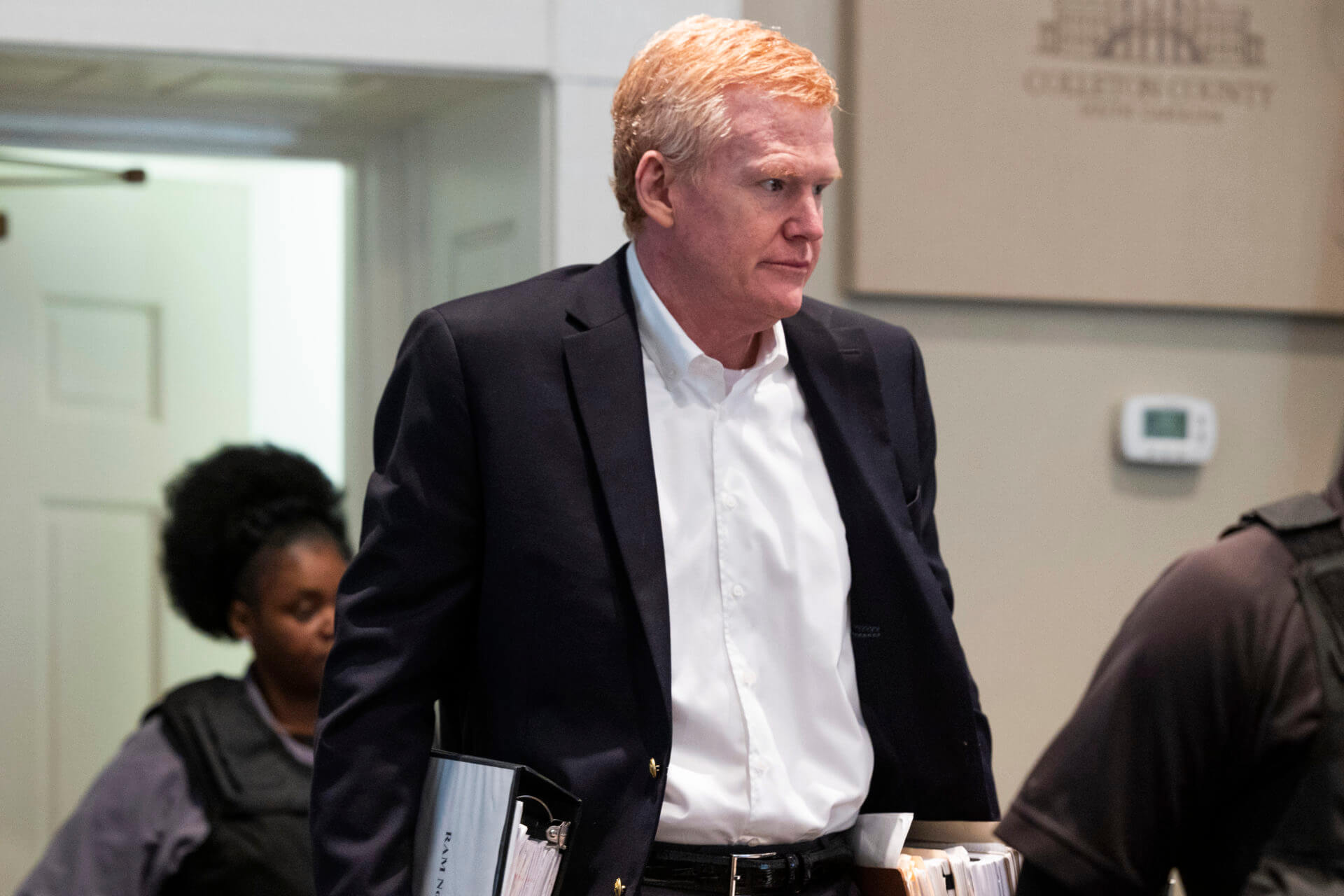
The 911 call came on the evening of June 7, 2021.
Alex Murdaugh told the dispatcher he had found his wife and son at the family's hunting estate in Colleton County, South Carolina.
His wife, Maggie Murdaugh, was 52.
His son, Paul Murdaugh, was 22.
They had been shot multiple times.
A rifle and a shotgun were used.
The bodies were near the dog kennels on the property.
Alex Murdaugh was the one who called.
He was also the one who found them.
The Murdaugh name carried weight in the Lowcountry.
Three generations of Murdaughs had served as the region's top prosecutor.
A fourth generation was being groomed for the role.
That family found two of its own dead on a Tuesday evening.
Who could have done this?
A botched robbery?
A shooting tied to Paul's earlier legal troubles?
Those were the initial theories.
Those theories stalled for months.
The exact circumstances of the shooting are not yet established.
The case went quiet.
Then, in September 2021, the story shifted.
Alex Murdaugh was shot in the head on a roadside.
He survived.
He later admitted he had arranged that shooting.
That admission changed everything.
But on the night of June 7, none of that was known.
There was only the call.
There were only the bodies.
There was only the silence of the kennels.
THE ROADSIDE SHOOTING
In September 2021, Alex Murdaugh was shot in the head on a roadside in Hampton County.
He survived.
The story he told at the time was of a random attack, a man in a passing truck, a bullet fired from nowhere.
That story did not hold.
He later admitted he had arranged the shooting with a former client, Curtis Edward Smith, to collect a life insurance payout.
Smith was charged separately.
The admission was a confession of fraud, not of murder.
But it broke something open.
A grieving widower who had staged his own shooting was no longer a believable witness to his own tragedy.
That admission, along with financial crimes charges, shifted the focus of the murder investigation.
The case had stalled for months after the June killings.
Now it moved.
In July 2022, SLED charged Alex Murdaugh with the murders.
Two counts of murder, two counts of possession of a weapon during a violent crime.
The prosecution argued that Alex’s financial fraud provided a motive.
He was drowning in debt, they said, and his schemes were about to collapse.
The killings, they argued, were a way out.
The defence argued the state had no direct evidence.
They called Alex a grieving husband and father.
What the record does not fully establish is the exact nature of the financial crimes and their link to the murders.
The fraud was real; the motive was argued.
The link was the prosecution’s theory, not a proven chain.
Was he hiding money?
Was he hiding the shooting?
Was he hiding the murders?
That would require evidence the record does not supply.
What the record shows is a man who lied about his own shooting, then was charged with killing his wife and son.

The case twisted in September 2021.
It kept twisting.
THE KENNEL VIDEO
At trial, prosecutors played cellphone video from Paul’s phone.
The video placed Alex Murdaugh at the dog kennels near the time of the killings.
It contradicted his alibi that he had been napping at the house.
The trial began in January 2023 in Walterboro, South Carolina, before Judge Clifton Newman.
The medical examiner testified that Maggie had been shot five times with a rifle and Paul twice with a shotgun.
The exact time the video was recorded is not specified in the record.
The state argued the video put Alex at the scene, not asleep at the residence.
The defence argued that the state had no direct evidence.
Alex was a grieving husband and father, they said.
Not because the video cleared him, but because it did not show him pulling a trigger.
The defence did not explain how the video got there without him.
What the record shows is a man placed at the kennels, a man who said he was elsewhere.
It is evidence of presence. It is not evidence of the act itself.
That would require more.
The prosecution said the timeline collapsed around him.
The defence said the timeline proved nothing.
The jury would decide which version held.
THE VERDICT
The prosecution called over 70 witnesses.
Buster Murdaugh testified for the state, the surviving son taking the stand against his father.
The defence called Alex Murdaugh himself.
He testified in his own defense, denying the killings.
He claimed he had been at the house, not at the kennels.
The video said otherwise; the jury heard it, and they heard him.
On March 2, 2023, the jury found Alex Murdaugh guilty on all four counts.
Two counts of murder. Two counts of possession of a weapon during the commission of a violent crime.
Judge Clifton Newman sentenced him to two consecutive life sentences without the possibility of parole.
The legacy collapsed in that courtroom.
Three generations of Murdaughs had served as the region’s top prosecutor; the heir was now a convict.
It is final. It is also not quite over.
In August 2023, Judge Newman denied a motion for a new trial based on allegations of jury tampering by a court clerk.
The allegations were not proven.
The motion was denied.
The defence had argued the clerk's comments poisoned the jury; the judge found no basis to overturn.
Was justice served?

That is the question the record leaves open.
The conviction stands. The appeals continue.
The jury decided which version of the timeline held.
They chose the video.
AND THE STORY STILL ISN'T OVER
Alex Murdaugh is serving two life sentences at a South Carolina prison.
He has separately pleaded guilty to numerous federal and state financial crimes, including fraud and money laundering.
Those sentences run concurrently with the murder sentences.
His appeals are ongoing.
The outcome of those appeals is not yet known.
Buster Murdaugh has remained out of the public eye.
The Murdaugh family’s name has been stripped from the law firm he once worked for.
The family’s legacy has been largely discredited.
The case has spawned numerous documentaries and books.
No new evidence has emerged to change the outcome.
The video still holds.
The alibi still does not.
What happens next is a question the record leaves open.
That would require evidence.
Advertisement
You may also like
The blood 'PIG' on a Hollywood door — and the mother who fought the killers' parole
The door stood at the top of a long driveway on Cielo Drive, in the hills above Los Angeles. On the night of August…
The 19-year-old nurse's aide whose brother spent decades doubting the confession
She was nineteen. A nurse's aide. On January 4, 1964, Mary Sullivan was found dead in her rented apartment. She was the final victim…
Two Utah robberies, one witness, and the .22-caliber pistol that sealed Gary Gilmore's fate
The first shot came at a Sinclair station in Provo, Utah, on the night of July 19, 1976. A 24-year-old gas station attendant was…
The fake police car that drove away from a garage at 10:30 a.m.
The garage door at 2122 North Clark Street stood open. A resident found it that way and looked inside. Seven men were dead on…
The 1987 saliva sample that sat unmatched for 14 years — then broke the Green River case
A warrant in 1987 gave investigators a saliva sample from Gary Ridgway, a truck painter at a Kenworth plant in Renton. The sample was…
The glasses Ronald Goldman was returning when he was stabbed — and the family who never stopped asking
He was 25 years old, a waiter at a nearby restaurant. On the night of June 12, 1994, he was returning a pair of…