The Co-ed Killer's 1972 confession: What did he tell police after turning himself in?
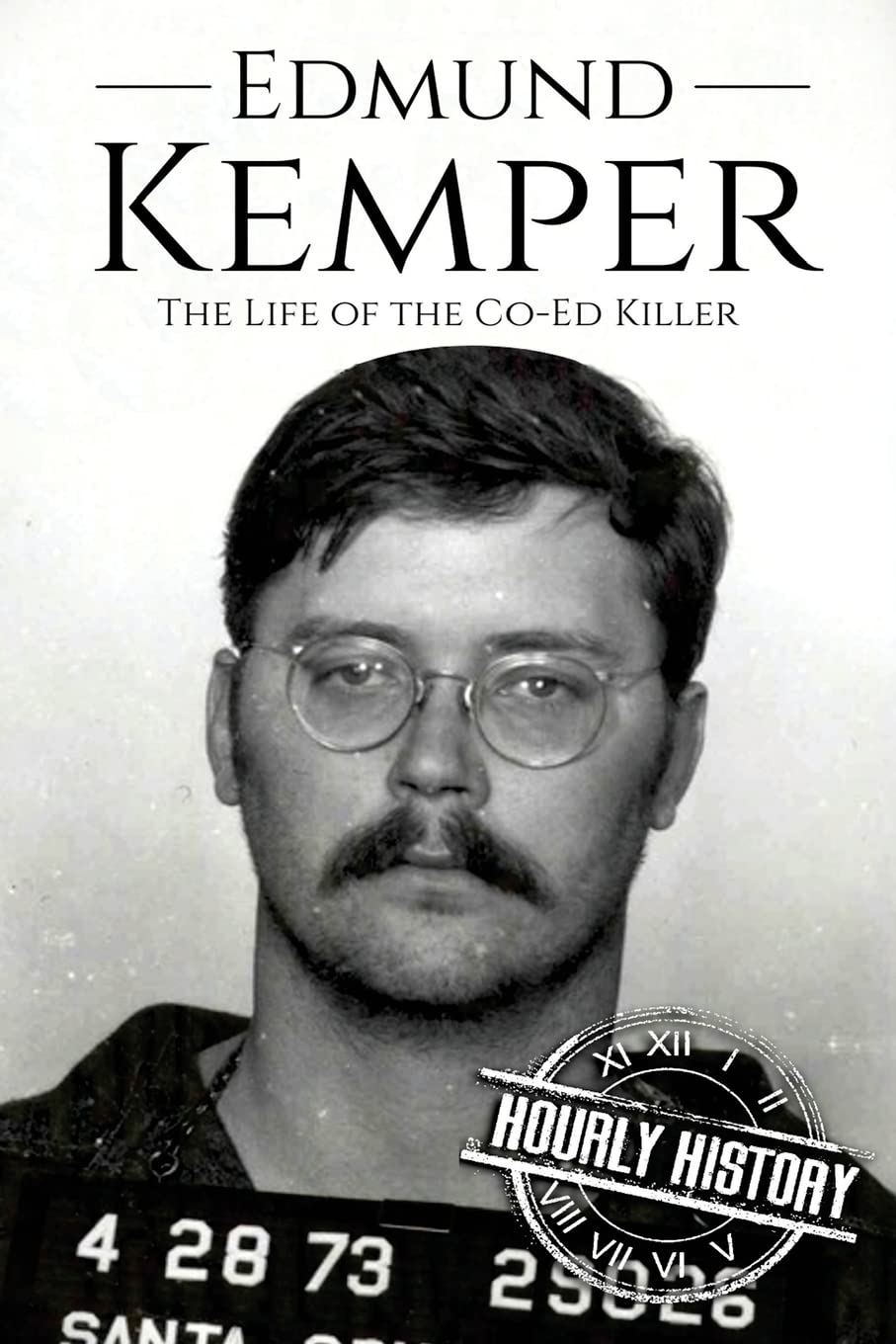
April 24, 1973.
A man walks into a police station in Pueblo, Colorado, after a cross-country drive.
He surrenders.
He is Edmund Kemper, and he tells the officers he has killed people.
Ten people, he says.
Six female college students in the Santa Cruz area, killed between August 1972 and February 1973.
His mother and her friend, killed in April 1973.
His grandparents, killed in 1964, when he was fifteen.
The record states that he confessed to all ten killings.
He led police to remains.
He provided physical evidence: photographs, personal items of the victims.
The case broke only because Kemper turned himself in.
No forensic link had connected him earlier.
No DNA, no witness, no thread from the disappearances to him.
The investigation in Santa Cruz had been open for months.
Students vanished; their bodies were found in remote areas, in a drainage ditch, in a shallow grave, near a highway.
Police had no suspect.
Then a man in Colorado said he did it.
What did he say, exactly?
The specific words of the confession are not in the record.
The exact location of the surrender is not in the record.
A stated motive is not in the record.
What remains is the act itself: a man walking into a station, changing everything.
Why now?
That would require evidence.
THE DISAPPEARANCES
The investigation began with the disappearances of students in Santa Cruz, per the source.
Two students vanished in September 1972.
Their bodies were found in a remote area, but police had no leads.
A student disappeared in January 1973.
Her body was found in a drainage ditch.
Another student vanished in February 1973.
Her body was found in a shallow grave.
Two more students disappeared in April 1973.
Their bodies were found near a highway.
The lead detective coordinated the cases.
He had no suspect until Kemper surrendered in Colorado.
The names of the students are not in the record.
The exact dates of each disappearance are not in the record.
The locations of the bodies are not in the record.
What the record does show is a pattern: six young women, six reports, six recoveries.
Each recovery yielded a body but no connection.
No witness placed a car at a curb.
No forensic link tied a suspect to a scene.
The detective had files, not a lead.
He had disappearances, then discoveries, then silence.
The gaps between vanishings stretched from months to weeks.
The bodies were found in ways that suggested different hands, or the same hand improvising.
A drainage ditch.
A shallow grave.
A remote area.
A spot near a highway.
Each location was different.
That would require evidence to explain.
The record does not establish how the victims were selected, or why the locations varied.
It establishes only the sequence, and the absence of a suspect.
The detective coordinated the cases because he saw a pattern.
The pattern was in the calendar, not the clues.
September, then January, then February, then April.
Six students gone.
One man would later say he took them all.
THE CONFESSION
He told police he picked up hitchhikers in a Ford Galaxie.
He described killing them.
He described disposing of the bodies.
He used a pistol, a machete, and a knife, according to the source.
He led police to remains.
He handed over photographs and personal items belonging to the victims, the source reports.
The confession was detailed.
The precision is chilling.
The method, the weapons, the car — all laid out in a statement.
Not because he was caught.
Because he walked into a station in Pueblo, Colorado, and turned himself in.
No forensic link had connected him to the disappearances before that day.
The case broke only because he spoke.
The years of no leads ended with his own words.
What exactly did he say?
What did he say about the first victims, the ones found in the remote area?
What did he say about the student found in the drainage ditch?
The record does not establish the full content of the confession.
It establishes the car.
It establishes the weapons.
It establishes that he picked them up, killed them, and disposed of them.
That is what is documented.
The rest — the why, the psychology, the narrative — that would require evidence.
He provided physical evidence.
Photographs.
Personal items.
Remains.
The detective coordinated the cases with no suspect.
Then the suspect provided the case himself.
THE VERDICT
Eight counts of first-degree murder.
Six students, his mother, and her friend.
He was not tried for the 1964 killings of his grandparents.
He had been a juvenile then, and he had been committed to a state hospital.
At trial in 1973, he pleaded not guilty by reason of insanity.
Psychiatrists testified about his history of abuse and his mental state.
The names of those psychiatrists are not in the record.
The specific testimony is not in the record.
The judge's name is not in the record.
The jury heard the testimony.
The jury weighed the testimony.
The jury rejected the insanity defense.
He was found guilty on all eight counts.
The judge sentenced him to life imprisonment on each count.
The sentences were to run consecutively.
Not consecutively for mercy.
Consecutively because each count stood on its own.
The legal machinery closed.
The charge was read.
The defense was offered.
The defense was refused.
The sentence was set.
That is what the record shows.
Anything else — a motive, a psychology, a narrative of why — would require evidence the record does not supply.
AND THE STORY STILL ISN'T OVER
The sentence was set.
Eight consecutive life terms.
Under California law at the time, that made Kemper eligible for parole after seven years.
He has been denied parole repeatedly.
Denied again in 2024, the most recent hearing on the record.
The families of the victims have stood before the board and spoken against his release.
They have done so more than once.
No appeal has succeeded.
None is recorded.
The confession is from 1973.
The trial is from 1973.
The story does not end there.
It continues in a hearing room, in a prison at California State Prison, Sacramento.
It is also known as the California Medical Facility.
Kemper serves his eight consecutive life sentences there.
Parole hearings come around.
The families come back.
The record shows the denials.
What it does not show is the next hearing date.
That is not established.
The case is closed in one sense.
The sentence was final.
It is open in another.
The question of release keeps returning, and the answer keeps being no.
That is the documented pattern.
Anything else — a reason, a prediction, a psychology of the board — would require evidence the record does not supply.
Advertisement
You may also like
The psychologist's mistress who heard a confession and changed a murder case
The tape recorder was running. Erik Menendez was in a therapy session with Dr. Jerome Oziel, his psychologist, when he confessed to the murders…
The cotton gin fan tied to Emmett Till's neck — and the evidence that didn't convict
The Tallahatchie River gave up its weight on August 31, 1955. Emmett Till's body surfaced with a cotton gin fan tied to his neck…
A Splash in the Chattahoochee — the Fiber Evidence That Tied Wayne Williams to Two Murders
The bridge over the Chattahoochee was quiet that night in May 1981. Police had staked it out after a tip, waiting on the dark…
The slumber party interrupted: Polly Klaas's last night before the intruder came
The party was a sleepover. Three girls, twelve years old, in the bedroom of a house in Petaluma, California. It was October 1, 1993.…
The .40-caliber pistol traced to New Jersey that linked Andrew Cunanan to Versace's killing
A .40-caliber pistol ended Gianni Versace’s life on the steps of his Miami Beach mansion. That same pistol had been stolen from a prior…
The modified Caprice trunk that hid a shooter from sight during the 2002 sniper attacks
The trunk of a white Chevrolet Caprice opened like a door to nothing. A shooter could lie flat inside, fire through a hole, and…