A Splash in the Chattahoochee — the Fiber Evidence That Tied Wayne Williams to Two Murders
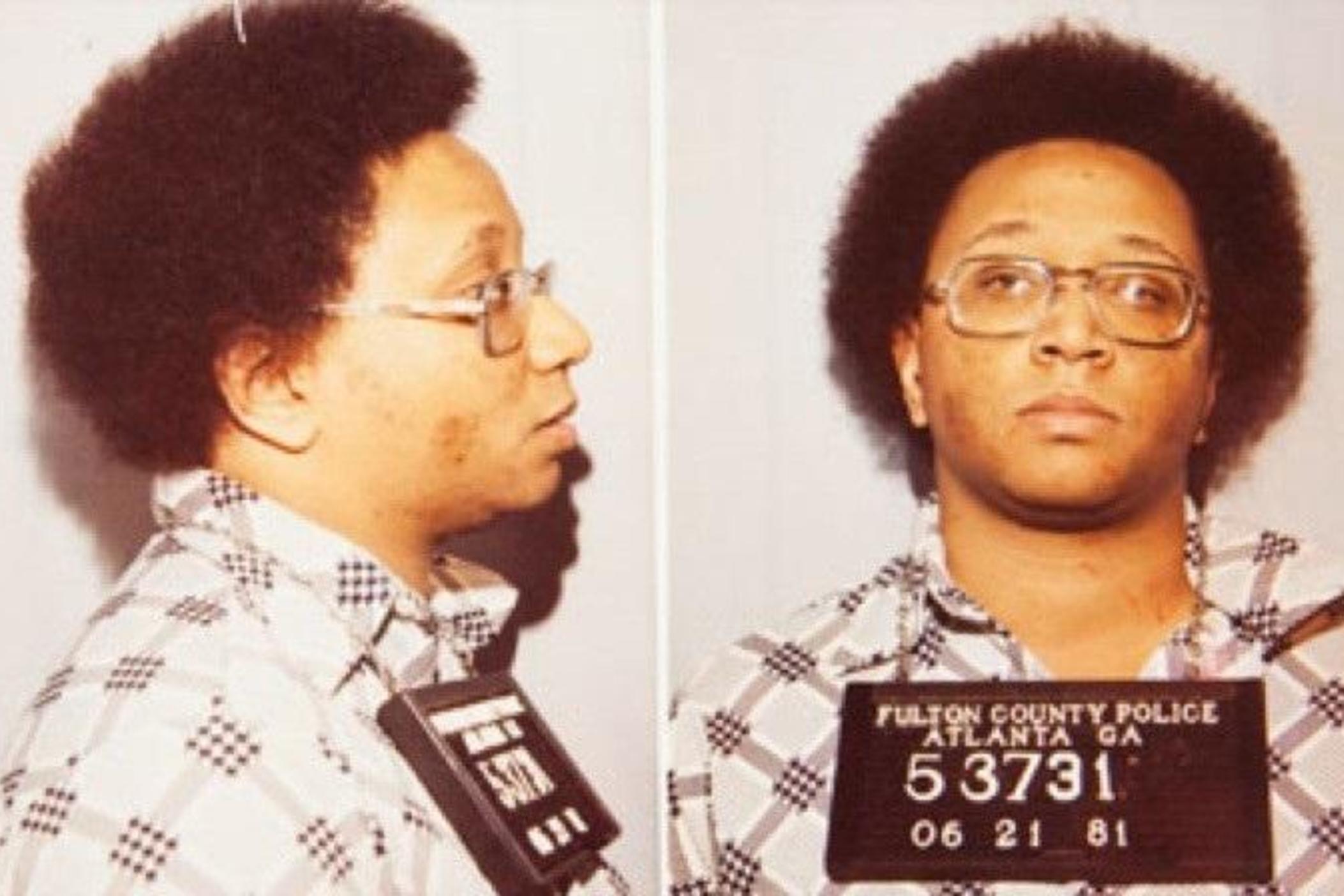
The bridge over the Chattahoochee was quiet that night in May 1981.
Police had staked it out after a tip, waiting on the dark water below.
Then they heard a splash.
They saw a car, driven by Wayne Williams, crossing the bridge at that moment.
Two days later, a body was found downstream.
That is what the record shows: a sound, a car, a body.
What made the splash — whether it was a body, a rock, or something else — is not established by the record.
The officers testified to what they heard, and what they saw.
The investigation record places Williams on that bridge.
The investigation timeline places the body in the river two days later.
What connects them is inference, not observation.
A theory circulating online holds that the splash was a body being dumped.
That theory is not a fact established by the record.
No witness saw anything leave the car.
No witness saw anything enter the water.
The river gave up a body, but it did not give up the moment of its arrival.
One sound, heard in the dark, became the hinge of a case.
Was it a heavy object dropped from the rail?
Was it a rock thrown by someone else?
Was it a current moving debris beneath the surface?
That would require evidence.
The record has the splash.
The record has the car.
The record has the body, found downstream, two days later.
It does not have the thing that hit the water.
THE STAKEOUT AND THE BODY
Between 1979 and 1981, at least 28 Black children, teenagers, and young adults were murdered or disappeared in Atlanta.
The bodies turned up in wooded areas, in rivers, in vacant lots across the city.
Some deaths were initially classified as accidents or unrelated.
Police struggled to link the cases early on.
The pressure to find a pattern was immense.
The record does not detail who made the tip that sent officers to the bridge.
It does not detail the exact nature of Williams's earlier presence at crime scenes.
What the record has is the stakeout.
Officers watched the bridge over the Chattahoochee River in May 1981.
They saw a car driven by Wayne Williams.
They heard a splash.
Two days later, the body of one of the two men Williams was charged with killing was found downstream.
Williams was already under surveillance by then.
His presence at earlier crime scenes had put him on the investigation's radar.
The city was in fear.
The families of the dead were demanding answers.
The police needed a break, and the river gave them one.
It is a documented fact that the car was on the bridge.
It is a documented fact that the splash was heard.
It is a documented fact that the body surfaced two days later.
What hit the water that night remains a question the record does not answer.
THE FIBERS
The prosecution’s key evidence was forensic: dog hairs and carpet fibers found on the victims.
FBI analysts testified that those fibers were microscopically indistinguishable from fibers taken from Williams’s home, his car, and a carpet he had used.
The fibers matched.
The analysts said so, fiber by fiber, under oath.
The defense argued the fibers were common.
Carpet fibers, the defense said, are everywhere — in homes, in cars, in the city itself.
The defense argued that no direct evidence tied Williams to the other murders.
The case was circumstantial.
There were no eyewitnesses to the killings.
There was no confession.
There was the splash, and there was the body, and there were the fibers.
Witnesses did testify that they saw Williams with some of the victims.
That testimony placed him near them.
It did not place him at the moment of death.
The fibers were the bridge between the car on the bridge and the body in the river.
They were also the bridge between one conviction and dozens of closed cases.
Whether the fibers were truly unique or common household items is contested.
The record does not settle this definitively.
It is a powerful thing, a single fiber.
It is also a fragile thing.
The jury heard the analysts.
The jury believed the match.
The fibers convicted.
The fibers also closed cases Williams was never tried for.
That is what a fiber can do.
THE TRIAL AND THE VERDICT
The trial began in Fulton County Superior Court in 1982.
It lasted nearly two months.
The prosecution built its case on two pillars: the fibers and the splash.
The river stakeout placed Williams on the bridge.
The fibers placed him on the victims.
FBI analysts testified that the hairs and carpet fibers were microscopically indistinguishable from those in Williams’s home, his car, and a carpet he had used.
The defense answered with a simpler claim: the fibers were common.
They argued the analysis was unreliable.
They argued the police had rushed to judgment.
Was a single strand of carpet enough?
Was the sound of a splash enough?
Was a pattern of matching fibers enough to convict a man of two murders?
The jury said yes.
On February 27, 1982, they found Williams guilty of both murders.
The judge sentenced him to two consecutive life terms.
The verdict rested on circumstances, not confessions, not eyewitnesses.
The prosecution had no direct evidence tying Williams to the killings.
The defense’s challenge to the fibers remains part of the record.
What the record does not establish is whether the fiber evidence was conclusive or flawed.
It is a question the trial answered with a verdict, not with proof.
AND THE STORY STILL ISN'T OVER
He is still in a Georgia prison, serving two consecutive life sentences.
He has asked the courts for new trials many times.
He cites advances in DNA testing.
He cites alleged flaws in the original fiber evidence.
The courts have denied his requests.
They have denied them again and again.
After the conviction, police closed many of the other child murder cases.
They attributed those deaths to Williams.
He was never tried for them.
He was never charged for them.
Whether Williams committed the other murders is not established.
It is not established because the record does not contain a charge or a trial for those deaths.
In 2019, the mayor of Atlanta ordered a new review of the cases.
Police re-examined the evidence.
No new charges have been filed.
No charges have been filed as of this writing.
The families of the other victims still push for the cases to be reopened.
They argue the investigation was flawed.
They argue Williams was never convicted for those deaths.
The story still isn't over.
Not because a court said so.
Not because a jury said so.
Because the files remain open, and the evidence remains what it was.
The verdict settled two murders.
The rest of the list remains a police conclusion, written into closed files.
That is what the record holds.
That is all the record holds.
Advertisement
You may also like
The Avia shoe print that tied a serial killer to his final crime scene
The sole of an Avia athletic shoe left a pattern in the dark. That pattern turned up at more than one crime scene linked…
The floppy disk clue that ended a 30-year hunt for BTK
For more than a decade, the killer had been silent. Then, in 2004, he resumed sending letters and packages to media outlets, according to…
The 1888 letter signed 'Jack the Ripper' that police never proved genuine
A letter arrived at a news agency in late September 1888. It was signed with a name no one had seen before: "Jack the…
Two college students, one gas station, and the gunman who made them kneel
The night of July 19, 1976, in Orem, Utah, began like any other shift at a gas station. Two young men were working the…
The confession that broke the Hillside Strangler case — but one victim's body was found after the trial began
October 18, 1977. A body on a hillside in Los Angeles. She was young. She had been strangled. The medical examiner would confirm the…
The cellmate tip that cracked the Clutter family murders open
Floyd Wells was a prisoner. In late 1959, he told authorities that his former cellmate, Richard Hickock, had described planning a robbery of the…