Two college students, one gas station, and the gunman who made them kneel
The night of July 19, 1976, in Orem, Utah, began like any other shift at a gas station.
Two young men were working the pumps — one a 25-year-old attendant, the other a 24-year-old student at Brigham Young University.
Then a stranger approached.
He robbed them at gunpoint.
He ordered them into a nearby field.
He shot both in the head.
Both died at the scene.
The gunman fled.
For days, the crime went unsolved.
THE VICTIMS
The victims were young men with ordinary lives — one earning a paycheck at the station, the other studying at a university just a few miles away.
Their names are known, but their families largely stayed out of the public spotlight.
What they said publicly, the record does not preserve.
What is documented is the crime itself — and the man who confessed to it.

THE CONFESSION
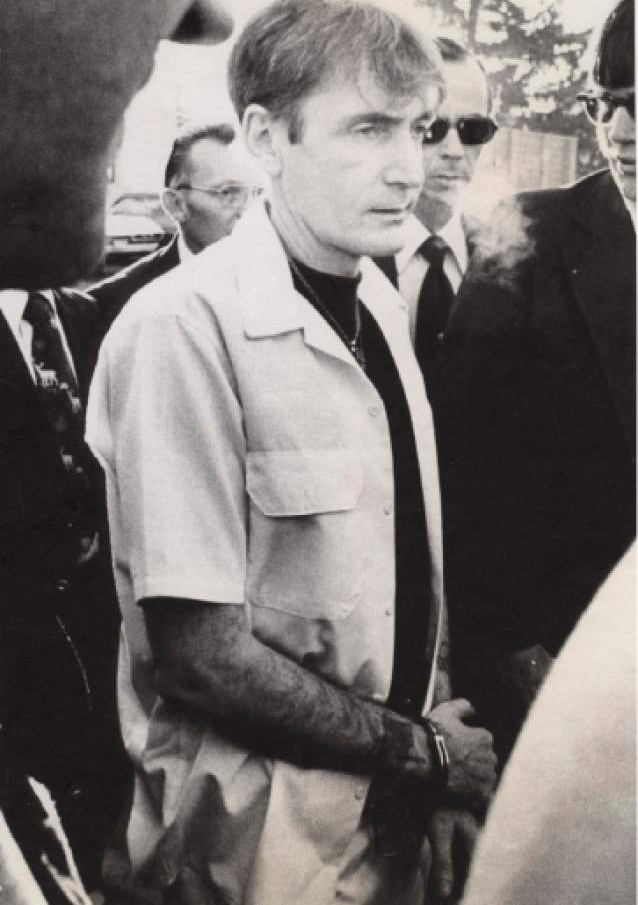
The case broke when a 35-year-old ex-convict named Gary Gilmore was arrested in connection with a separate robbery.
Questioned by police, he confessed to the two murders.
He led officers to the murder weapon — a .22-caliber pistol.
The confession was detailed and matched the crime scene evidence.
No other suspects were seriously considered.
THE TRIAL
Gilmore was charged with two counts of first-degree murder.
He pleaded guilty to both counts.
The trial judge sentenced him to death.
Under Utah law, Gilmore could choose the method of execution.
He chose to be shot by a firing squad.
Gilmore initially waived his appeals.
His mother and others tried to intervene to stop the execution.
The Utah Supreme Court declined to block the sentence.

The U.S. Supreme Court declined as well.
THE EXECUTION
On January 17, 1977, at Utah State Prison in Draper, Utah, Gary Gilmore was executed by firing squad.
His death marked the first execution in the United States in nearly a decade.
The case became the subject of Norman Mailer's Pulitzer Prize-winning book "The Executioner's Song," published in 1979.
Gilmore's brother later wrote his own memoir about the family.
But the victims' families stayed quiet.
WHAT REMAINS
The case is studied for what it says about the death penalty — and about a condemned man's right to end his own appeals.
But beneath that history is a simpler fact: two young men went to work that night and did not come home.
One routine shift.
One gas station.
One gunman who made them kneel.
That is what happened.
That is all the record shows.
Advertisement
You may also like
The love letters scattered beneath a crabapple tree that investigators could not trace
The crabapple tree stood in a secluded lane called Lovers' Lane, near St. John's Episcopal Church in New Brunswick, New Jersey. On the night…
The 2007 deal that let Epstein plead state charges — and the detective who kept digging
Palm Beach, 2005. A mother walked into a police station and reported that her 14-year-old stepdaughter had been recruited by an older girl. The…
The eyeglasses with a rare hinge that broke a perfect alibi
The eyeglasses sat in the culvert beside the body of Robert "Bobby" Franks, fourteen years old, found on May 22, 1924, near the Indiana…
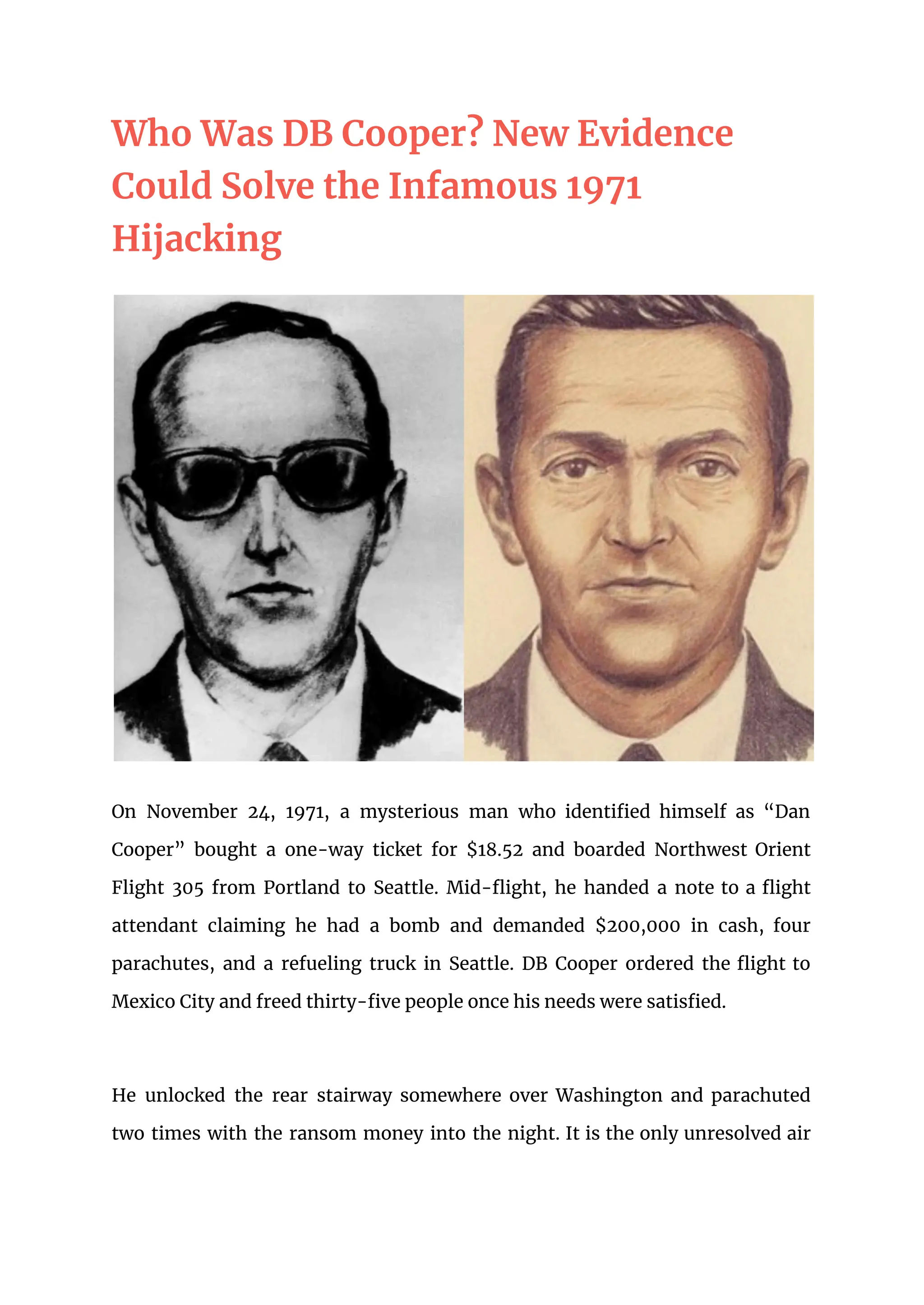
The $5,800 in serial-matched ransom cash that a boy found by the Columbia River
The bundle was rotting when the boy found it. Brian Ingram was a child that day in 1980, playing along the Columbia River near…
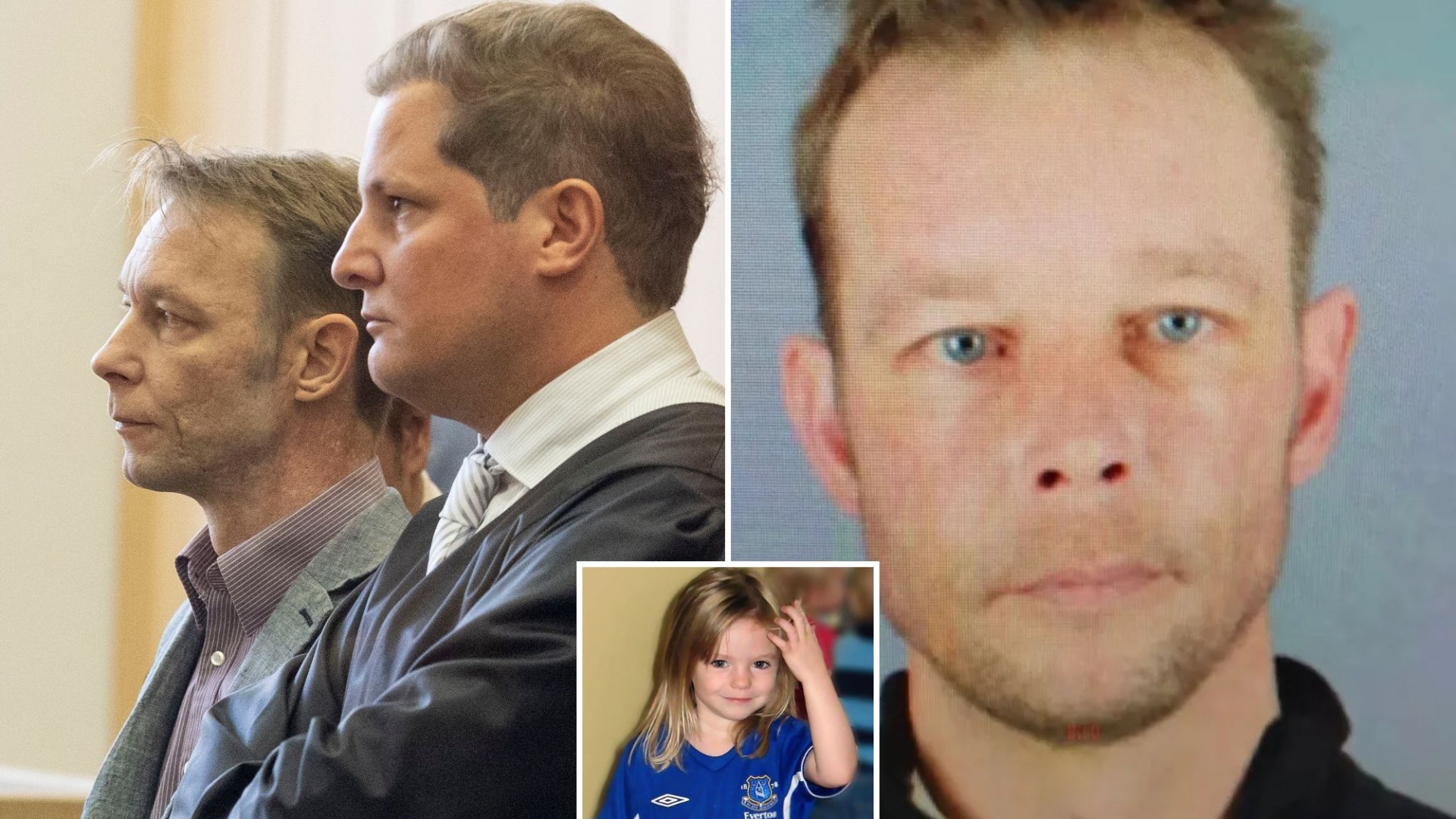
The 10pm bed check that sent a mother into a holiday apartment — and changed a case forever
The tapas restaurant sat about 50 metres from the apartment. Kate McCann crossed that distance at approximately 10:00 pm on 3 May 2007. She…

The 31-day gap and the trunk stain that locked the spotlight on Casey Anthony
Caylee Marie Anthony was two years old when relatives last saw her on June 16, 2008. She was not reported missing for 31 days.…