The eyeglasses with a rare hinge that broke a perfect alibi
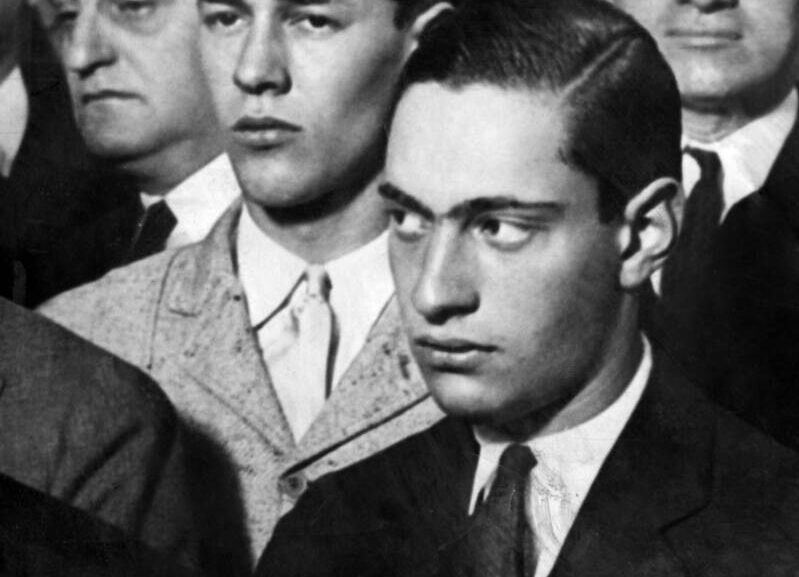
The eyeglasses sat in the culvert beside the body of Robert "Bobby" Franks, fourteen years old, found on May 22, 1924, near the Indiana border.
They were not ordinary glasses.
The hinge mechanism was rare — a Chicago optician had sold only three pairs in total.
One of those three pairs had been sold to Nathan Leopold, a University of Chicago student.
Leopold said he had lost the glasses on a bird-watching trip.
That was the claim.
That was the alibi.
At this moment, the glasses are just a piece of evidence beside a body.
It is not established who wore them.
It is not established how they got there.
Only that they were found.
A hinge, a number, a name.
How could a hinge lead anywhere?
How could a tiny metal mechanism undo a perfect story?
How could one optician's records reach across a city and touch a murder?
That would require evidence.
The evidence was already in the culvert.
THE KIDNAPPING AND THE BODY
On May 21, 1924, 14-year-old Robert "Bobby" Franks was kidnapped on his way home from school in Chicago.
His body was found the following day.
It lay in a culvert in a swampy area near the Indiana border.
A chisel had been used to kill the boy.
A rented car had been used in the kidnapping.
Both facts are documented in the record.
The exact sequence of the kidnapping and the murder is not detailed in the source.
Only the facts are listed: the boy taken, the body found, the chisel, the car.
The case drew national attention.
It drew attention because of the social status of the families involved.
The victim was a child from a wealthy Chicago family.
The two men later charged were also wealthy.
They were University of Chicago students in their late teens.

They were described as highly intelligent.
The contrast was stark.
A boy on his way home from school.
Two privileged students accused of planning his death as an intellectual exercise.
The city watched.
The nation watched.
The evidence was circumstantial but overwhelming, according to the record.
It began with a pair of eyeglasses near the body.
It ended with confessions from both men.
But that comes later in the story.
For now, the body is in the culvert.
The chisel is documented.
The rented car is documented.
The sequence between them is not.
THE TRACE
The eyeglasses lay near the body in the culvert, and they were not ordinary.
The hinge was the detail, a rare mechanism that a Chicago optician had fitted to only three pairs ever sold.
Police took the glasses to the optician, who kept records.
One pair had been sold to Nathan Leopold, a University of Chicago student.
The source does not specify who bought the other two pairs.
When questioned, Leopold claimed he had lost the glasses during a bird-watching trip.
That alibi fell apart under scrutiny, according to the record.
The glasses were not the only trace.
A typewriter used to write the ransom note was also traced to Leopold.
The source states the typewriter was traced, but it does not explain how.
The evidence was circumstantial, the record says.
It was also overwhelming.
Leopold and Richard Loeb confessed.
The hinge did not convict them by itself; the confessions did.
But the hinge was what pointed to them first.
It was a small, specific fact in a case built on small, specific facts.
The chisel is documented.
The rented car is documented.
The hinge is documented.
The sequence between them is not.
THE ALIBI AND THE RECORD
The alibi was a bird-watching trip.
Leopold told police he had lost the glasses somewhere out in the country, on a day he had gone looking for birds.
The record documents that claim.
The record also documents that it fell apart under scrutiny.
What the record does not detail is every contradiction.
The specific flaws in Leopold's story are not itemised in the source.
Only that it broke.
The hinge held.
It is a rare hinge, sold three times, one pair to Leopold.
The glasses were found near the body.
Was he bird-watching there?
The record does not establish any alternative explanation for the glasses' presence.
No viral theory appears in the source.
No web of conspiracy, no planted evidence, no second pair.
The documented fact is the hinge.
The documented fact is the trace.
The evidence was circumstantial.
It was also overwhelming.
That is what the source states.
That is what led to confessions.
What exactly broke the alibi?
Was it the typewriter that wrote the ransom note?
Was it the rented car?
Was it the chisel?
The source does not say which detail cracked the story first.
It says only that the story cracked.

The glasses did not lie.
The hinge did not wander.
It was in one place, near the body, and its owner had said he lost it elsewhere.
That is the line between a claim and a proven fact.
Leopold claimed.
The hinge proved.
AND THE STORY STILL ISN'T OVER
Leopold and Loeb were charged with murder and kidnapping.
They pleaded guilty.
The trial was a bench trial before a judge — no jury, only the record and the arguments.
Clarence Darrow led the defense.
He argued against the death penalty, emphasising youth and mental state.
He spoke of what a young mind could do, and what a young mind could become.
On September 10, 1924, the judge sentenced both to life imprisonment for murder plus 99 years for kidnapping.
Not the death penalty.
The source does not name the judge; that role is not attributed in the record.
The source does not name the lead detective; that role is not attributed either.
The case remains a landmark in criminal law.
It is a landmark regarding psychiatric evidence.
It is a landmark in the debate over the death penalty.
Richard Loeb was killed in prison in 1936 by a fellow inmate.
Nathan Leopold was paroled in 1958 after 33 years.
He moved to Puerto Rico.
He worked as a medical technician.
He wrote a memoir.
He died in 1971.
The hinge that broke the alibi sits at the centre of a legal legacy.
That legacy outlived both men.
The glasses were found.
The hinge was traced.
The alibi fell.
And the law still carries the weight of what the record established.
Advertisement
You may also like
The left-luggage ticket that cracked the Moors murders case
October 7, 1965. Police searched a house in Manchester and found a left-luggage ticket. Not a weapon. Not a confession. A ticket for Manchester…
The hatchet head in the cellar that never matched the timeline
The cellar was damp and close on the morning of August 4, 1892. In Fall River, Massachusetts, the bodies of Andrew Jackson Borden and…
The 2002 sniper shootings: a tip about a Caprice at a rest stop, and the rifle that changed everything
The caller reached the hotline on October 24, 2002. The caller gave a description of a Chevrolet Caprice. Police found the Caprice parked at…
The Thompson submachine gun found in Fred Burke's Michigan home that tied him to the massacre
The Thompson submachine gun sat in a Michigan home, miles from the Chicago garage. Investigators found it in the residence of a man named…
The kennel video that placed Alex Murdaugh at the scene minutes before the murders
On June 7, 2021, Paul Murdaugh’s phone recorded video at the dog kennels on the family estate. The timestamp on that video placed Alex…
The bite marks on Lisa Levy that tied Ted Bundy to the Chi Omega murders
The bite marks were on the buttocks of Lisa Levy. They were found at the Chi Omega crime scene, in the sorority house where…