The 2002 sniper shootings: a tip about a Caprice at a rest stop, and the rifle that changed everything
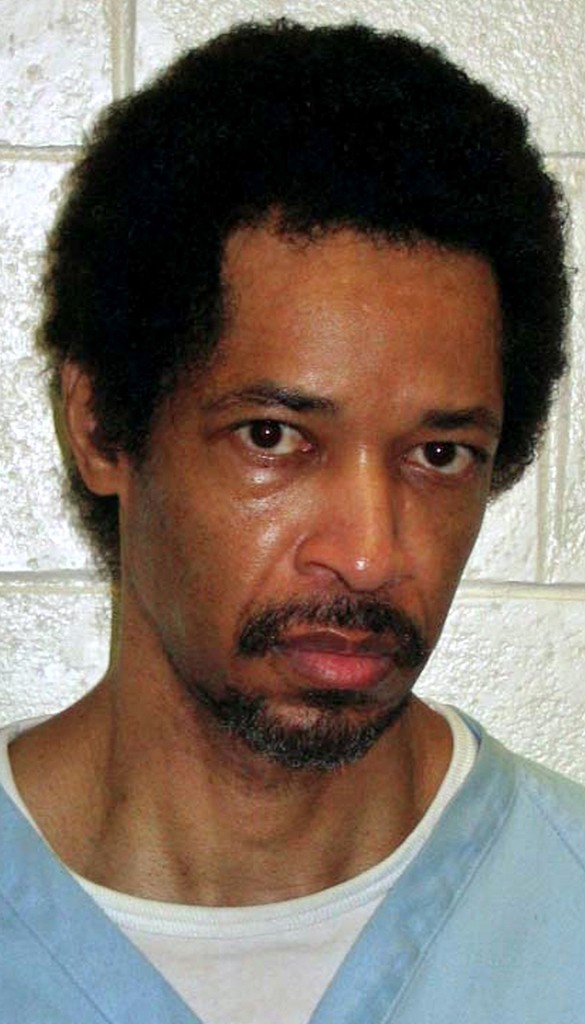
The caller reached the hotline on October 24, 2002.
The caller gave a description of a Chevrolet Caprice.
Police found the Caprice parked at a rest stop off Interstate 70 near Myersville, Maryland.
Inside were John Allen Muhammad, a 41-year-old Army veteran, and Lee Boyd Malvo, a 17-year-old from Jamaica.
A rifle was found in the car, later linked to the shootings.
This came after weeks of shootings across Maryland, Virginia, and Washington, D.C., that killed ten and wounded three.
Who was the caller?
What exactly did they say?
How did one tip end a regional terror?
The identity of the caller is not in the record.
The exact wording of the tip is not in the record either.
But the description led police to the car, and the car held the rifle.
That was the break.
THE FIRST SHOT
The first fatal shooting came on October 2, 2002, outside a grocery store in Wheaton, Maryland.
Between that day and October 24, a series of shootings unfolded across Maryland, Virginia, and Washington, D.C.
Ten people were killed. Three more were wounded.
The attacks appeared random.
Victims were shot while pumping gas, mowing a lawn, or loading a car.
One victim was a 13-year-old shot outside his middle school.
Schools closed. People zigzagged in parking lots.
Fear spread through the suburbs, and no one could say where the next shot would come from.
Montgomery County Police Chief Charles Moose led the investigation.
Moose became the public face of the case, appearing at briefings as the shootings continued.
The shootings stretched across multiple jurisdictions, and police initially had few leads.
The motive for the shootings is not stated in the record.
That would require evidence, and the record does not provide it.
What the record does show is a pattern of victims struck in ordinary moments.
A gas pump. A lawn. A car door.
Each scene was different. Each was the same.
The randomness was the terror.
It is not a conclusion the record draws, but it is what the record describes.
THE TAROT CARD
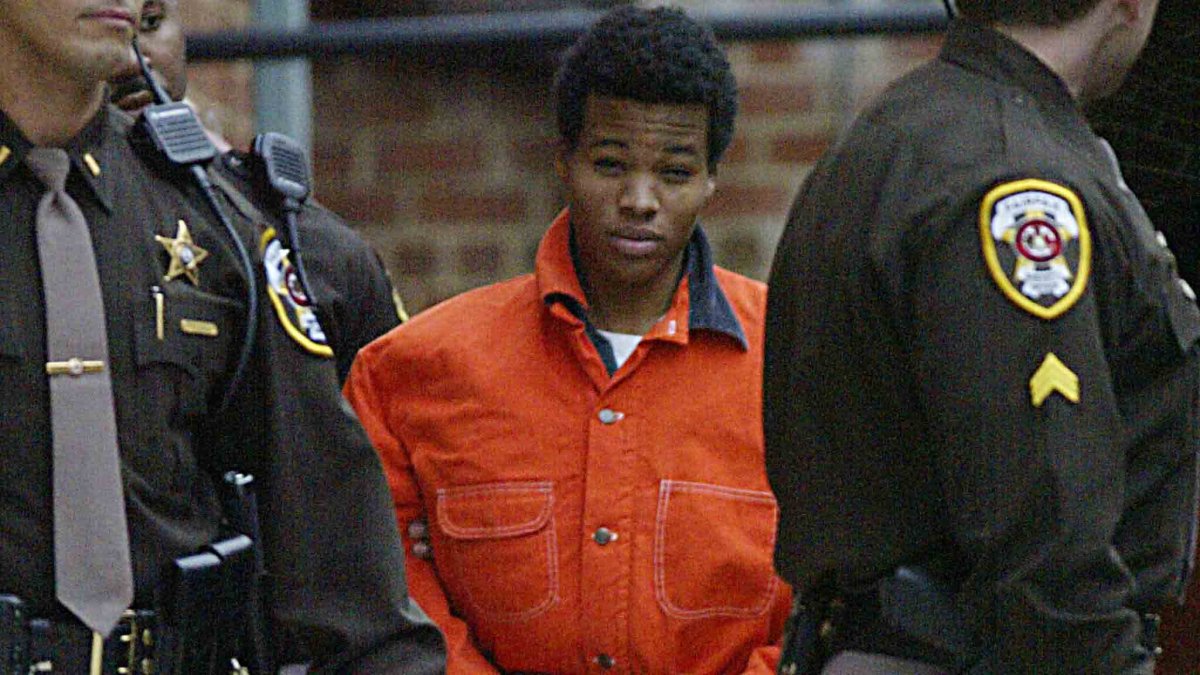
The shootings spanned three jurisdictions, and no single police department held the whole picture.
Each force chased its own leads, its own victims, its own crime scenes.
The investigation was criticized for jurisdictional confusion.
It is a critique the record supports.
At one scene, officers found a tarot card left behind with a message.
The exact content of that message is not in the record.
What is in the record is that police treated it as a taunt, a signature left by the shooter.
It gave them little to work with.
The randomness continued.
Then a friend of Muhammad's, a man who had been with him and Malvo in the car, testified about their movements.
He placed them on the road, in the vehicle, across the region.
It was a lead, but not yet the break.
The break came from a hotline.
A caller provided a description of a Chevrolet Caprice.
Police found the car parked at a rest stop off Interstate 70 near Myersville, Maryland.
Inside were Muhammad and Malvo.
The tarot card was a message.
The witness was a timeline.
The tip was the door.
It is not a conclusion the record draws, but it is what the record describes.
THE RIFLE AND THE ARREST
The Caprice sat at the rest stop, and inside it was a Bushmaster XM-15 .223-caliber rifle.
The rifle had been fired from the modified Chevrolet Caprice.
After the arrest, ballistics linked that rifle to multiple shootings.
The record says "linked to multiple shootings" — it does not detail the specific match.
Muhammad and Malvo were arrested at the rest stop.
The legal path was not simple.
Muhammad was tried first, in Prince William County, Virginia.
He was tried first to avoid the death penalty being barred for a juvenile co-defendant.
Prosecutors chose the venue with that in mind.
He was convicted of capital murder for the killing of Dean Harold Meyers.
The jury found the "terrorism" aggravating factor.
He was sentenced to death.

Malvo was tried separately.
He was convicted of capital murder for the killing of Linda Franklin.
He was sentenced to life without parole.
The rifle was the smoking gun.
It is also the object that made the case.
The arrests were the end of the shootings.
The trials were a different kind of work.
One defendant faced death.
The other faced life.
The rifle linked the car to the attacks.
The car linked the men to the rifle.
The tip linked the car to the police.
It is a chain the record describes.
It is not a chain the record argues about.
The ballistics match details are not in the record beyond "linked to multiple shootings."
That is where the evidence stops.
The verdicts did not stop there.
AND THE STORY STILL ISN'T OVER
Muhammad was executed by lethal injection on November 10, 2009.
Malvo’s sentence was later affirmed on appeal.
In 2017, Malvo’s life sentence was challenged in light of Supreme Court rulings on juvenile sentencing.
He remained in prison.
The record does not establish the outcome of that challenge beyond that fact.
Several victims’ families have spoken publicly about the case.
They have spoken about the losses, about the trial, about the years since.
The shootings led to changes in how multi-jurisdictional investigations are coordinated.
Not because the old system worked. Because it did not.
The case remains one of the most studied examples of random sniper attacks in U.S. history.
It is studied for the tip. It is studied for the rifle. It is studied for the failures that came before both.
The verdicts did not settle everything.
The execution did not settle everything.
The appeals did not settle everything.
What remains is the record: a tip, a Caprice, a rifle, two convictions.
What remains is the question of what happens when the evidence stops.
That is where the evidence stops.
Advertisement
You may also like
The truck that returned home, and the timeline that fell apart
The blue Ford Escape came back to the house before dawn on August 13, 2018. A neighbor's security camera caught it pulling into the…
The 20-month-old in the crib, the $50,000 note, and the ladder no one could explain
The nursery window was shut, the crib empty, the room still warm. Betty Gow, the child's nurse, found the crib empty around 10:00 p.m.…
The truck axle with a VIN that led FBI to bomber’s rental alias
9:02 a.m. on April 19, 1995. A rented Ryder truck, packed with ammonium nitrate and fuel oil, exploded outside the Alfred P. Murrah Federal…
The severed head in a canal that identified a missing boy — and the confession that never went to trial
The video games were the last thing Adam Walsh watched. On July 27, 1981, the six-year-old was at the Sears store in the Hollywood…
The Unabomber trial turned on a brother's recognition of his writing style
In 1995, a 35,000-word manifesto titled "Industrial Society and Its Future" was mailed to The New York Times and The Washington Post. The sender…
The shantytown razed twice by Eliot Ness, and the killer who vanished
The second fire went up in 1938, and the flames were meant to solve something. Eliot Ness, Cleveland's Safety Director, had already ordered the…