The 20-month-old in the crib, the $50,000 note, and the ladder no one could explain
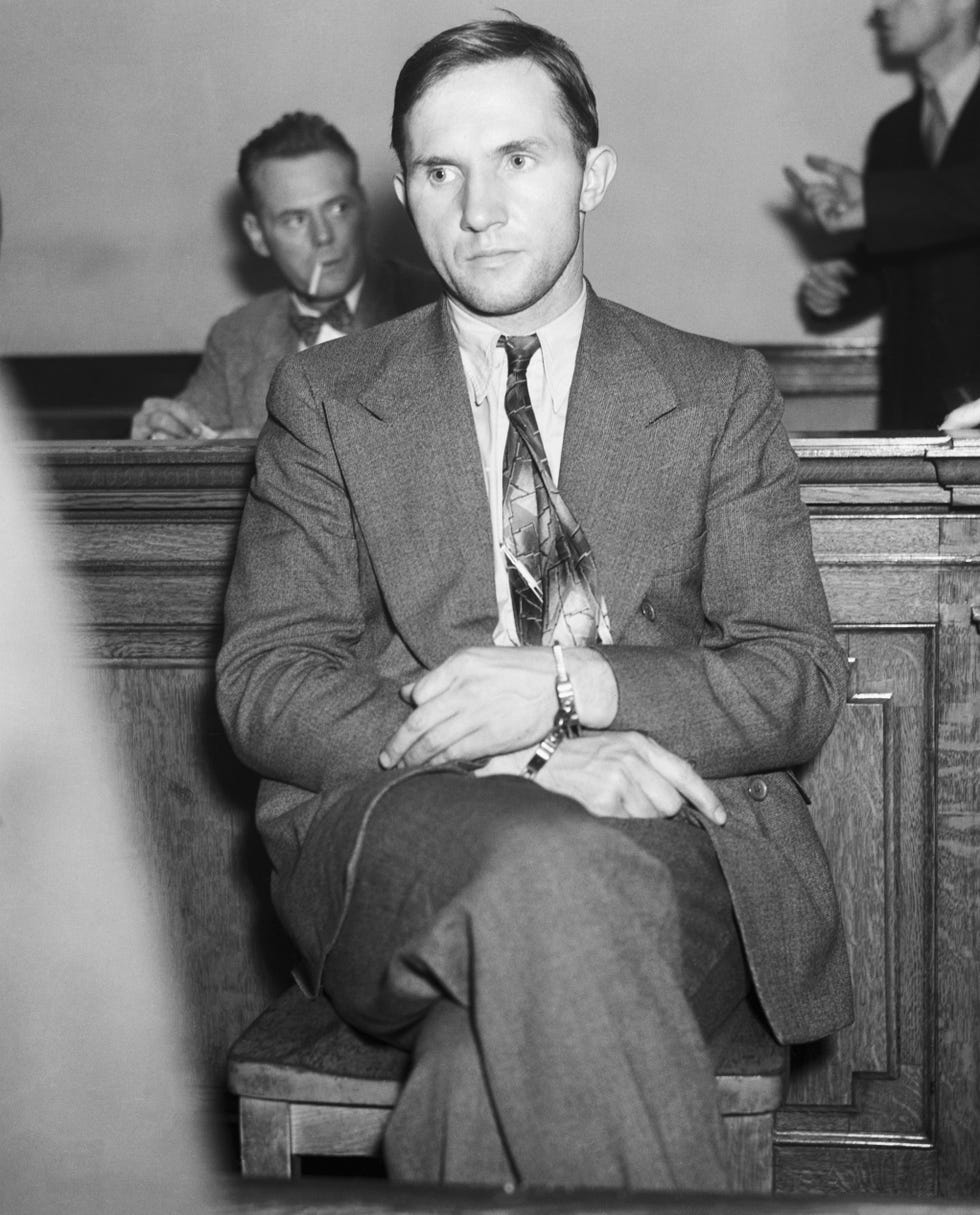
The nursery window was shut, the crib empty, the room still warm.
Betty Gow, the child's nurse, found the crib empty around 10:00 p.m. on the evening of March 1, 1932.
She had gone to check on Charles Lindbergh Jr., the 20-month-old son of aviator Charles Lindbergh and author Anne Morrow Lindbergh, in the family's home near Hopewell, New Jersey.
The child was gone.
On the nursery windowsill lay a ransom note demanding $50,000.
Who left it there?
How did anyone reach the window without a sound?
What happened in the minutes before the nurse opened the door?
That would require evidence.
It is not established who entered the nursery or how the child was removed.
The Lindbergh home was not secured immediately.
Many people walked through the nursery, compromising the scene.
The note remained on the sill, a paper witness to an empty room.
The room was intimate.
The absence was sudden.
The note was specific — a demand, a number, a promise of return.
No one could explain the ladder.
No one could explain the silence.
The child was on the ground below, four and a half miles away, found on May 12, 1932.
The cause of death was a blow to the head.
But that was later.
On the evening of March 1, there was only the crib, the open window, and the note.
THE SEARCH AND THE RANSOM
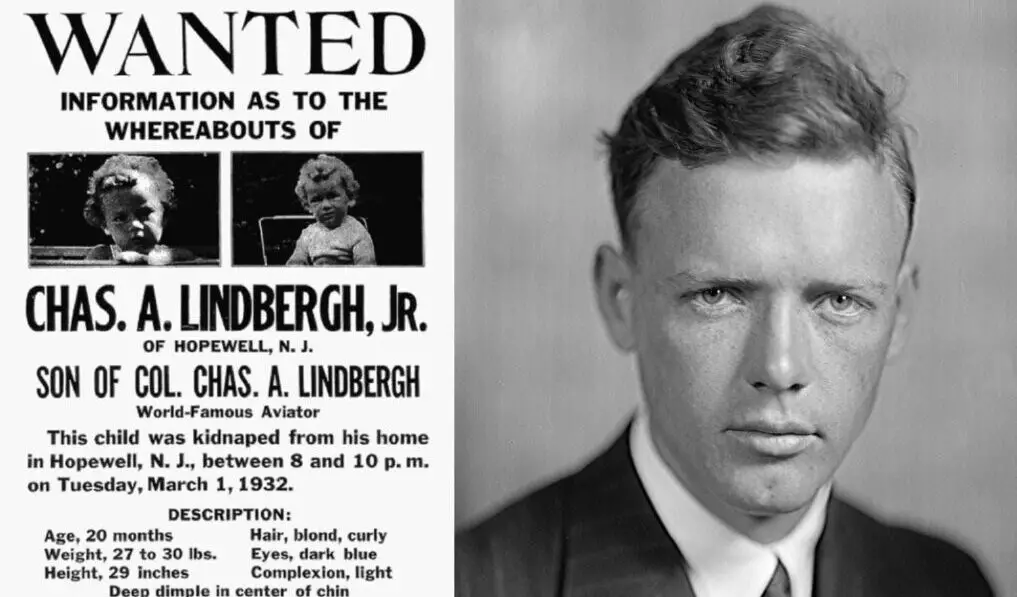
The ransom was paid on April 2, 1932.
Dr. John F. Condon, a retired Bronx schoolteacher, delivered the $50,000 in marked gold certificates to a man who identified himself as "John."
Condon had volunteered to act as a go-between after receiving a note.
The Lindberghs' lawyer, Colonel Henry Breckinridge, also acted as an intermediary with the kidnappers.
The money was handed over in a cemetery, according to Condon's later testimony.
"John" gave Condon a note saying the child was safe on a boat.
That was the hope.
The search went on for weeks.
Then, on May 12, 1932, the child's body was found in a wooded area about four and a half miles from the Lindbergh home.
The cause of death was a blow to the head.
The weapon was a blunt object, never identified.
What happened to the child between the kidnapping and the discovery of the body is not established.
The marked bills were later traced.
Each serial number had been recorded before the payment.
The money moved through the city, one certificate at a time.
Condon told reporters about the man in the cemetery, the voice, the exchange.
He described the handoff in detail.
He described the hope it carried.
It is a strange arc: the theatrical go-between, the careful payment, the long wait.
Then the body in the woods.
The bills kept circulating.
They would not stop until September 1934, when one of them surfaced at a gas station in the Bronx.
That is where the money led.

But in May of 1932, there was only the grave, the blow to the head, and the questions no one could answer.
THE LADDER AND THE MONEY
The gold certificate surfaced on a Tuesday afternoon in September 1934, at a gas station in the Bronx.
The attendant took the bill, noted the serial number, and wrote down the license plate of the man who handed it over.
That plate led to a house on East 222nd Street.
On September 19, 1934, Hauptmann was arrested at that home.
The money was in his garage.
A portion of the ransom cash, still in marked gold certificates, was found among his belongings.
The ladder was in the attic.
Wood from his attic floor was matched to the homemade ladder used in the kidnapping.
The grain, the tool marks, the species—they lined up, according to the prosecution's experts.
Handwriting experts testified that he wrote the ransom notes.
They pointed to the loops, the slant, the pressure of the pen on the page.
It is not established that Hauptmann was the man who received the ransom.
The identification was made by Dr. John F. Condon, the retired schoolteacher who had volunteered as the go-between.
The defense argued the evidence was circumstantial.
They said the money could have been placed, the wood could have been planted, the notes could have been copied.
That would require evidence.
The record shows the plate number, the garage cash, the wood grain.
It shows a carpenter's hands on a ladder built for a single purpose.
The pieces did not click into place all at once.
They clicked slowly, over two and a half years, one serial number at a time.
The gas station attendant remembered the man.

The man was Hauptmann.
The money was the ransom.
The ladder was the ladder.
The record does not say how the ladder got there.
THE TRIAL AND THE TWO STORIES
The trial began on January 2, 1935, in Flemington, New Jersey.
The prosecution was led by Attorney General David T. Wilentz.
Hauptmann was represented by Edward J. Reilly.
The state built its case on wood and handwriting.
The wood was from his attic, matched to the ladder.
Handwriting experts testified that he wrote the ransom notes.
A portion of the ransom money was found in his garage.
The defense argued that the evidence was circumstantial.
The defense argued that Hauptmann was a victim of a frame-up.
Two stories stood in the courtroom.
One story said the carpenter climbed the ladder, took the child, and wrote the notes.
The other story said the ladder was placed, the notes were planted, and the money was staged.
Not because the evidence proved it. But because the defense claimed it.
On February 13, 1935, Hauptmann was found guilty of first-degree murder.
He was sentenced to death.
Appeals and motions for clemency failed.
Hauptmann was executed in the electric chair at the New Jersey State Prison on April 3, 1936.
He maintained his innocence to the end.
His wife, Anna Hauptmann, maintained it for decades after.
She petitioned for posthumous pardons and new hearings.
Those efforts were unsuccessful.
It is not established that Hauptmann was innocent.
His conviction and execution are in the record.
His claim of innocence is a claim.
The frame-up theory is a theory.
The record does not resolve which story is true.
The electric chair was final.
The child was on the ground below, four and a half miles from home.
The ladder was in the record.
The money was in the record.
The notes were in the record.
The innocence was not.
AND THE STORY STILL ISN'T OVER
She kept his name.
Anna Hauptmann spent decades petitioning for posthumous pardons and new hearings.
She argued that the evidence against her husband was flawed.
It is not established that the evidence was flawed.
Her arguments were unsuccessful in every petition.
The record closed with his execution in 1936.
He maintained his innocence to the end.
The Lindbergh family could not stay.
They moved to Europe to escape the intense publicity.
The house where the crib stood was left behind.
It was later donated to the state.
It is now a historic site.
Visitors walk the rooms where the nurse found the child missing.
They see the nursery.
They see the windowsill where the note was found.
They do not see an answer.
The case did not end with the trial.
It ended with a law.
The Federal Kidnapping Act of 1932 made kidnapping across state lines a federal crime.
They called it the Lindbergh Law.
A law born from a crib.
A family driven abroad.
A widow's unanswered petitions.
The house remains.
It is quiet there now.
It is permanent.
The money was in the record.
The notes were in the record.
The innocence was not.
She was on the ground below.
Anna Hauptmann was not.
Advertisement
You may also like

The bloody glove that didn't fit — and the LAPD evidence mistake that changed the trial
The glove sat on the evidence table, leather and dark, one found at the crime scene, the other on the accused's property. In court,…

The ring that identified Emmett Till after his body was pulled from the Tallahatchie River
The cotton gin fan was still tied to his neck with barbed wire. His body came up from the Tallahatchie River on August 31,…
Why the FBI manhunt missed Andrew Cunanan in Miami for weeks
The bicycle was found first, abandoned against a wall a few blocks from the Casa Casuarina. On July 15, 1997, Gianni Versace was shot…

The cell phone records that placed Adnan Syed near Leakin Park — and the witness who swore he saw the body
The witness was Jay Wilds, an acquaintance of Adnan Syed. He testified that Syed showed him Hae Min Lee's body. He testified that the…
The front-page editorials that demanded Dr. Sam Sheppard’s arrest before his trial began
On July 4, 1954, in Bay Village, Ohio, Marilyn Sheppard, 31, was found bludgeoned to death in the upstairs bedroom of the lakeside home…
The bank card used after the McStay family vanished — and the phone calls that changed everything
The surveillance footage is grainy, the timestamp frozen in the days after the McStay family vanished. A man is at an ATM, inserting a…