The truck axle with a VIN that led FBI to bomber’s rental alias
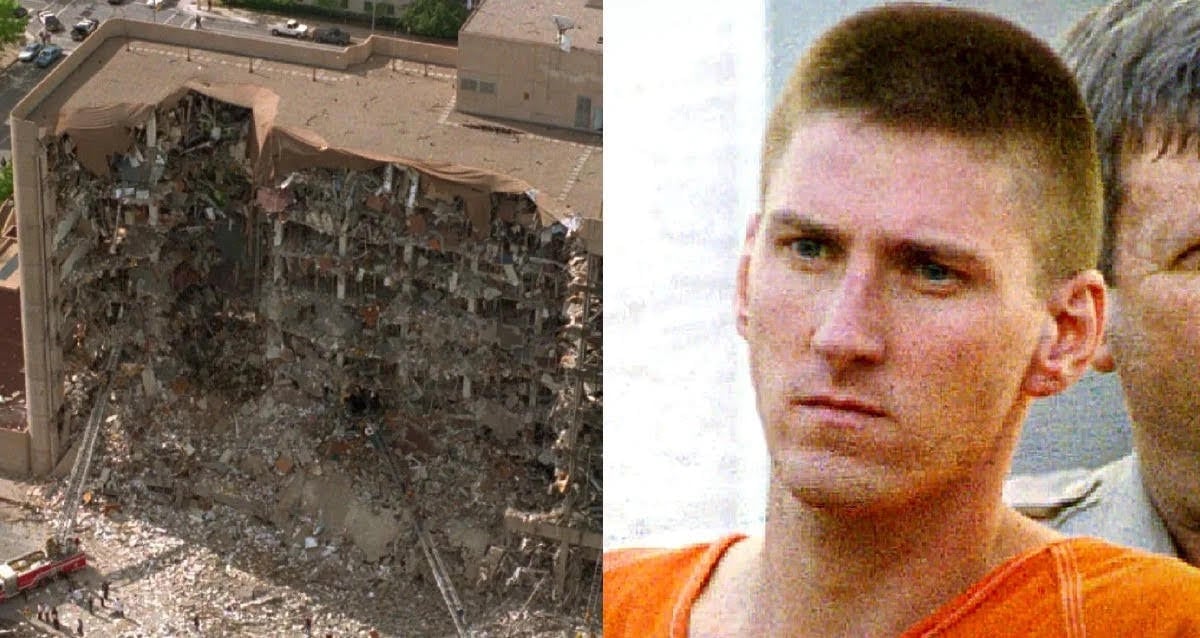
9:02 a.m. on April 19, 1995.
A rented Ryder truck, packed with ammonium nitrate and fuel oil, exploded outside the Alfred P. Murrah Federal Building in Oklahoma City, Oklahoma.
The blast destroyed the north face of the nine-story building.
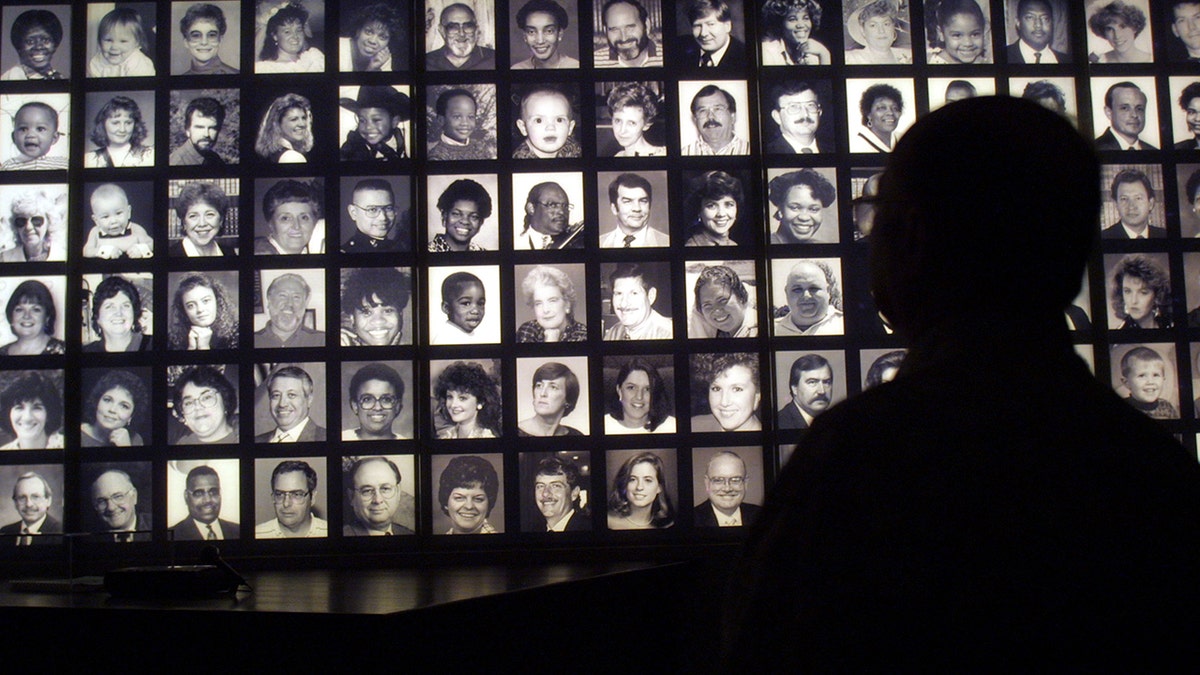
It killed 168 people, including 19 children in the building’s day-care center.
More than 500 others were injured.
Within minutes, rescue teams were in the rubble.
They searched for survivors in the dust and the twisted steel.
Among the debris was a truck axle.
Just a metal part, sheared off in the blast.
It lay in the wreckage of the north face, buried under concrete.
An axle carries the weight of a truck.
It also carries a vehicle identification number, stamped into the metal.
That number would later match a rental agreement.
The agreement was signed under the alias "Robert Kling" at a Ryder location in Junction City, Kansas.
One piece of metal.
One number.
One name that was not a name.
How did a single axle hold the key to the entire case?
THE RENTAL RECORD AND THE ALIAS
The axle carried a number.
Within days, FBI agents and local police traced that number to a Ryder rental location in Junction City, Kansas.
The rental record led them to a man using the alias "Robert Kling."
The description matched Timothy McVeigh.
The exact date and time of that axle identification are not in the record.
What is in the record is the arrest.
Oklahoma State Trooper Charles Hanger pulled McVeigh over for driving without a license plate.
That stop happened just 90 minutes after the bombing.
Hanger found a loaded handgun in the truck.
McVeigh was initially held only on traffic and weapons charges.
Not for the bombing.
Not yet.
FBI agents searched McVeigh’s motel room.
They found earplugs.
They found a business card for a gun show.
The card linked him to Terry Nichols and Michael Fortier.
The chain ran: axle to rental, rental to alias, alias to a man in custody on minor charges.
A suspect held for a missing plate and a gun.
That would have to hold him long enough.
That would require evidence.
THE FORENSIC MATCH
The axle came out of the rubble with its vehicle identification number still legible.
That number matched the rental agreement.
It was the same axle, the same truck, the same paper trail.
The FBI explosives expert took the stand and walked the jury through the bomb's construction.
Ammonium nitrate and fuel oil, he testified, packed into the Ryder truck.
The blast pattern matched the truck bomb theory.
The residue recovered from the scene matched the mixture.
It was a scientific chain, link by link, from the crater to the rental counter.
McVeigh's own words were part of it too.
A letter to a friend, his writings, his statements.
They were used to establish motive and intent.
The prosecution had the axle, the residue, the testimony, the words.
It was a case built on evidence that could be held, measured, weighed.
But there was an early misstep.
A witness described a second man at the rental counter.
Investigators named him John Doe No. 2.
They searched for him.
They never found him.
No such person was ever identified.
The record does not establish that John Doe No. 2 existed.
The witness description was later cleared.
The theory of a second suspect remains a theory.
That would require evidence.
The axle gave certainty.
The residue gave certainty.
The testimony gave certainty.
The cleared suspect gave a question that the record leaves open.
TWO STORIES, ONE AXLE
The prosecution told one story.
The axle's VIN matched the rental agreement, and the rental agreement matched the alias "Robert Kling."
The alias matched the man arrested 90 minutes after the blast.
Prosecutor Joseph Hartzler argued the axle was the hinge, the physical object that tied Timothy McVeigh to the truck, the truck to the bomb, and the bomb to the building.
Bomb residue from the scene matched the ammonium nitrate and fuel-oil mixture.
McVeigh's own writings showed intent.
The defense told another story.
Stephen Jones, McVeigh's lead attorney, argued the evidence was circumstantial.
He pointed to other possible actors, including the cleared John Doe No. 2.
The defense's specific arguments beyond that are not detailed in the source material; the record does not establish them.
Two stories, one axle.
The trial moved to Denver, Colorado, after a change of venue.
McVeigh faced 11 counts of conspiracy and murder.
In June 1997, the jury convicted him on all counts.
The jury recommended the death penalty.
Judge Richard Matsch sentenced him to death.
Terry Nichols was tried separately.
He was convicted of conspiracy and involuntary manslaughter.
He was sentenced to life in prison without parole.
Michael Fortier pleaded guilty and testified for the prosecution.
He was sentenced to 12 years.
The axle did not speak.
It was measured, photographed, and traced.
It carried a number, and the number carried a name.
The name carried a man.
The man carried the sentence.
That is the documented record.

The cleared suspect remains a question the record leaves open.
AND THE STORY STILL ISN'T OVER
He was executed by lethal injection on June 11, 2001, at the U.S. Penitentiary in Terre Haute, Indiana.
Terry Nichols remains in federal prison, serving a life sentence without parole.
Michael Fortier was released from prison in 2006 after serving his sentence.
The building came down in 1995.
The Alfred P. Murrah Federal Building was demolished, and the Oklahoma City National Memorial now stands on the site, honoring the 168 victims.
The memorial and its museum continue to operate as a tribute and educational center.
The case remains a landmark in U.S. domestic terrorism law enforcement.
The convictions stand.
No future legal proceedings are in the record.
No pending motions appear in the file.
The case is closed in terms of convictions.
That is the documented record.
What remains is the memorial, the museum, the names on the chairs.
What remains is the question of what was known, and when.
What remains is the cleared suspect, John Doe No. 2, a description that led nowhere.
That would require evidence.
The axle was found.
The VIN matched.
The alias was traced.
The man carried the sentence.
She was on the ground below.
The story, in the record, ends there.
Advertisement
You may also like

The bloody glove that didn't fit — and the LAPD evidence mistake that changed the trial
The glove sat on the evidence table, leather and dark, one found at the crime scene, the other on the accused's property. In court,…

The ring that identified Emmett Till after his body was pulled from the Tallahatchie River
The cotton gin fan was still tied to his neck with barbed wire. His body came up from the Tallahatchie River on August 31,…
Why the FBI manhunt missed Andrew Cunanan in Miami for weeks
The bicycle was found first, abandoned against a wall a few blocks from the Casa Casuarina. On July 15, 1997, Gianni Versace was shot…

The cell phone records that placed Adnan Syed near Leakin Park — and the witness who swore he saw the body
The witness was Jay Wilds, an acquaintance of Adnan Syed. He testified that Syed showed him Hae Min Lee's body. He testified that the…
The front-page editorials that demanded Dr. Sam Sheppard’s arrest before his trial began
On July 4, 1954, in Bay Village, Ohio, Marilyn Sheppard, 31, was found bludgeoned to death in the upstairs bedroom of the lakeside home…
The bank card used after the McStay family vanished — and the phone calls that changed everything
The surveillance footage is grainy, the timestamp frozen in the days after the McStay family vanished. A man is at an ATM, inserting a…