The kennel video that placed Alex Murdaugh at the scene minutes before the murders
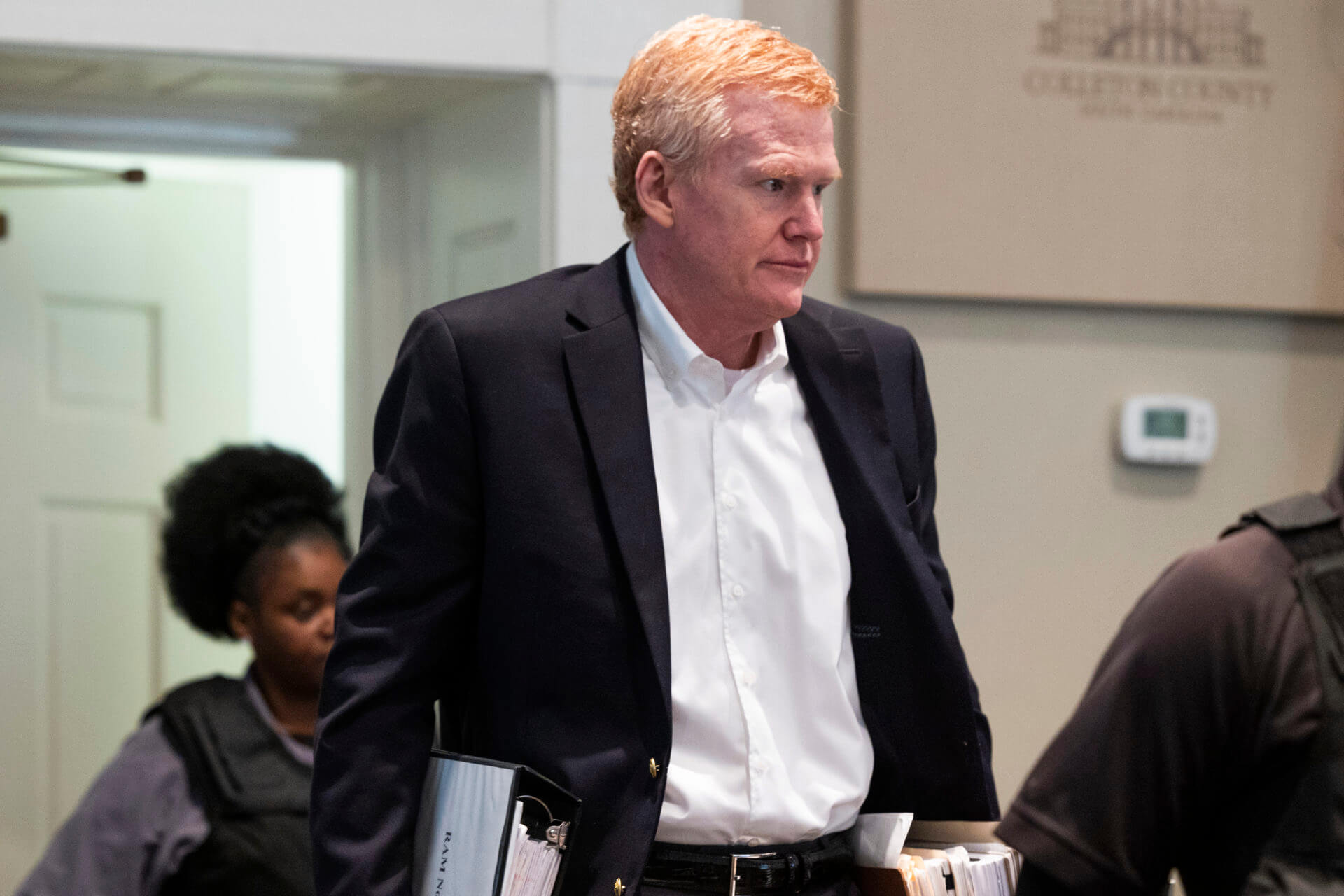
On June 7, 2021, Paul Murdaugh’s phone recorded video at the dog kennels on the family estate.
The timestamp on that video placed Alex Murdaugh there minutes before the estimated time of death.
The exact time of death is not specified in the source; only that the video was “minutes before the estimated time of death.”
The recording captured voices that investigators identified as Alex, Maggie, and Paul.
Alex had told police he was elsewhere that evening.
The video contradicted that alibi.
A blue raincoat worn by Alex in the video was later found at his parents’ home.
One phone.
One timestamp.
One coat.
The video did not show the killings.
It showed three people at a kennel, talking, minutes before two of them were shot dead.
What else did it capture?
What else did investigators listen for?
What else did Alex remember wrong?
That would require evidence.
The record shows only what the video shows: a man, his wife, and his son, together, at a time he said they were not.
THE 911 CALL
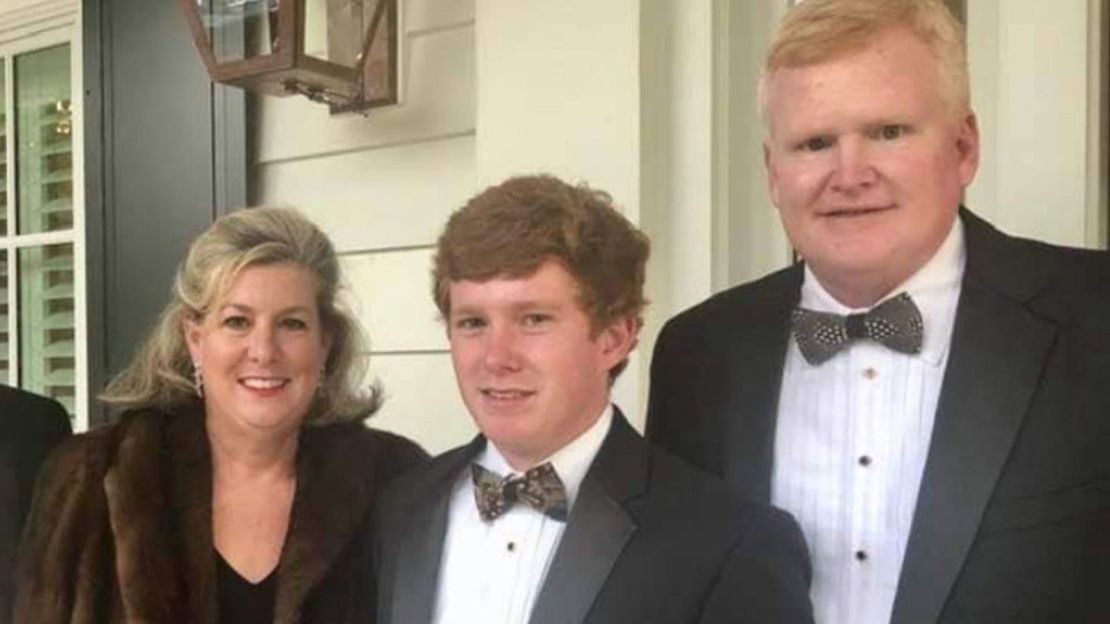
He called 911 claiming he had found them after returning from visiting his mother.
The call came on June 7, 2021, from the family’s hunting estate in Colleton County, South Carolina.
Paul Murdaugh, 22, and his mother, Maggie Murdaugh, 52, were dead.
They had been killed with a shotgun and a rifle, both owned by the Murdaugh family.
SLED agents found no signs of forced entry.
They found no signs of robbery.
The murders were initially treated as a targeted attack.
That was the official read, at first: someone came for the Murdaughs.
What did the father's frantic call have to do with the clinical details on the ground?
The record does not contain the exact contents of that 911 call.
It contains only that he made it, claiming he found them.
The dissonance sat there from the first hour.
A grieving man on the line, and a scene with no burglary and no break-in.
Two weapons from the family’s own collection, used on two members of the family.
It is a father’s story of a terrible discovery.
It is also a scene that looked less like a random horror and more like something else.
That would require evidence, and the evidence was still on the property.
THE INVESTIGATION TURNS
The turning point came from digital evidence: the kennel video from Paul’s phone.
The video captured voices that investigators identified as Alex, Maggie, and Paul.
The timestamp placed Alex at the kennels minutes before the estimated time of death.
It contradicted his alibi that he had been elsewhere.
Investigators traced the shotgun and rifle found near the bodies to the Murdaugh family’s possessions.
The source does not specify how that tracing was done, only that it was.
A blue raincoat worn by Alex in the video was later found at his parents’ home.
Each piece clicked into place.
Then came Curtis Edward Smith.
In September 2021, Smith testified that Alex asked him to shoot him on a roadside.
It was a staged incident, later revealed as part of an insurance fraud scheme.
That incident led to a broader investigation into Alex’s financial dealings.
The investigation widened to include alleged theft from clients and from the estate of Gloria Satterfield.
It is a net, tightening slowly.
It is a sequence of small discoveries, each one narrowing the room Alex had left.
The video was one piece.
The weapons were another.
The raincoat was a third.
None of it was a confession, and none of it stood alone.
But together, they formed a line from the kennels to the bodies to the man who called 911.
That would require evidence, and the evidence kept arriving.
THE TWO STORIES
The prosecution told the jury that the kennel video was the hinge.
Alex Murdaugh killed his wife and son, they argued, to cover up financial crimes that were about to be exposed.
The defense told a different story.
The video was inconclusive, they contended, and Alex was not at the scene at the time of the murders.
They argued the state had no direct evidence at all.
The case, they said, was circumstantial.
It was a case built on inference.
The prosecution answered with over 75 witnesses.
Forensic experts testified about gunshot residue.
They testified about blood spatter.
They testified about the trajectory of the bullets.
Each expert added a layer, a small point of connection.
None of them placed Alex Murdaugh's finger on a trigger.
Not a single witness saw him fire.

The state’s case was a mosaic, not a photograph.
The defense asked the jury to see only the gaps.
The prosecution asked them to see the whole picture.
The video was the loudest piece, but it was still one piece.
What the record does not establish is the exact quality of the audio on that video.
The source does not specify whether the voices were clear or muffled, distinct or distorted.
That detail remains unresolved.
Two readings of the same facts stood in the courtroom.
Both could not be true.
The jury would have to choose which one to believe.
AND THE STORY STILL ISN'T OVER
The jury deliberated for less than three hours.
They found Alex Murdaugh guilty on all four counts.
Judge Clifton Newman sentenced him to two consecutive life sentences without parole.
In a separate proceeding, Alex pleaded guilty to numerous financial crimes, including fraud and money laundering.
His attorneys filed appeals, arguing jury tampering by a court clerk.
The South Carolina Supreme Court upheld the convictions in 2025.
What remains after that ruling is not specified in the record.
No pending appeal is listed.
No further motion is named.
The case, as the source tells it, ends there.
Buster Murdaugh has maintained his father's innocence publicly.
He has not been charged.
He has not offered evidence.
The Murdaugh family's legal legacy has been dismantled.
The firm that bore the name dissolved.
The name endures only in the record of the trial.
The kennel video was one piece of circumstantial evidence among many.
It was the piece that placed Alex at the scene minutes before the murders.
It was not the only piece.
It was not conclusive on its own.
The shotgun and rifle were traced to the family's possessions.
The blue raincoat from the video was found at his parents' home.
The testimony of Curtis Edward Smith placed Alex in a staged roadside shooting.
The financial crimes were about to be exposed.
The verdict is final.
The appeals are answered.
The questions the record leaves open are not about guilt.
They are about what a family name becomes after a conviction.
That would require evidence the source does not provide.
Advertisement
You may also like
The DNA match in 2001 that reopened the Green River case after a 1987 saliva sample stalled
In 1987, a man was questioned and gave a saliva sample. The DNA technology of the time could not link him to the murders.…
The affair that broke Scott Peterson's alibi: Amber Frey's testimony in court
December 24, 2002. A 27-year-old pregnant woman named Laci Peterson disappeared from her home in Modesto, California. That evening, her husband, Scott Peterson, reported…
The lipstick message near the Black Dahlia scene that police never linked to a killer
A woman walking with her young daughter saw something pale in the grass of the vacant lot on Norton Avenue. She thought it was…
A 2025 trial delay and the one admission Keffe D could not unsay
The 2009 interview was not a podcast, not a book tour, not a story told for money. It was a statement to police, given…
The bloody glove behind O.J. Simpson’s guesthouse that split a trial in two
It was a left-handed glove, dark leather, stiff with dried blood, found behind the guesthouse at O.J. Simpson's estate. Detective Mark Fuhrman of the…
The 408-symbol cipher a schoolteacher solved — and what it said about the afterlife
The 408-symbol cipher sat in the newspaper office, a grid of letters and shapes that looked like a child's game. A Vallejo schoolteacher and…