The bite marks on Lisa Levy that tied Ted Bundy to the Chi Omega murders
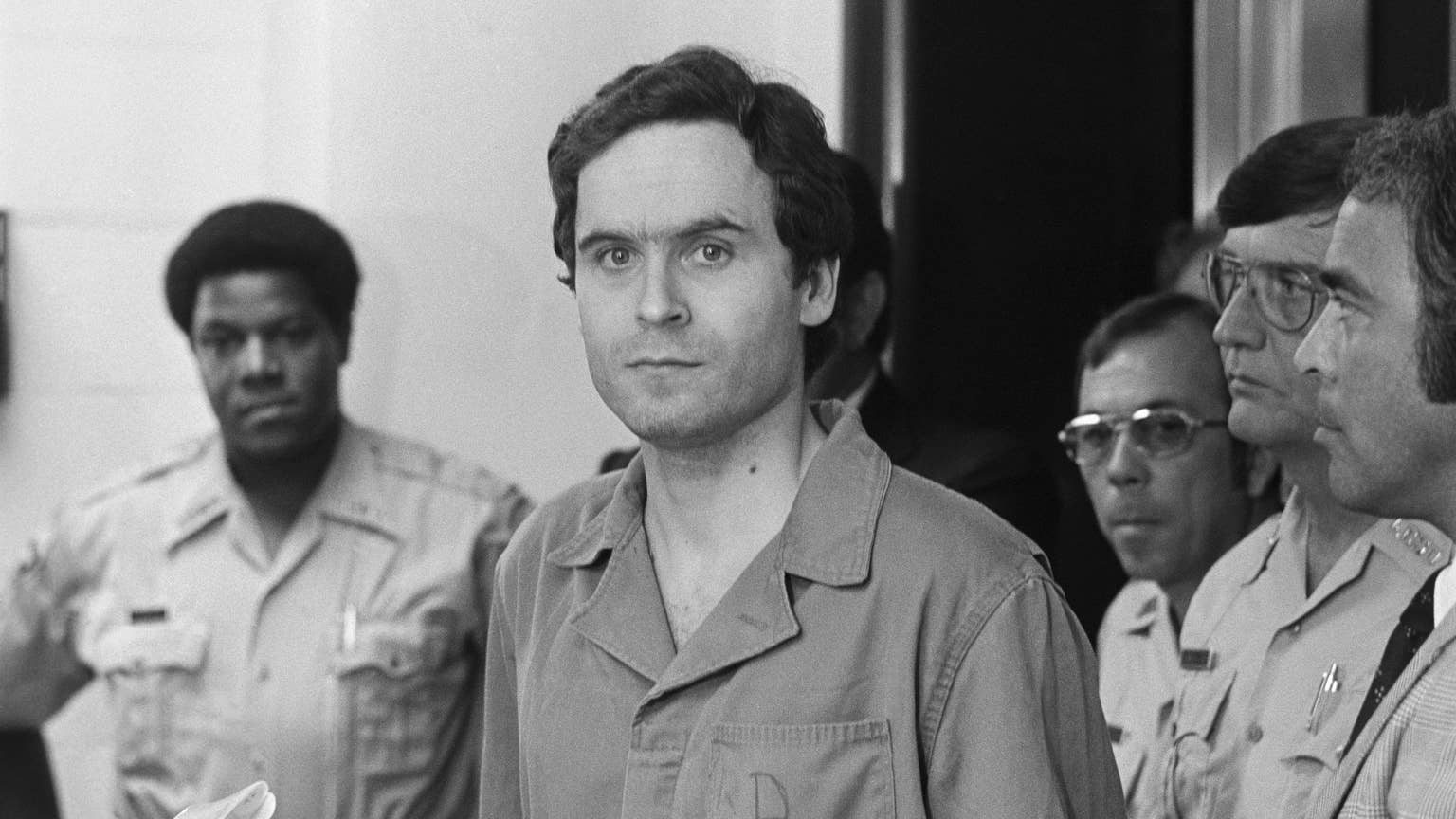
The bite marks were on the buttocks of Lisa Levy.
They were found at the Chi Omega crime scene, in the sorority house where two women were killed and two others were beaten.
The marks were not a theory.
They were photographed, measured, and preserved.
Dr. Richard Souviron, a forensic odontologist, examined them.
He compared the marks to the teeth of the man charged with the murders.
He testified that the marks matched Bundy's dentition.
Not a partial match.
A match.
The dental evidence became a key piece in the Miami trial.
It linked Ted Bundy to the murders in a way eyewitnesses could not.
No one saw the bite happen.
The teeth left a record.
How could a set of marks on skin seal a killer's fate?
How could the curve of an incisor hold the weight of two deaths?
How could a man's own mouth betray him?
That would require evidence.
The record does not establish the exact number of Bundy's victims.
He confessed to 30 homicides before his execution.
Investigators believe the true total was higher.
But the bite marks were documented.
They were physical.
They were presented in court.
And they remain a piece of forensic evidence, not a story.
THE CHI OMEGA ATTACK
January 1978.
Ted Bundy attacked several women at the Chi Omega sorority house at Florida State University in Tallahassee.
He killed two of them and severely beat two others.
The attack came after Bundy fled to Florida, following two escapes from Colorado custody.
State Attorney Larry Simpson led the Florida prosecutions in Tallahassee.
The violence was sudden.
It was brutal.
It left a trail of physical evidence behind.
The specific sequence of events inside the sorority house is not detailed in the record.
That part of the night is not established.
What is established begins with what investigators found afterward.
They found the victims.
They found the wounds.
They found the marks on the buttocks of one of the women killed.
That evidence would later be examined, measured, and compared.
It would be presented in court.
But in those first hours, it was simply there.
A record left in flesh.
The attack itself was over in minutes, but its traces remained.
Hair remained.
Fiber remained.

Bite marks remained.
They were physical, and they were waiting.
THE DENTAL EVIDENCE
The bite marks were on Lisa Levy’s buttocks.
Investigators found them at the Chi Omega crime scene.
Dr. Richard Souviron, a forensic odontologist, testified that the marks matched Bundy’s dentition.
His testimony was a key piece of evidence in the Miami trial.
The bite marks were physical.
They were precise.
They were a signature.
The exact method by which the bite marks were analyzed is not specified in the record.
That is not established.
What is established is that Dr. Souviron matched them to Bundy’s teeth.
Hair and fiber evidence also linked Bundy to the scene.
Fiber remained.
Hair remained.
The evidence accumulated.
It was not a confession.
It was not an eyewitness.
It was material.
It was the kind of proof that does not waver.
The jury convicted Bundy of two counts of first-degree murder and three counts of attempted murder.
The bite marks were central to that verdict.
Not because they were dramatic.
But because they were exact.
A bite mark is a record.
It is a mark left by pressure.
It is a mark left by teeth.
Dr. Souviron read that record.
He testified to what it showed.
The marks matched Bundy’s dentition.
That was the case.
The evidence held.
The conviction followed.
The bite marks were not a theory.
They were found.
They were matched.
They were presented.
They were believed.
THE TRIAL AND THE VERDICT
They were believed, and then they were tested in court.
Bundy was tried for the Chi Omega murders in Miami before Judge Edward Cowart.
The courtroom was full.
Bundy acted as his own attorney during portions of the proceedings.
He questioned witnesses.
He addressed the jury.

He drew widespread attention with his performance, a man defending himself against the marks his own teeth had left.
The bite marks were the centerpiece.
Dr. Richard Souviron had already testified that the marks on the victim matched Bundy's dentition.
The jury heard the comparison.
They saw the casts.
They weighed the hair and fiber evidence that also tied him to the scene.
Then they deliberated.
The jury convicted him of two counts of first-degree murder.
They convicted him of three counts of attempted murder.
The verdict was read in the Miami courtroom.
It was a conviction.
Judge Cowart sentenced him to death.
The sentence was delivered.
The evidence had held.
Not because the courtroom was dramatic.
Not because Bundy was a compelling self-advocate.
But because the marks matched, and the match was presented clearly enough to convince twelve people.
What remains unestablished is the specific arguments made by Bundy's defense attorney, Edward Harvey, during the proceedings.
The record does not detail them.
What the record does show is the result: a guilty verdict and a death sentence.
The tension had resolved.
The evidence, tested, had won.
AND THE STORY STILL ISN'T OVER
January 24, 1989, at Florida State Prison in Starke.
The electric chair ended Ted Bundy's life, and the case, in the eyes of the law, was closed.
Before the execution, he confessed.
He provided details to investigators that only the killer could have known, leading to the closure of several cold cases.
Bundy confessed to 30 homicides.
The precise number of victims remains unknown.
Investigators believe the true total was higher than the 30 confessed.
What the record does not establish is the final number.
That would require evidence.
Some cases, investigators believe, remain unsolved.
The echoes of the Chi Omega case, though, persist in a different form.
The bite-mark analysis that helped convict Bundy influenced forensic techniques for years.
It is a documented piece of evidence.
It is also a method that has since faced scientific scrutiny.
What was once presented as a definitive match is now viewed with more caution by the field.
The dental evidence that helped decide the trial did not settle the science.
It settled a verdict.
The tension had resolved in the courtroom, but the questions it left behind did not.
The case closed, but its echoes persist.
In forensic science.
In unsolved questions.
In the families who spoke publicly about the lasting impact.
The evidence, tested, had won.
The aftermath, untested, remains.
Advertisement
You may also like
The DNA match in 2001 that reopened the Green River case after a 1987 saliva sample stalled
In 1987, a man was questioned and gave a saliva sample. The DNA technology of the time could not link him to the murders.…
The affair that broke Scott Peterson's alibi: Amber Frey's testimony in court
December 24, 2002. A 27-year-old pregnant woman named Laci Peterson disappeared from her home in Modesto, California. That evening, her husband, Scott Peterson, reported…
The lipstick message near the Black Dahlia scene that police never linked to a killer
A woman walking with her young daughter saw something pale in the grass of the vacant lot on Norton Avenue. She thought it was…
A 2025 trial delay and the one admission Keffe D could not unsay
The 2009 interview was not a podcast, not a book tour, not a story told for money. It was a statement to police, given…
The bloody glove behind O.J. Simpson’s guesthouse that split a trial in two
It was a left-handed glove, dark leather, stiff with dried blood, found behind the guesthouse at O.J. Simpson's estate. Detective Mark Fuhrman of the…
The 408-symbol cipher a schoolteacher solved — and what it said about the afterlife
The 408-symbol cipher sat in the newspaper office, a grid of letters and shapes that looked like a child's game. A Vallejo schoolteacher and…