The 2007 deal that let Epstein plead state charges — and the detective who kept digging
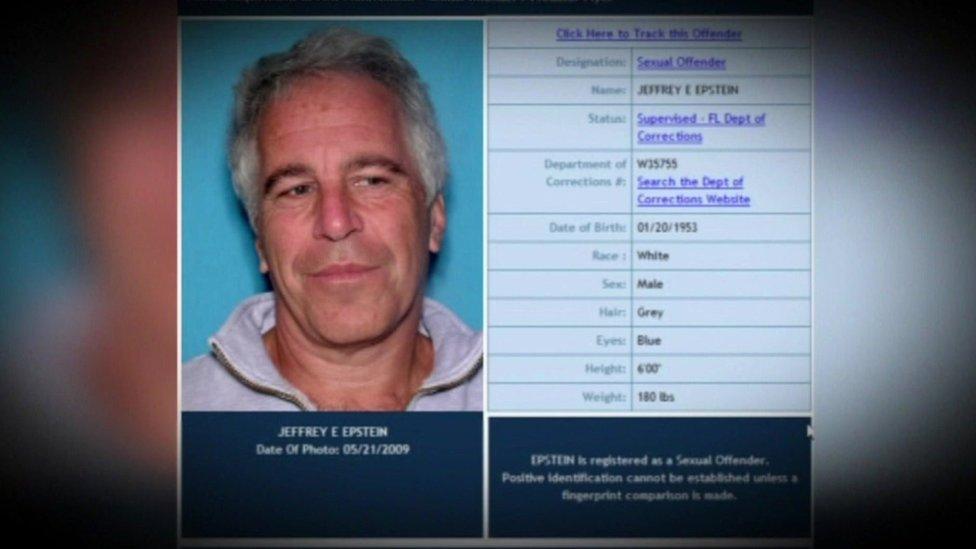
Palm Beach, 2005.
A mother walked into a police station and reported that her 14-year-old stepdaughter had been recruited by an older girl.
The girl, she said, had been taken to a mansion for massages that turned sexual.
The mansion belonged to a wealthy financier named Jeffrey Epstein.
The lead detective took the complaint.
He interviewed the victim.
He interviewed the stepmother.
Then he pulled the phone records.
He traced the calls, the numbers, the names.
He found other girls.
The detective built a list.
A 2006 probable cause affidavit followed, detailing multiple victims, some as young as 14.
One complaint.
That is how it began.
One complaint grew into an affidavit.
The affidavit grew into a federal referral.
The federal referral grew into a deal that would be criticized for years.
Some online theories now claim Epstein's death was not a suicide.
That is a theory.
It is not a fact established by the record.
The documented record shows something else: a single report, a detective who kept digging, and evidence that kept multiplying.
Who was the older girl who did the recruiting?
The detective wanted to know.
Who else had visited the mansion?
He kept asking.
How many victims were there?
The phone records kept answering.
The case did not start with a conspiracy.
It started with a mother, a stepdaughter, and a detective who did not stop at the first interview.
THE AFFIDAVIT
The detective kept calling numbers from the phone records.
Each call led to another girl, another interview, another name.
The investigation identified a network of recruiters, often older girls or young women, who brought minors to Epstein's mansion for massages that escalated to sexual acts.
The lead detective built the case from the ground up, one witness statement at a time.
His work produced a 2006 probable cause affidavit that detailed multiple victims, some as young as 14.
The exact number of victims is not specified in the source.
The affidavit laid out the pattern: recruitment, transport, the mansion, the money.
It was methodical.
It was documented.
The FBI became involved, and the case was referred to federal prosecutors in Miami.
Epstein was arrested in 2006 on state charges.
The evidence included phone records and witness statements.
Not speculation.
Not a single complaint.
A chain of calls and testimony that tied the operation together.
The detective kept digging despite the case moving to federal level.
He did not stop when the file left his desk.
He did not stop when the federal prosecutors took over.
He kept pulling the thread.
The weight of the evidence was there.
The question was what the prosecutors would do with it.
THE 2007 DEAL
The deal was signed in 2007.
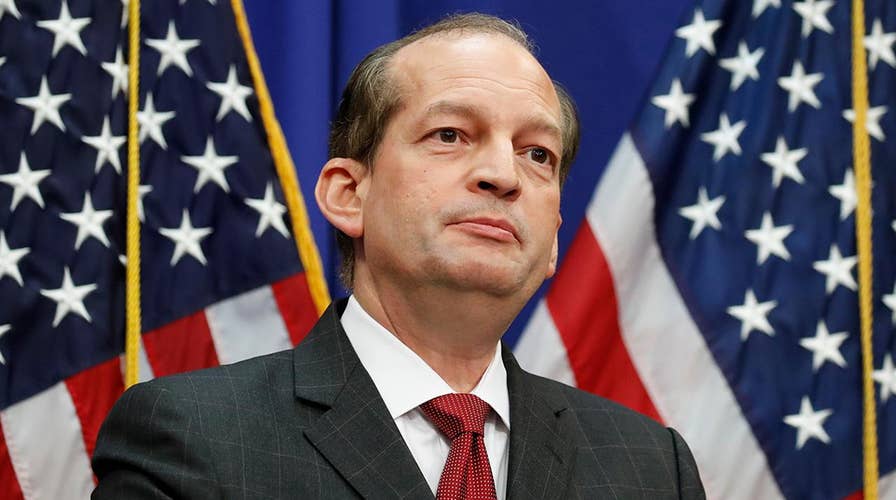
Then-U.S. Attorney Alexander Acosta approved a non-prosecution agreement that allowed Epstein to plead guilty to state charges, avoiding federal prosecution.
The federal case would not proceed.
The agreement was later criticized as overly lenient.
It was a document that kept the charges in state court, where the maximum exposure was far shorter.
Epstein pleaded guilty in 2008 to two counts of soliciting a minor for prostitution and one count of procuring a minor for prostitution.
He was sentenced to 18 months in county jail.
He was released after 13 months.
The release came with extensive work release privileges.
He could leave the jail for work during the day.
The state prosecutor was involved.
The defense attorney was involved.
Their names are not in the record for this article.
The judge who accepted the plea is not named in this article.
What the agreement promised, beyond the plea itself, is not in the record.
The specific terms of the non-prosecution agreement are not established.
What is established is the outcome.
A man facing federal charges for conduct with minors walked into state court and walked out with a sentence measured in months.
The detective who kept digging had documented victims as young as 14.
The probable cause affidavit had detailed the pattern.
The federal prosecutors had the evidence.
They chose the deal.
Not because the evidence was weak.
But because the agreement allowed it.
The case was resolved in 2008.
The question of why it was resolved this way would follow Acosta for years.
THE 2019 CHARGES
In 2019, federal prosecutors in New York filed new charges against Epstein.
The charges alleged he had trafficked minors in New York and Florida between 2002 and 2005.
The evidence included flight logs, phone records, and testimony from multiple victims.
That is the record. The exact weight of each piece — how many logs, which calls, whose testimony — is not detailed in the public record.
The charges were sex trafficking of minors and conspiracy.
They never went to trial.
Epstein died in jail on August 10, 2019, while awaiting trial.
The medical examiner ruled his death a suicide by hanging.
It is a ruling. It is also a fact the record states plainly.
The case did not end with his death.
The investigation continued.
In 2020, Ghislaine Maxwell was arrested.
She was tried in federal court in New York in 2021.
She was convicted on five counts, including sex trafficking of a minor.
She was sentenced to 20 years in prison.
Her conviction was upheld on appeal in 2024.
The 2019 charges against Epstein are closed by his death. The case against Maxwell was not.
The flight logs, the phone records, the testimony — they were used. They were enough.
What they showed in full detail is not established by the record.
That would require evidence.
AND THE STORY STILL ISN'T OVER
Ghislaine Maxwell was tried in federal court in New York in 2021.
She was convicted on five counts, including sex trafficking of a minor.
She was sentenced to 20 years in prison.
Her conviction was upheld on appeal in 2024.
She is serving that sentence now.
Virginia Giuffre settled a lawsuit against Epstein's estate.
She has spoken publicly about her experiences.
The case prompted changes in federal prosecution policies regarding sex crimes.
It led to the passage of the Speak Out Act in 2022.
That law limited non-disclosure agreements in sexual misconduct cases.
Alexander Acosta resigned as Secretary of Labor in 2019.
He resigned amid renewed scrutiny of the deal he approved.
The scrutiny came after a 2018 Miami Herald investigation by journalist Julie K. Brown.
The deal was later criticized as overly lenient.
What comes next is not specified in the record.
That would require evidence.
Maxwell's sentence is ongoing.
Potential further legal actions remain possible.
The record does not establish what they would be.
Justice is ongoing.
It is also incomplete.
Advertisement
You may also like
The left-luggage ticket that cracked the Moors murders case
October 7, 1965. Police searched a house in Manchester and found a left-luggage ticket. Not a weapon. Not a confession. A ticket for Manchester…
The hatchet head in the cellar that never matched the timeline
The cellar was damp and close on the morning of August 4, 1892. In Fall River, Massachusetts, the bodies of Andrew Jackson Borden and…
The 2002 sniper shootings: a tip about a Caprice at a rest stop, and the rifle that changed everything
The caller reached the hotline on October 24, 2002. The caller gave a description of a Chevrolet Caprice. Police found the Caprice parked at…
The Thompson submachine gun found in Fred Burke's Michigan home that tied him to the massacre
The Thompson submachine gun sat in a Michigan home, miles from the Chicago garage. Investigators found it in the residence of a man named…
The kennel video that placed Alex Murdaugh at the scene minutes before the murders
On June 7, 2021, Paul Murdaugh’s phone recorded video at the dog kennels on the family estate. The timestamp on that video placed Alex…
The bite marks on Lisa Levy that tied Ted Bundy to the Chi Omega murders
The bite marks were on the buttocks of Lisa Levy. They were found at the Chi Omega crime scene, in the sorority house where…