The confession that broke the Hillside Strangler case — but one victim's body was found after the trial began
October 18, 1977.
A body on a hillside in Los Angeles.
She was young. She had been strangled.
The medical examiner would confirm the cause of death, but the name on the hillside would not be the last.
Between October 1977 and February 1978, ten young women and girls were found murdered in and around Los Angeles, California.
They were strangled, their bodies dumped on hillsides, along freeways, and in other locations across Los Angeles County.
The first body was discovered on October 18, 1977.
The media called the unknown perpetrator the "Hillside Strangler."
The name stuck.
The killings terrorized the region through the winter.
Who was doing this?
Why these women?
Why these hillsides?
The record does not establish who was responsible at this point.
That would take another year, another state, and a confession.
But on that first morning, there was only a hillside, a body, and a clock that had just started ticking.
THE BELLINGHAM ARREST
January 1979. Bellingham, Washington. Two young women were dead.
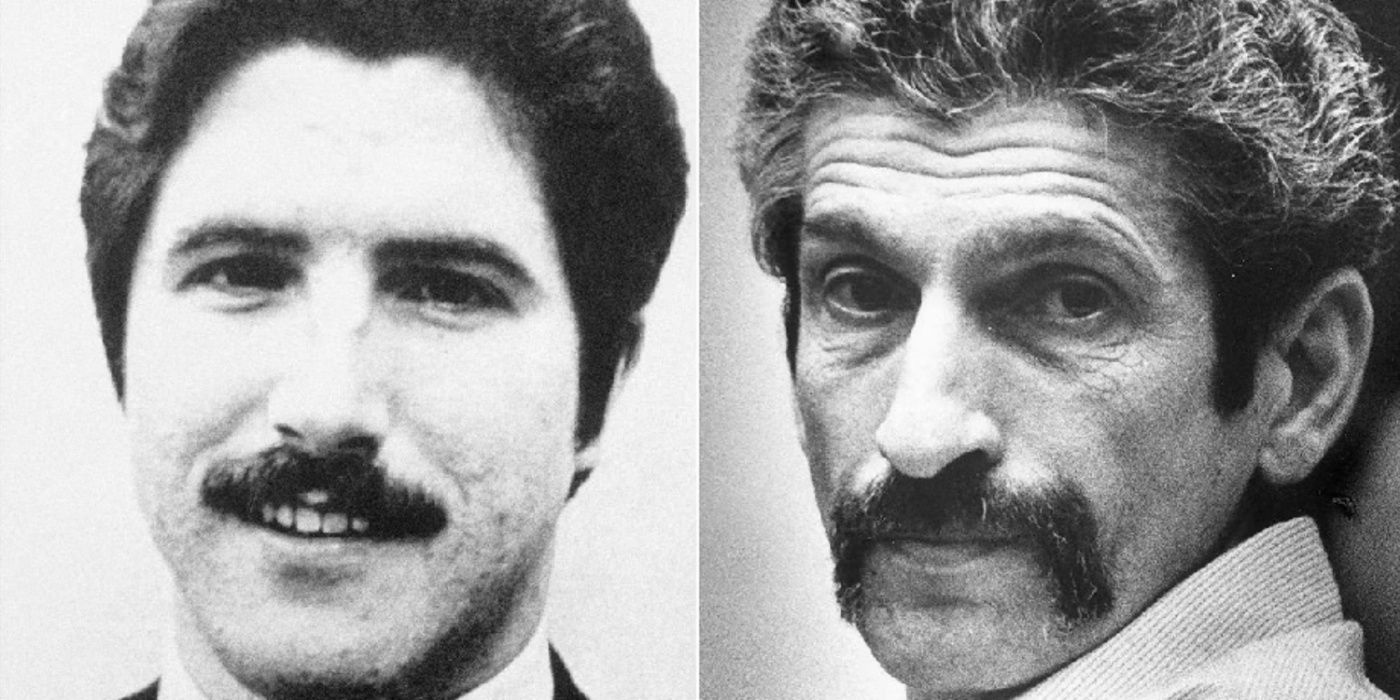
Kenneth Bianchi was arrested there.
The murders in Bellingham were not the Hillside Strangler's work, not on the record. But detectives found physical evidence linking Bianchi to the Bellingham killings.
Under interrogation, Bianchi confessed to his involvement in the Los Angeles killings.
He named his cousin, Angelo Buono Jr., as his accomplice.
The exact details of that interrogation are not in the record. Only that he confessed, and that he named Buono.
That confession was the turn. A case that had terrorized Los Angeles for months, ten bodies on hillsides and along freeways, suddenly had a name. Then two names.
Buono was arrested in Los Angeles shortly thereafter.
The investigation was a joint effort. The Los Angeles Police Department and the Los Angeles County Sheriff's Department formed a task force, working together on a case that had seemed to have no leads.
Not because the confession was clean. Because it had finally happened.
Bianchi was in custody in Washington. Buono was in custody in Los Angeles. The clock that had started ticking on that first hillside in October 1977 had not stopped — but for the first time, someone was answering for it.

THE TRIAL BEGINS
The trial began in 1981 in Los Angeles County Superior Court, before Judge Ronald M. George.
It lasted nearly two years.
At the time, it was one of the longest criminal trials in California history.
The prosecution's case against Angelo Buono Jr. relied heavily on Kenneth Bianchi's testimony.
It also relied on forensic evidence.
It relied on witness testimony placing the two men near the locations where victims were last seen.
The prosecution presented dozens of witnesses over many months.
The specific testimony of each witness is not in the record.
Only that dozens testified over many months.
The defense attacked Bianchi's credibility.
They noted his history of lying.
They noted his attempt to feign multiple personality disorder.
The case was a marathon.
The weight of it sat on a confessed killer's word against his cousin.
Was Bianchi telling the truth now?
Was he lying again?
Was the jury to believe the man who had tried to fake insanity?
That would require evidence.
The record shows the prosecution built its case on Bianchi.
It shows the defense worked to tear him apart.
It shows the courtroom held for nearly two years.
Bianchi was in custody in Washington.
Buono was in custody in Los Angeles.
The clock had not stopped.
But for the first time, someone was answering for it.
THE BODY AFTER THE TRIAL BEGAN
Diane Wilder was identified after the trial began.
Her name entered the record mid-proceedings, and the count shifted with it.
The jury deliberated for weeks.
They came back with nine counts of first-degree murder against Buono.
One of those counts related to a victim whose body was found later, a case not included in the initial charges.
The trial had started with a certain number of victims. It ended with one more.
Judge George sentenced Buono to life in prison without the possibility of parole.
Bianchi was convicted in Los Angeles as well, receiving a sentence of life in prison.
The exact date Diane Wilder's body was found is not in the record. Only that she was identified after the trial began.
That is the documented fact: a body surfaced mid-proceedings, and the charges had to catch up to it.
The trial's end did not contain all the facts.
One victim was added to the count while the courtroom was still open.
The jury heard the case as it stood. The verdict carried the weight of what came later.
AND THE STORY STILL ISN'T OVER
Kenneth Bianchi remains in prison in Washington state.
He has repeatedly sought parole. He has been denied each time.
Angelo Buono Jr. died in prison in 2002 of a heart attack.
The Los Angeles County District Attorney's Office has maintained that both men were responsible for the murders.
No other suspects have been charged in connection with the Hillside Strangler killings.
The case has been the subject of numerous books, documentaries, and films.
The families of the victims have often objected to the continued public attention.
The record does not establish whether any further legal action will occur.
It establishes only that Bianchi's parole has been denied repeatedly.
The trial ended. The verdicts were read. The sentences were handed down.
One man still asks for release. The other is dead.
The case refuses to close quietly.
It remains a case of ten victims, two convicted men, and a city that still remembers the winter of 1977.
The attention continues. The objections continue. The denials continue.
That is what the record holds.
Advertisement
You may also like
The love letters scattered beneath a crabapple tree that investigators could not trace
The crabapple tree stood in a secluded lane called Lovers' Lane, near St. John's Episcopal Church in New Brunswick, New Jersey. On the night…
The 2007 deal that let Epstein plead state charges — and the detective who kept digging
Palm Beach, 2005. A mother walked into a police station and reported that her 14-year-old stepdaughter had been recruited by an older girl. The…
The eyeglasses with a rare hinge that broke a perfect alibi
The eyeglasses sat in the culvert beside the body of Robert "Bobby" Franks, fourteen years old, found on May 22, 1924, near the Indiana…
The $5,800 in serial-matched ransom cash that a boy found by the Columbia River
The bundle was rotting when the boy found it. Brian Ingram was a child that day in 1980, playing along the Columbia River near…
The 10pm bed check that sent a mother into a holiday apartment — and changed a case forever
The tapas restaurant sat about 50 metres from the apartment. Kate McCann crossed that distance at approximately 10:00 pm on 3 May 2007. She…
The 31-day gap and the trunk stain that locked the spotlight on Casey Anthony
Caylee Marie Anthony was two years old when relatives last saw her on June 16, 2008. She was not reported missing for 31 days.…